
Click beetle
Selatosomus
Description
How to identify
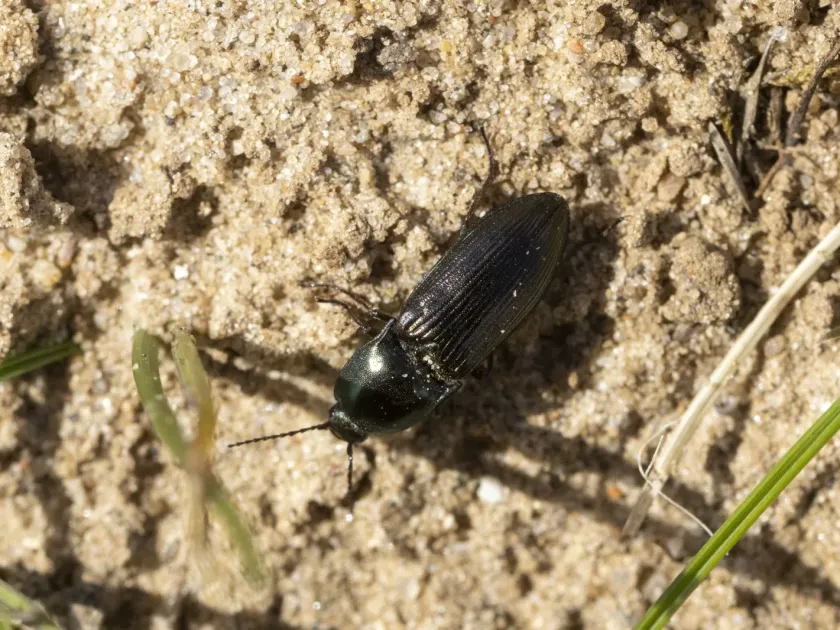
Click beetles, belonging to the family Elateridae, are named for their unique ability to flip themselves into the air with an audible clicking sound if they are placed on their backs. They have elongated, streamlined bodies, typically dark in color.
The larval stage, commonly known as the wireworm, is the most destructive phase. These larvae possess a hard, shiny, cylindrical body that is yellow to reddish-brown in color, resembling a short piece of wire.
Within the genus Selatosomus, several species are identified as significant pests of various crops. While the adult beetles feed on foliage, their impact is usually secondary compared to the subterranean destruction caused by their offspring.
The life cycle of a click beetle is remarkably long, ranging from 3 to 5 years. Most of this time is spent underground, where larvae develop and thrive by consuming the roots and stems of various plant species.
Developmental success is highly dependent on soil moisture and temperature. Larvae are sensitive to environmental shifts, moving vertically within the soil profile to find conditions that favor their survival and continued development.
What it damages
Wireworms are notorious polyphagous pests, attacking a wide range of agricultural crops including potatoes, carrots, beets, cereals, and young seedlings. Their broad diet makes them a constant threat to biodiversity in the garden.
Damage occurs primarily beneath the soil surface. Larvae sever roots and bore into stems, leading to the rapid wilting and death of young plants, which significantly reduces the final stand of the crop.
In potatoes, the damage is particularly costly. Wireworms bore deep, narrow tunnels into the tubers. Not only does this ruin the appearance of the vegetable, but it also creates entry points for fungal pathogens, leading to severe rot.
Economic damage is often proportional to the density of the larval population in the field. High concentrations of wireworms can cause complete failure of germination, necessitating replanting or intensive intervention.
The pest is most damaging in fields that have been left fallow or fields with high grass cover, as these environments provide the ideal moisture and food sources required for a healthy and growing population of wireworms.
When it appears
Larval activity reaches its peak in the spring when soil temperatures rise and plants begin their rapid growth phase. This is when the larvae are closest to the surface, searching for tender roots to feed on.
During the summer months, as the upper soil layers dry out, wireworms descend to deeper, cooler strata. Their activity near the surface decreases significantly unless supplemental irrigation provides enough moisture to keep them active.
In the autumn, with the arrival of cooler temperatures and increased rainfall, the larvae return to the upper soil layers. This is the period when they perform their final feeding before entering winter dormancy in deep soil.
Adult click beetles usually emerge between May and June. During this time, they are visible above ground, where they mate and deposit eggs in the soil, usually near the roots of grasses or cultivated crops.
Since larvae remain in the soil for multiple years, every season brings a new potential threat. The overlap of generations ensures that a field infested with click beetles will remain problematic for several consecutive years.
Signs of infestation
The first indicator of a wireworm infestation is usually the presence of wilted seedlings. If these plants are pulled gently, the roots are often found to be severed or eaten away entirely.
Visible boreholes on the surface of root vegetables like carrots or beets are a classic sign of wireworm feeding. These holes are typically deep and may lead to hollowed-out sections within the vegetable.
Potatoes at harvest time often exhibit dark spots and tunnels. These signs, often accompanied by mold growth inside the tunnels, confirm the long-term presence of the larvae within the tuber.
High levels of couch grass (Elymus repens) in a field are a strong predictor of click beetle presence, as this weed provides a primary habitat and food source for the larvae to thrive.
To confirm the presence of wireworms, farmers use soil traps, such as burying pieces of potato or carrot 10-15 cm deep. After a few days, the traps are inspected to count the number of larvae attracted to the bait.
Control measures
Good agricultural practices are the first line of defense. Deep autumn tilling brings larvae to the surface, where they are exposed to harsh weather conditions and avian predators, significantly reducing their numbers.
Implementing a diverse crop rotation is highly effective. Alternating host plants with non-host crops, such as mustard or certain legumes, can disrupt the wireworm's life cycle and deplete their population over time.
Soil pH management is another tool; since wireworms prefer acidic soils, applying lime to adjust the pH level can make the environment less hospitable for the larvae, thereby lowering the infestation risk.
Chemical control options include the use of soil insecticides applied at planting or the use of seed treatments that protect young plants during their most vulnerable stage of establishment.
- Maintaining clean fields by aggressively managing weeds, especially grasses.
- Using trap crops or bait traps to monitor and reduce populations before planting.
- Encouraging the presence of natural predators like ground beetles and various birds.
Taxonomy
- Latin name
- Selatosomus
- Order
- Coleoptera (beetles)
- Family
- Elateridae
- EPPO code
- SELTSP
Discussion
No discussions yet — be the first.