
Click beetle
Pyrophorus noctilucus
Description
How to identify
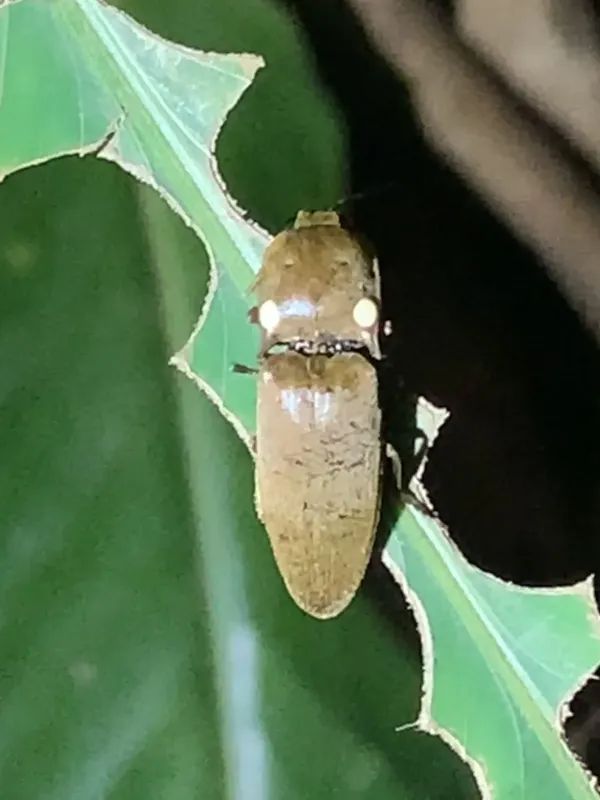
The click beetle (Pyrophorus noctilucus) is a remarkable insect from the Elateridae family, famous for its bioluminescent organs. Adult beetles can reach up to 4 cm in length and typically have a dark, brownish-black color.
They are characterized by two luminous spots on the pronotum, which glow with a bright green light. This feature is mainly used for communication and defense, becoming particularly intense during flight or when the beetle is disturbed.
The larvae, commonly known as wireworms, are characterized by their hard, cylindrical, and brownish bodies. This structural hardness allows them to burrow through compact soil and root systems efficiently.
The life cycle involves four stages: egg, larva, pupa, and adult. The larval stage is the most critical for agricultural impact, as it can last for several years, allowing them to cause sustained damage.
These beetles are native to tropical and subtropical climates, thriving in environments where high soil moisture supports the survival of eggs and the activity of larvae.
What it damages
The primary agricultural damage is caused by the wireworms, which live in the soil and feed on underground plant parts, including seeds, roots, and seedling stems.
Affected crops include a variety of tropical and subtropical plants such as sugarcane, corn, various root vegetables, and staple grain crops.
Wireworms often bore into the base of young stems, which can lead to the wilting of the plant, growth retardation, or even total crop failure if the damage is severe enough.
In high-density infestations, wireworms can cause significant stand reduction, requiring costly replanting and disrupting the uniformity of the field.
Furthermore, the physical damage to roots creates entry points for soil-borne pathogens, leading to secondary infections such as root and stem rots that further weaken the plants.
When it appears
Adult beetles are nocturnally active, with their bioluminescence being most visible during the rainy season when they seek mates in humid environments.
Larvae are perennial soil-dwellers, though their vertical distribution depends heavily on moisture levels and temperature in the soil profile.
During dry spells, larvae typically move to deeper soil layers to avoid desiccation, making them harder to target with surface-applied treatments.
In the spring, when temperatures rise and soil moisture is optimal, larvae migrate to the upper rhizosphere to feed on developing root systems of crops.
Because the larvae of different generations can coexist in the soil, the damage potential remains a year-round threat, though it peaks during the primary growing season.
Signs of infestation
The first signs of an infestation often include irregular patches of stunted or wilting plants within a field, regardless of the irrigation status.
Visual inspection of the root zone will reveal tunnels or holes in the roots and stems, which are typical symptoms of wireworm feeding activity.
At night, the presence of adult beetles can be confirmed by observing the green bioluminescent light, which is a unique diagnostic feature for this specific species.
Digging into the soil around affected plants to find the larvae is the most reliable way to confirm the pest's presence and estimate the population density.
High infestation rates are often associated with fields that have a history of perennial grassy weeds, as these provide a steady food source for the larvae.
Control measures
Deep tillage or plowing is an effective cultural practice that exposes larvae to sunlight, predators, and desiccation, significantly reducing their numbers.
Crop rotation is a fundamental strategy, replacing host crops with species that are less attractive or unfavorable for the survival of the larvae.
- Seed treatment with systemic insecticides to protect the crop during the vulnerable seedling stage.
- Using bait traps made of grain to monitor larval activity and determine the necessity for chemical intervention.
- Optimizing planting times to allow crops to pass the seedling stage before the peak activity of wireworms.
Chemical control can be implemented by applying soil-applied granular insecticides during planting to create a protective zone around the seeds.
Managing weed populations, particularly perennial grasses, is essential to deprive the wireworms of their refuge and food source, promoting long-term field health.
Taxonomy
- Latin name
- Pyrophorus noctilucus
- Order
- Coleoptera (beetles)
- Family
- Elateridae
- EPPO code
- PYOHNO
Discussion
No discussions yet — be the first.