
Pyrophorus beetle
Pyrophorus
Description
How to identify
The Pyrophorus beetle belongs to the family Elateridae, commonly known as click beetles. These insects are distinguished by their remarkable ability to produce light, a phenomenon known as bioluminescence.
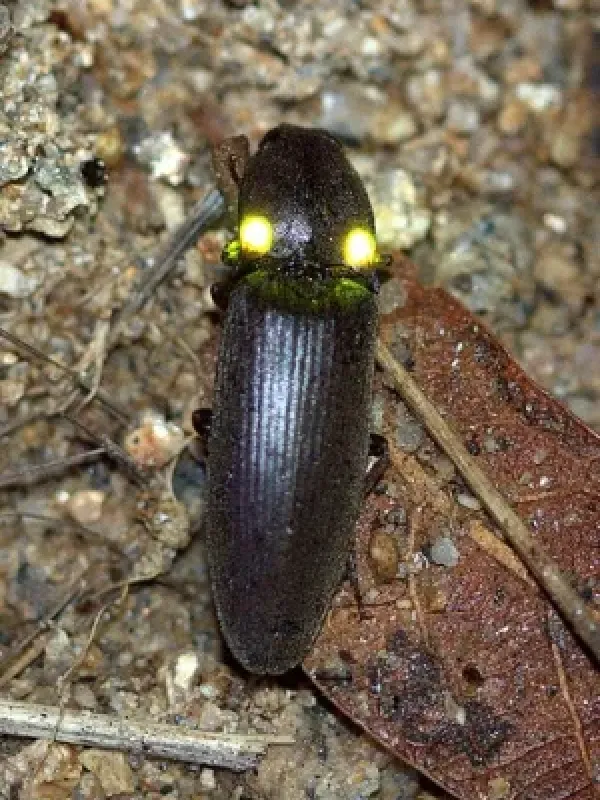
Adult beetles feature two glowing spots on their pronotum, emitting a cold greenish light. Their bodies are elongated, hardened, and typically dark-colored, adapted for living within soil or forest litter.
The larvae, known as wireworms, possess a cylindrical, heavily chitinized body. This structure, often yellow to brown in color, provides the strength necessary for tunneling through dense soil layers.
The life cycle undergoes complete metamorphosis, consisting of egg, larva, pupa, and adult stages. Unlike many temperate click beetles, Pyrophorus species are primarily active in warm, humid tropical environments.
Agronomists identify this species through morphological analysis of antennae and abdominal segments, while also considering its geographic distribution, which is largely confined to Central and South America.
What it damages
The primary damage is caused by the larvae, which live cryptically within the rhizosphere of crops. They are known to infest the root systems of various agricultural staples, including sugarcane and corn.
The infestation is characterized by the consumption of young roots, leading to stunted plant growth, wilting, or complete plant death at the seedling stage. Wireworms may also bore into the lower stem tissues.
Damaged root systems become highly susceptible to secondary infections, such as fungal and bacterial rots, which further degrade the phytosanitary condition and overall yield potential of the fields.
In regions where these beetles are prevalent, they represent a significant economic threat to plantations, necessitating continuous monitoring of larval populations in the soil before planting.
Adult Pyrophorus beetles, unlike their larvae, feed on decaying vegetation or nectar and do not cause direct damage to the harvest, though they are responsible for the dispersal and continuation of the species.
When it appears
Adult activity is highly correlated with the onset of the rainy season in tropical regions, as increased soil moisture is essential for oviposition and successful larval development.
Larvae persist in the soil throughout the year, but they inflict the most significant damage during the active growing phase of crops, when roots are most vulnerable to mechanical feeding.
Vertical migration of larvae within the soil profile is driven by temperature; during the heat of the day, they descend deeper, moving back toward the surface when moisture conditions are optimal.
The larval development cycle is quite protracted, often spanning several years, which requires long-term management strategies for fields known to host these populations.
The emergence of young adults usually aligns with seasonal climate shifts, which serves as a critical indicator for agronomists to initiate preventive insecticide treatments.
Signs of infestation
A primary indicator of infestation is the patchy emergence of seedlings, where plants suddenly wilt, turn yellow, and are easily pulled from the soil due to damaged or severed root systems.
Inspecting the root zone of affected plants often reveals distinctive tunnels or completely consumed roots, frequently accompanied by the presence of hard-bodied wireworms in the immediate soil.
During the night, the presence of adult populations can be easily confirmed visually due to their bioluminescent glow, simplifying the monitoring of the beetle's density in the field.
High population densities in fields manifest as reduced stand uniformity, leading to significant yield losses during the harvest of susceptible agricultural crops.
Soil sampling, including taking core samples to a depth of 30 cm, is a reliable diagnostic method to detect larval presence and determine the necessity of pre-emergent control measures.
Control measures
The main method of control involves the application of soil insecticides at planting or within the crop rows to eliminate larvae directly in the root zone.
Strategic crop rotation is an effective cultural practice, as it removes the specific food sources required by the larvae and disrupts their natural reproductive cycle.
Deep plowing of the soil during critical larval developmental stages facilitates mechanical destruction and exposes the pests to the surface, where they become prey for birds and other predators.
The use of pheromone traps to capture adult beetles helps reduce the overall fecundity of the population, thereby preventing mass infestations in subsequent growing seasons.
Biological control methods, such as the use of entomopathogenic fungi and nematodes, provide an eco-friendly alternative by naturally infecting and killing larvae within the soil environment.
Taxonomy
- Latin name
- Pyrophorus
- Order
- Coleoptera (beetles)
- Family
- Elateridae
- EPPO code
- PYOHSP
Discussion
No discussions yet — be the first.