
Bronze-black click beetle
Pheletes aeneoniger
Description
How to identify
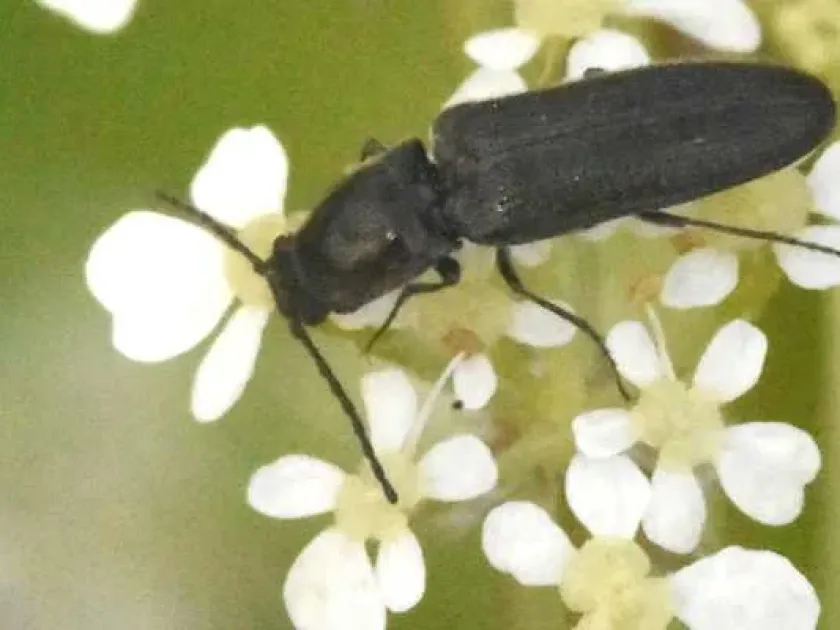
The bronze-black click beetle (Pheletes aeneoniger) is a member of the Elateridae family, known for its distinctive dark, metallic appearance. It is a common pest found in agricultural landscapes across Europe.
The adult beetle has an elongated, hard-bodied structure. Like all click beetles, it possesses a unique anatomical mechanism on its thorax that allows it to flip into the air with a snapping sound if it lands on its back.
The larvae, widely known as wireworms, are the primary damaging stage of this insect. They are cylindrical, firm, and glossy, with a yellowish to brownish color, resembling small pieces of stiff wire.
Their life cycle is extensive, often spanning several years before the larvae pupate into adult beetles. Throughout this period, they reside in the soil, feeding on various organic materials and plant roots.
Adults emerge in the spring to feed on foliage and pollen. After mating, females deposit their eggs in the soil, particularly favoring moist areas with dense vegetation or crop residues.
What it damages
Wireworms cause significant damage by feeding on seeds, roots, and underground stems of various crops. This feeding behavior disrupts the nutrient uptake of plants, often leading to stunted growth.
Cereal crops like wheat and corn, as well as root vegetables including potatoes, carrots, and sugar beets, are particularly vulnerable. Heavy infestations can lead to total crop failure.
In addition to direct consumption of plant tissue, the larvae create tunnels that serve as entry points for secondary pathogens, such as fungi and bacteria, causing further decay of the plant system.
The damage is most severe during the germination and seedling stages, as even minor root feeding can lead to the death of young, delicate plant specimens.
While adult beetles cause negligible damage to foliage and flowers, the presence of adults is a clear indicator of potential wireworm populations in the soil for the following seasons.
Signs of infestation
The first sign of an infestation is often the appearance of dead or wilting seedlings in irregular patches throughout the field, indicating that the root systems have been compromised.
Upon examination, the underground parts of the plants show clean, narrow boreholes or missing root sections. Potatoes and root crops often exhibit deep, dark-stained tunnels.
Significant gaps in the crop rows occur when wireworms destroy the seed or the plumule before the plant even emerges above the soil surface, causing thin plant stands.
In cases of high pest density, farmers may find larvae near the roots when excavating the soil around symptomatic plants during the growing season.
The presence of large numbers of adults during the spring months is a warning sign that the soil is a suitable breeding ground and requires careful monitoring.
Control measures
Cultural control is essential. Deep autumn plowing (tillage) is effective in exposing larvae to surface conditions, where they become vulnerable to desiccation, low temperatures, and predators.
Strategic crop rotation helps break the life cycle of the beetle. Avoiding the planting of highly susceptible crops immediately after perennial grasses is a standard agronomic practice.
Soil management, including the liming of acidic soils, can make the environment less favorable for larval development and help boost the vigor of the main crop.
Chemical control focuses on seed treatments with systemic insecticides, which provide protection for seedlings during the critical initial weeks of their development.
Integrated pest management (IPM) strategies, including the use of pheromone traps for adult monitoring, help in deciding if and when soil insecticide applications are economically necessary.
Taxonomy
- Latin name
- Pheletes aeneoniger
- Order
- Coleoptera (beetles)
- Family
- Elateridae
- EPPO code
- PHEEAE
Discussion
No discussions yet — be the first.