
Wireworm
Melanotus villosus
Description
How to identify
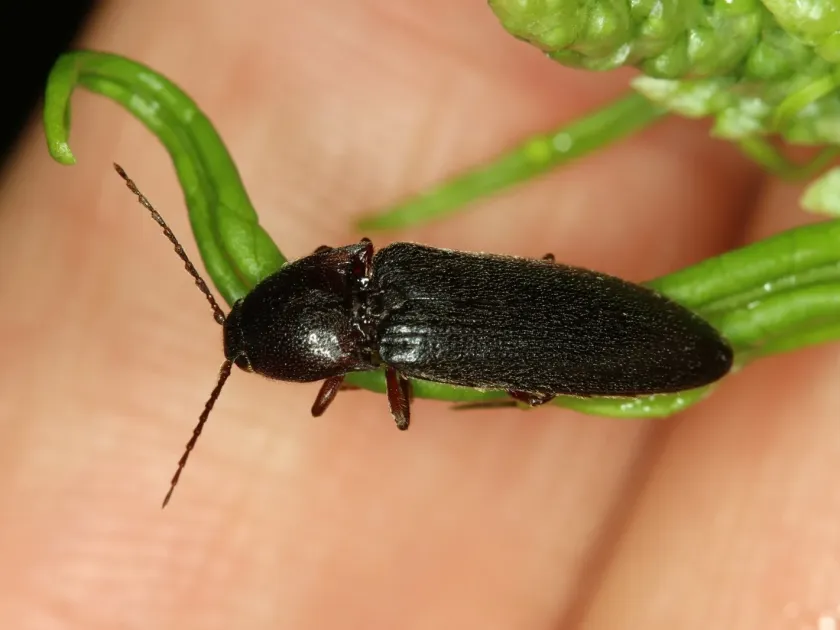
The click beetle, specifically Melanotus villosus, belongs to the Coleoptera order and the Elateridae family. Adult beetles are dark brown to black in color, with bodies densely covered in short, greyish hairs, giving them a matte appearance.
The adults measure approximately 12–15 mm in length. They possess a small head partially hidden by the pronotum and serrated antennae. When flipped on their backs, these beetles use a specialized mechanism to jump with a distinct clicking sound.
The larvae, known as wireworms, are characterized by a cylindrical, hardened, and highly chitinized body. Their coloration ranges from yellow to dark brown, and their smooth, glossy skin makes them resistant to environmental and physical stress.
The life cycle of this pest is extensive, typically lasting between 3 to 5 years. The vast majority of their life is spent in the larval stage, residing within the soil and feeding on the subterranean parts of various plant species.
Field identification involves soil sampling during early spring or autumn. By excavating soil samples at specific depths, agronomists can estimate the wireworm population density per square meter.
What it damages
The primary damage is caused by the larvae, which are omnivorous and attack the root systems of almost all field, garden, and vegetable crops. Cereal grains, corn, sunflowers, and potatoes are at the highest risk.
Wireworms feed on sown seeds, gnaw through underground stems, and destroy young root systems. This leads to sparse plant stands, reduced crop density, and significant overall yield losses for the farmer.
In potato cultivation, wireworms bore deep tunnels into the tubers. This not only degrades the market quality of the harvest but also creates entry points for secondary infections, including soft rots and fungal pathogens.
During years of high infestation, yield losses for row crops can exceed 30–50%, particularly in fields with poor crop rotation practices or high soil moisture levels.
Damaged plants exhibit stunted growth, yellowing, and wilting. In severe cases, total seedling collapse occurs, necessitating field reseeding or remedial management actions.
When it appears
Adult beetle flight generally begins in late spring, typically around May, and continues through July. During this time, they congregate in pastures, weedy fields, or growing crops to lay eggs.
Larval activity in the upper soil layers peaks in spring as temperatures rise above 10–12 degrees Celsius, and again in autumn as they prepare for winter. Summer drought forces them to migrate deeper into the soil.
The most critical period for crops is early spring, during germination and early seedling development, as larvae of all developmental stages aggressively feed on tender roots and emerging sprouts.
Autumn is another active feeding period as larvae accumulate energy reserves before wintering. They may cause significant damage to late-harvested root vegetables and potato tubers left in the field.
Vertical migration is a survival strategy; larvae move up and down the soil profile in response to moisture and temperature fluctuations, making them particularly elusive pests for control.
Signs of infestation
One of the earliest indicators of a wireworm problem is uneven plant emergence across the field, with patches of plants wilting or dying without any apparent surface-level disease symptoms.
Upon inspection of the root zone of affected plants, one will typically find severed or hollowed-out roots, often with the wireworm larva present in the immediate soil or the plant tissue itself.
Potato tubers and root vegetables often show distinct, narrow tunnels penetrating the flesh. These holes are frequently surrounded by localized rot caused by secondary pathogens.
Observing a high number of adult click beetles on the soil surface or surrounding vegetation in late spring provides a reliable warning of potential larval population growth for future seasons.
- Patchy or thin crop stands.
- Damaged or severed roots on young seedlings.
- Presence of boreholes and tunnels in potato tubers.
Control measures
Effective management begins with proper crop rotation. Avoiding the planting of cereals or corn immediately after perennial grasses, which serve as primary breeding grounds, is essential.
Cultural practices such as deep autumn tillage disrupt the soil, exposing larvae to surface predators, harsh weather conditions, and physical injury, which significantly reduces the surviving population.
Rigorous weed control, particularly of couch grass, is vital, as these weeds provide the necessary food and shelter for wireworms to thrive within the field environment.
The application of insecticidal seed treatments before planting is the most effective chemical method to protect young seedlings during the high-risk germination phase.
Liming acidic soils creates an environment less conducive to wireworm survival, as these pests prefer soils with moderate acidity and high moisture content for optimal development.
Taxonomy
- Latin name
- Melanotus villosus
- Order
- Coleoptera (beetles)
- Family
- Elateridae
- EPPO code
- MELNRF
Discussion
No discussions yet — be the first.