
Dark click beetle
Melanotus verberans
Description
How to identify
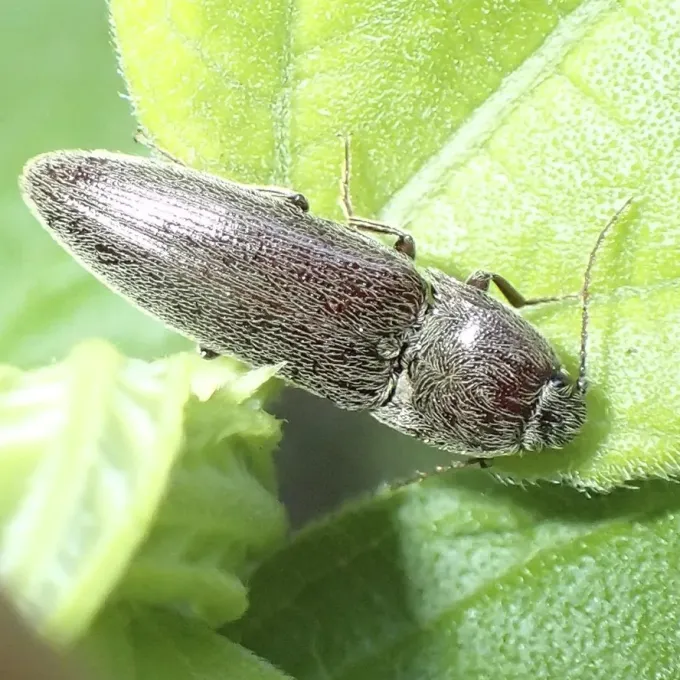
The dark click beetle (Melanotus verberans) is a member of the Elateridae family, commonly known for its unique body structure and biological characteristics. The adult beetle typically measures 12–18 mm in length and exhibits a dark brown or black coloration.
This species derives its name from the specialized mechanism in its thorax, which allows the insect to perform a sudden "clicking" motion, enabling it to flip itself over when placed on its back.
The larval stage, widely referred to as the wireworm, is a slender, cylindrical creature with a tough, shiny, and highly sclerotized cuticle that varies in color from yellow to dark brown.
The biological cycle of this pest involves complete metamorphosis, including egg, larval (which spans several years), pupal, and adult stages, making it a persistent resident in the soil.
The larval stage is the most significant in terms of damage, as these insects remain in the soil environment for extended periods, constantly seeking food sources such as roots and seeds.
What it damages
Wireworms are recognized as serious polyphagous pests that cause extensive damage to the root systems and subterranean parts of a wide array of agricultural and horticultural crops.
Target crops susceptible to infestation include maize, cereals, potatoes, sugar beets, and various vegetable species, where the pest attacks seeds and underground stems.
Damage often manifests as a reduced plant population, with wireworms consuming seeds before germination or boring into the stalks of young seedlings, leading to plant wilting and death.
Root and tuber crops are particularly vulnerable, as wireworms create deep tunnels in the flesh, which significantly lowers the market quality and shelf-life of the harvested produce.
High population densities can result in total crop failure on specific field patches, necessitating professional intervention to prevent economic losses.
When it appears
Adult beetles typically emerge from the soil in late spring and early summer, when environmental conditions, particularly temperature, become favorable for mating and oviposition.
Females deposit eggs in the soil, favoring areas with sufficient moisture and organic debris, which provide an ideal environment for the developing larvae.
The larval stage is notably long, typically lasting three to five years, during which the insects perform vertical and horizontal movements through the soil profile.
Peak feeding activity usually occurs during the spring and autumn months when soil moisture levels are optimal for the metabolic processes of the wireworms.
During the winter, larvae migrate to deeper layers of the soil, well below the freezing zone, ensuring their survival even in severe climatic conditions.
Signs of infestation
An early indication of wireworm presence is the appearance of thinned or patchy stands in the field, where seedlings suddenly wilt or turn yellow without apparent surface pathogen activity.
Inspection of the soil around the base of affected plants usually reveals the characteristic firm, wire-like larvae, confirming the cause of the damage.
For tuber crops, the primary sign of infestation is the presence of small, dark holes on the surface of tubers that penetrate deep into the interior, rendering them unsalable.
In cereal crops, the destruction of the underground tiller node by wireworms often causes the central leaf of the seedling to die back, a key symptom of early-stage infestation.
Field soil sampling prior to sowing is the most reliable method to detect the population density and decide if preventative treatment is required for the upcoming season.
Control measures
Integrated Pest Management (IPM) for the dark click beetle focuses on crop rotation, avoiding susceptible crops following grass leys which often harbor high wireworm populations.
Cultivation and tillage techniques, particularly deep plowing, are highly effective in physically disrupting the soil and exposing larvae to predators and environmental stress.
Managing soil acidity through liming can make the environment less hospitable for larvae, as they generally prefer acidic soils and struggle in neutral or alkaline conditions.
Chemical control via seed dressings or soil-applied granular insecticides provides a robust defense for crops during the vulnerable germination and early seedling stages.
- Use of certified insecticide-treated seeds.
- Effective weed management, especially targeting couch grass (Elymus repens).
- Maintenance of optimal soil moisture and structure through proper agronomic practices.
Taxonomy
- Latin name
- Melanotus verberans
- Order
- Coleoptera (beetles)
- Family
- Elateridae
- EPPO code
- MELNVE
Discussion
No discussions yet — be the first.