
Hairy click beetle
Melanotus pilosus
Description
How to identify
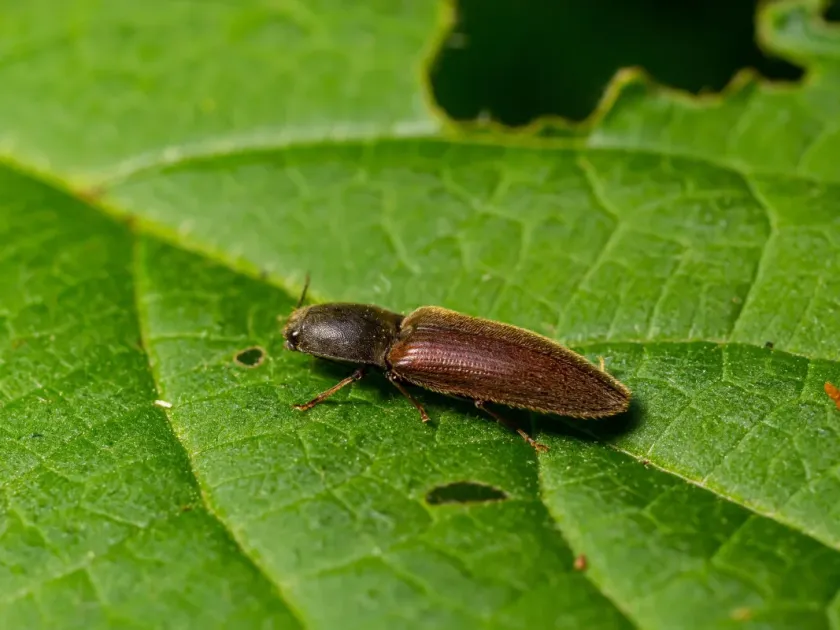
The hairy click beetle (Melanotus pilosus) belongs to the Elateridae family. Adult beetles have an elongated body, 12–18 mm long, covered with dense yellowish or grey hairs, which gives the species its common name.
Their coloration ranges from dark brown to almost black. A key diagnostic feature is the beetle's ability to perform a sudden "click" jump when placed on its back to return to its normal position.
The larvae, widely known as wireworms, possess a cylindrical, heavily chitinized body that is yellow-brown in color. Their dense exterior provides them with high resistance to soil-dwelling conditions.
Systematically, this species belongs to the genus Melanotus, which contains numerous destructive soil pests. Larval development occurs entirely within the soil, where they pass through several instars.
The life cycle of the hairy click beetle is quite long, typically spanning 3 to 5 years, depending heavily on the regional temperature and availability of food sources.
What it damages
The larvae (wireworms) cause the primary damage by living in the soil and feeding on the underground parts of various agricultural crops, especially affecting young seedlings.
Major crops damaged include cereals such as wheat, corn, barley, and rye. Wireworms consume seeds, sever sprouts, and damage the root systems of young plants.
Significant damage also occurs to row crops, including sunflowers, sugar beets, and potatoes. In potato tubers, the larvae create deep tunnels, ruining the quality and promoting rot.
The harmful impact of the hairy click beetle increases significantly with higher population densities, often leading to thin crop stands and requiring field reseeding.
Damage to the root system weakens the plants, stunts their growth, and increases their vulnerability to drought and secondary phytopathogenic infections.
When it appears
Adult beetle emergence typically begins in late spring or early summer when soil temperatures reach optimal levels for insect activity.
Females lay eggs in small clusters within the upper soil layer, preferring areas with high moisture levels or perennial grass fields where the soil is firm.
Larvae are active throughout the growing season, migrating within the soil profile depending on moisture and temperature levels. They move to deeper layers if the topsoil dries out.
Wireworm activity is highest in the spring (during germination) and autumn, when soil temperatures are moderate and humidity levels rise.
Both larvae of various ages and adult beetles overwinter by moving deep into the soil to protect themselves from sub-zero temperatures.
Signs of infestation
Key indicators of pest presence include mass thinning of crops and localized plant death throughout the field.
- Yellowing and wilting of young seedlings without visible damage to the above-ground parts.
- Deep holes or "tunnels" found in root crops and tubers during harvest.
- Discovery of tough, yellow-brown larvae during routine soil sampling.
- Obvious damage to young plant roots when specimens are dug up and inspected.
If more than 3–5 wireworms per square meter are detected during soil analysis, protective measures should be implemented before planting starts.
Control measures
Management of the hairy click beetle must be integrated, combining agrotechnical, chemical, and biological control strategies.
Crop rotation is a fundamental agrotechnical measure. Avoiding planting cereals after cereals and incorporating crops that wireworms avoid (e.g., mustard, legumes) helps reduce their population.
Deep tillage and meticulous weed control, particularly of couch grass, are effective practices, as the roots of these weeds provide essential food for larvae.
Chemical control involves treating seeds with insecticidal dressings containing neonicotinoids or diazinon before planting.
In cases of severe field infestation, applying granular insecticides directly into the soil during the planting process using specialized applicators is recommended.
Taxonomy
- Latin name
- Melanotus pilosus
- Order
- Coleoptera (beetles)
- Family
- Elateridae
- EPPO code
- MELNPI
Discussion
No discussions yet — be the first.