
Striped click beetle
Melanotus invectitius
Description
How to identify
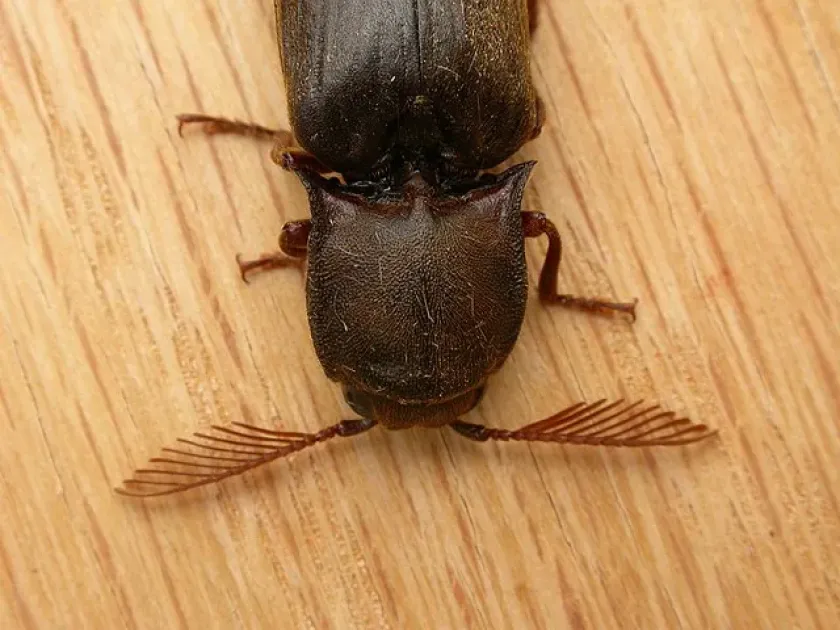
The striped click beetle Melanotus invectitius is a member of the Coleoptera order and the Elateridae family. Adult beetles measure between 14 to 19 mm and are characterized by a dark brown body with a metallic sheen.
The name comes from the beetle's unique mechanism: a thoracic spine that snaps into a groove, allowing the insect to launch itself into the air to escape predators or flip over if turned onto its back.
Their larvae, widely known as wireworms, are the primary life stage of concern. They possess a hard, cylindrical, golden-brown body with three pairs of small legs and a powerful head with biting mouthparts.
The life cycle of this beetle is complex and spans between three to five years, with the majority of the developmental stages occurring underground where the larvae feed on plant tissues.
Pupation takes place in earthen cells toward the end of summer. Both adults and larvae can overwinter in the soil, which helps the population withstand fluctuating environmental conditions.
What it damages
Wireworms are notorious polyphagous pests that attack a wide variety of crops, including corn, small grains, sunflowers, potatoes, and various vegetable species.
Damage occurs primarily during the germination phase, as larvae feed on seeds, destroying the germ and resulting in thin stands or complete crop failure in specific areas of the field.
Young seedlings are often killed when wireworms bore into the stems or prune the roots. This damage prevents the plant from accessing necessary nutrients and water, leading to stunting or death.
Root crops like potatoes and beets are frequently targeted, with larvae creating deep tunnels that compromise the structure of the vegetable, significantly reducing marketability and shelf life.
These feeding sites also serve as entry points for various soil-borne pathogens, including bacteria and fungi, which can cause secondary rot that spreads through the damaged root systems.
When it appears
Adult beetle activity begins in the spring when soil temperatures reach approximately 10–12 degrees Celsius. They are primarily nocturnal or crepuscular, hiding in soil debris or under organic cover during the day.
Females lay eggs in moist, loose soil, particularly where organic matter is abundant. High soil moisture is crucial for the survival of the eggs and early-stage larvae after hatching.
Throughout the growing season, wireworms perform vertical migrations within the soil profile. They move closer to the surface during temperate spring and autumn months to feed on emerging crops.
During the heat of mid-summer or cold winter months, larvae retreat to deeper soil layers to avoid desiccation or freezing, which makes them harder to reach with many agricultural treatments.
The most destructive activity occurs with mid-to-late stage larvae, as their increased size and appetite allow them to damage or destroy numerous plants in a very short period of time.
Signs of infestation
Field signs of infestation often include uneven germination and patches of wilted or stunted plants that are easily pulled from the ground because their roots have been severed.
Inspecting the base of affected plants often reveals chewed stems, gnawed roots, or small boreholes where the larvae have been feeding. In tubers, these holes are distinct and often penetrate deep into the flesh.
Monitoring populations can be done using bait traps: burying containers with germinating seeds or potato pieces about 15 cm deep in the soil and checking them after several days for wireworms.
A high count of larvae in these bait traps provides a clear indication of a significant population density that poses a risk to the upcoming crop and justifies protective measures.
Early-stage yellowing of crops, paired with the presence of larvae in the soil around the rhizosphere, is a definitive indicator of wireworm damage as opposed to nutrient deficiencies.
Control measures
Crop rotation is the most effective cultural practice for managing populations. Growing non-host crops like certain legumes or mustard can interrupt the life cycle and reduce wireworm numbers.
Strategic tillage, particularly deep autumn plowing, disrupts the larvae's habitat and exposes them to natural predators like birds and beneficial insects, reducing the overwintering survival rate.
Effective weed management, specifically the control of couch grass (Elymus repens), is essential, as these weeds provide a vital food source for wireworms between primary crop plantings.
Chemical control commonly involves the use of insecticidal seed treatments, which provide a protective coating for the seeds and allow for a healthy start during the critical germination phase.
For high-pressure fields, soil-applied granular insecticides are recommended at the time of planting to establish an effective chemical barrier in the root zone and protect the developing plants.
Taxonomy
- Latin name
- Melanotus invectitius
- Order
- Coleoptera (beetles)
- Family
- Elateridae
- EPPO code
- MELNIN
Discussion
No discussions yet — be the first.