
Melanotus communis
Melanotus communis
Description
How to identify
Adults of Melanotus communis, commonly known as click beetles, are characterized by their elongated, dark brown or black bodies. They possess a unique anatomical feature on their thorax that allows them to snap and flip into the air if placed on their backs, a behavior that gives them their common name.
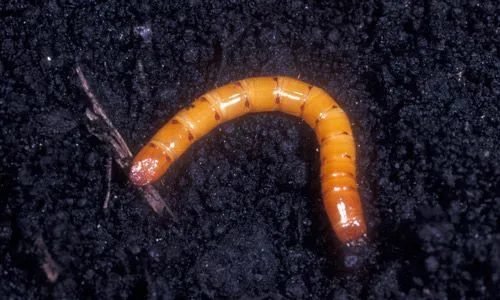
The larval stage, widely recognized as wireworms, has a cylindrical, hard-bodied appearance with a distinct shiny, yellowish-brown cuticle. Their tough exoskeleton is a key adaptation for moving through compacted soil.
This species belongs to the family Elateridae within the order Coleoptera. The development of these insects is quite complex, often spanning several years as larvae reside permanently beneath the soil surface.
Adult beetles are nocturnal, often hiding under debris or within the top layer of soil during the day. They rely on environmental cues to emerge in the spring for mating and egg-laying in suitable grassy or moist habitats.
Proper identification of the larvae requires examining the specific sclerotized plates on the segments and the morphology of the last abdominal segment to distinguish them from other soil-dwelling Coleoptera.
What it damages
Wireworms cause significant damage by feeding on seeds, roots, and underground stems of various agricultural crops. They bore into germinating seeds, destroying the embryo before emergence, which leads to poor stand establishment.
Young plants are particularly vulnerable, as the larvae chew through roots and the base of the stem, causing them to wilt suddenly and die. This damage pattern is often mistaken for nutrient deficiency or environmental stress.
Crops such as corn, small grains, potatoes, and sugar beets are primary targets for Melanotus communis. The larvae can persist in the soil for multiple years, maintaining a constant threat to successive plantings if not properly managed.
In root crops like potatoes, larvae create deep tunnels which not only reduce the aesthetic quality of the harvest but also serve as entry points for pathogens, leading to secondary rot and storage diseases.
Root system pruning by wireworms restricts the plant's ability to uptake water and nutrients, which significantly stunts growth and results in yield reductions, especially during periods of limited rainfall.
When it appears
Adult beetle emergence typically occurs in the late spring, coinciding with rising soil temperatures. This is the primary period for mating, and females search for sites with dense vegetation or moist soil to deposit their eggs.
Larvae are active throughout the entire growing season. Their movement within the soil profile is largely dictated by soil moisture and temperature, as they descend to deeper, more stable layers during extremely dry or cold conditions.
During early spring and late autumn, larvae are usually found closer to the surface, where they actively forage on the roots of developing seedlings or winter crops.
Pupation occurs in the summer within earthen cells constructed in the soil. After a brief pupal stage, the adults emerge and typically overwinter in the soil to repeat the cycle in the following season.
Monitoring for larval activity is most effective when soil conditions are moist, as this is when wireworms are most likely to be present in the upper rhizosphere where they can cause the most damage.
Signs of infestation
The most common indicator of wireworm infestation is a thinning stand, where patches of plants turn yellow and wilt unexpectedly. This often leads to sparse field sections that appear devoid of healthy plants.
Up-rooting affected plants reveals necrotic or chewed roots and stems, often with visible tunnels. The presence of hard, wire-like, yellow-brown larvae in the root zone is the definitive sign of a Melanotus communis infestation.
Growers often use bait stations, such as buried corn or potato halves, to trap larvae and assess the soil population density before planting, which helps in determining if chemical intervention is necessary.
The presence of adult click beetles in large numbers around field edges, especially those adjacent to pastures or long-term forage, serves as an early warning for potential infestation in the coming year.
Harvested root vegetables showing narrow, irregular tunneling or pitting are clear signs that wireworms were active in the field throughout the season.
Control measures
Integrated pest management (IPM) is essential for wireworm control. Crop rotation, particularly moving from small grains to legumes or non-host crops, can help disrupt the life cycle of the wireworm population.
Cultural practices, such as maintaining a weed-free field and ensuring proper soil drainage, reduce the attractiveness of the site for egg-laying females and discourage larval development.
Deep tillage can be an effective mechanical control method, as it exposes the larvae to desiccating conditions on the soil surface and increases their vulnerability to natural predators such as birds.
Chemical control often involves the use of insecticide seed treatments, which provide a protective barrier around the seed and root system during the highly susceptible germination phase.
For high-pressure situations, soil-applied granular insecticides used at the time of planting offer a more robust solution, ensuring that the larvae are killed upon contact before they can cause economic damage to the crop.
Taxonomy
- Latin name
- Melanotus communis
- Order
- Coleoptera (beetles)
- Family
- Elateridae
- EPPO code
- MELNCO
Discussion
No discussions yet — be the first.