
Click beetle
Melanotus caudex
Description
How to identify
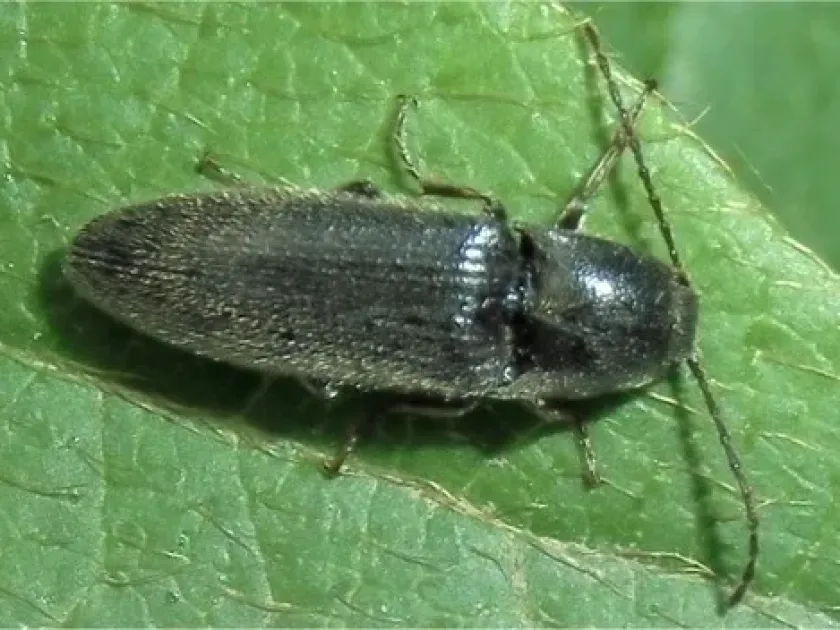
The click beetle (Melanotus caudex) belongs to the order Coleoptera and the Elateridae family. Adult beetles are characterized by their dark brown or black, elongated, armored bodies, typically measuring 15–20 mm in length.
The larvae, widely known as wireworms, are the primary concern for agronomists. They have a cylindrical shape, a rigid, highly sclerotized cuticle, and a distinctive yellowish-brown color, which makes them highly resilient in soil environments.
Adult beetles are named for their unique ability to flip themselves into the air with an audible clicking sound when placed on their backs. They are primarily nocturnal or cryptic, seeking shelter under debris or within the soil during the day.
The life cycle of the click beetle is extensive, spanning from 3 to 5 years depending on local climatic conditions. The majority of this time is spent in the larval stage, residing and feeding underground.
Females lay eggs in small clusters near the soil surface, preferring areas with dense vegetation or abundant organic matter. Optimal conditions for their development include moderate soil moisture and stable temperatures.
What it damages
It is the wireworms that cause significant agricultural damage by feeding on roots, seeds, and underground stems of various crops. They are polyphagous pests, posing a threat to cereals, corn, potatoes, and root vegetables alike.
Wireworms frequently destroy germinating seeds by boring into the endosperm, which prevents emergence. This results in patchy stands and necessitates costly reseeding of the affected agricultural areas.
Seedlings often succumb after larvae sever the stem below the soil line, causing sudden wilting and plant death. This destruction can quickly reduce the plant population density to levels that jeopardize total yield expectations.
For potato crops, wireworms create deep, winding tunnels that damage the aesthetic quality of tubers. Beyond surface damage, these tunnels facilitate secondary infections by pathogens, leading to further rotting and storage losses.
Extensive root grazing hinders nutrient uptake, resulting in stunted, yellowing crops that struggle to mature. High larval densities can lead to total crop failure, particularly in regions prone to long-standing grass-to-crop transitions.
Signs of infestation
The most common sign of a click beetle infestation is the appearance of irregular, thin spots in fields. Affected plants will show signs of stress, such as yellowing or wilting, despite adequate moisture levels.
When pulling an affected seedling, one may find the roots missing or stem tissue chewed just below the surface. In potatoes, harvest time reveals deep, cylindrical boreholes created by the larvae during their growth phase.
Zonal patches of poor plant performance are common, especially in areas previously used for permanent pasture or leys. Finding the larvae near the roots of a dying plant confirms the presence of the infestation.
Farmers can monitor the population using soil baits, such as potato chunks buried in the soil a few days before sowing. Checking these traps allows for an estimation of wireworm density to inform chemical application decisions.
Early-season scouting is crucial; look for plants that easily pull out of the ground due to severed roots. Monitoring helps to prevent the expansion of infestation zones throughout the cropping season.
Control measures
Effective management begins with sound agronomical practices, such as deep fall plowing. This mechanical disruption exposes larvae and pupae to predators and harsh weather conditions, significantly reducing their survival rate.
Crop rotation is essential for controlling wireworm populations. Avoiding cereals following perennial grasses significantly reduces the available food source and reproductive habitat for the beetles.
Liming acidic soils helps deter wireworm activity, as these pests prefer soils with lower pH levels. Incorporating physiologically alkaline fertilizers into the soil management plan can create a less hospitable environment for the larvae.
Consistent weed control, particularly of couch grass and other perennials, is vital. Weeds provide the shelter and food source necessary for adult click beetles to lay their eggs and thrive.
Chemical control measures include the use of systemic insecticidal seed treatments to protect young plants during emergence. For high-risk crops like potatoes, applying soil-applied granular insecticides during planting can provide season-long protection.
Taxonomy
- Latin name
- Melanotus caudex
- Order
- Coleoptera (beetles)
- Family
- Elateridae
- EPPO code
- MELNCA
Discussion
No discussions yet — be the first.