
Brown-legged click beetle
Melanotus brunnipes
Description
How to identify
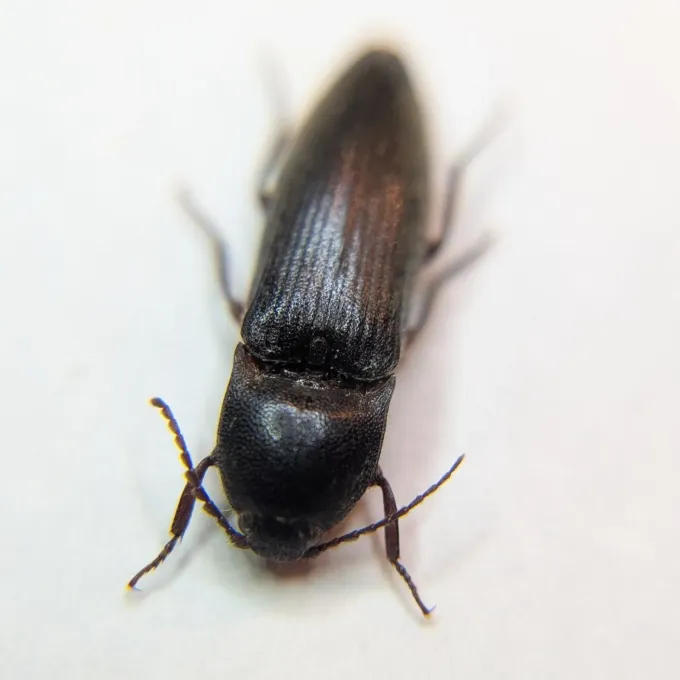
The brown-legged click beetle (Melanotus brunnipes) belongs to the order Coleoptera and the family Elateridae. The adult beetle typically measures 12–18 mm and is characterized by a dark brown or blackish color.
The larvae of this species, commonly known as wireworms, possess a hard, cylindrical body with a yellowish-brown, chitinized exoskeleton. Their head is dark and equipped with strong mandibles for feeding.
Adult beetles are named for their unique ability to perform a snapping maneuver. If placed on their back, they use a special thoracic hinge to flip themselves into the air with an audible click.
Their life cycle is complex and long-lasting, with larvae spending several years in the soil. During this stage, they are highly mobile and move vertically through the soil profile.
The larvae are particularly resilient to adverse conditions, which makes them one of the most difficult soil-dwelling pests to manage in modern agriculture.
What it damages
Melanotus brunnipes is a polyphagous pest, meaning it attacks a wide variety of crops including cereals, maize, sunflower, and various root vegetables.
The larvae feed primarily on germinating seeds, often hollowing them out completely, which prevents germination and leads to significant gaps in plant stands.
They also cause severe damage to the underground stems of young seedlings, often causing the plants to wilt, turn yellow, and die shortly after emergence.
Root system damage is a critical issue as it reduces the plant's ability to absorb nutrients and water, making it prone to lodging and drought stress.
In mature plants, wireworm feeding creates wounds that serve as entry points for soil-borne pathogens, leading to secondary fungal or bacterial infections.
When it appears
Adult beetles are typically active during late spring and early summer. This is when they mate and lay eggs in moist, vegetated soil.
Larval activity is highest in the upper soil layers during spring and autumn when moisture levels are optimal for their movement and feeding.
During the peak of summer, if the soil surface becomes excessively dry and hot, the larvae migrate deeper into the ground to find cooler and more humid conditions.
As soil temperatures drop in the autumn, larvae return to the upper layers to feed before going into a state of dormancy during the winter months.
Monitoring the pest is crucial during the early sowing season, as the vulnerability of the crop is at its peak when the seeds are beginning to germinate.
Signs of infestation
Thin and uneven plant stands in newly sown fields are a primary indicator of wireworm infestation, often manifesting as localized patches of missing plants.
Sudden wilting of seedlings in the field, even when moisture levels are adequate, often points to the destruction of the roots or the crown by larvae.
Excavating the soil around the base of a damaged plant usually reveals wireworms, as they remain in the root zone to feed until the food source is exhausted.
Visible feeding holes or tunnels on the stems near the soil line are common symptoms observed in crops like maize and sunflowers.
High weed density in the field, especially perennial grasses, often correlates with higher wireworm populations, as these weeds provide stable food sources.
Control measures
Good agronomic practices, such as deep autumn ploughing, expose larvae to harsh weather and avian predators, significantly reducing their population density.
Crop rotation is essential; alternating susceptible crops with non-host plants or cover crops can disrupt the lifecycle and reduce food supply for the larvae.
Seed treatments with systemic insecticides are the most common and effective preventive measure to protect crops from early-stage wireworm damage.
In high-pressure situations, soil-applied granular insecticides during sowing can provide a localized zone of protection for the developing seed and root system.
- Maintain clean fields by managing grasses and perennial weeds effectively.
- Apply lime to acidic soils to make the environment less favorable for larvae.
- Use pheromone traps for adult beetle monitoring to time intervention strategies.
Taxonomy
- Latin name
- Melanotus brunnipes
- Order
- Coleoptera (beetles)
- Family
- Elateridae
- EPPO code
- MELNBR
Discussion
No discussions yet — be the first.