
Click beetle
Ludius
Description
How to identify
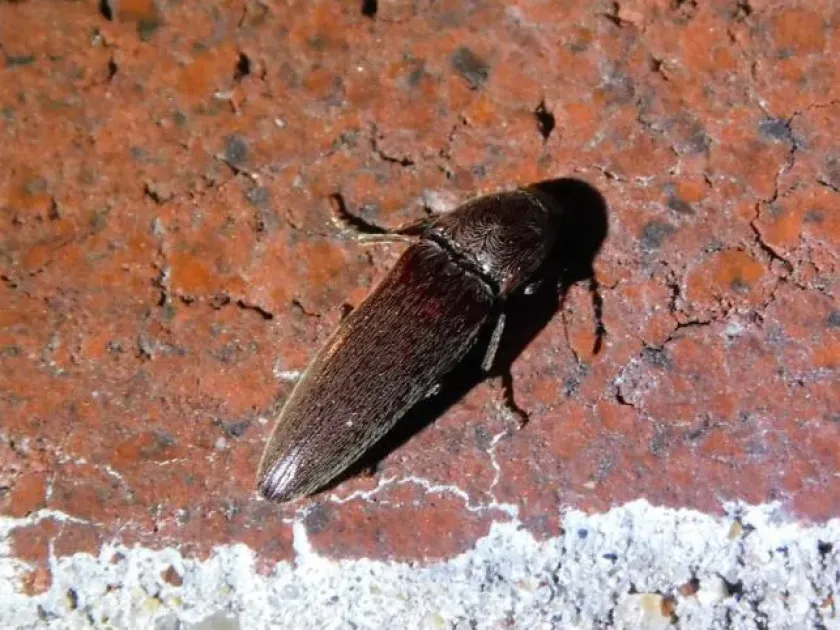
Adult click beetles (Elateridae) are characterized by an elongated body, typically dark brown or black in color, ranging from 5 to 20 mm in length. They are famous for their ability to snap their bodies to flip over when placed on their backs.
The larvae, widely known as wireworms, are the primary agricultural pest in this family. They have a tough, cylindrical, and glossy appearance, resembling a piece of wire, which is where their common name originates.
Systematically, they belong to the order Coleoptera and the family Elateridae. This diverse family comprises numerous species globally, several of which are significant pests that inhabit the soil for most of their life cycle.
The life cycle of the click beetle is notably long, typically lasting between 3 to 5 years depending on the species and environmental conditions. This extended developmental period makes population management challenging.
While the adult beetles primarily feed on decaying vegetation or nectar and are largely harmless to crops, their reproduction behavior ensures that the soil remains infested with the highly destructive larval stage.
What it damages
Wireworms are polyphagous pests that cause extensive damage to a wide range of crops, including potatoes, sugar beets, corn, wheat, and various vegetable species. They target the underground portions of plants.
The primary damage occurs when larvae tunnel into tubers, roots, and bulbs. This boring activity not only reduces the weight and market value of the crop but also creates entry points for fungal and bacterial infections.
In young crops, wireworms often sever the roots or tunnel into the base of the stems, causing seedlings to wilt and die rapidly. This can lead to significant thinning of stands and poor yields in field crops.
In nurseries and orchards, wireworms can damage the roots of young saplings, weakening the trees and leaving them susceptible to environmental stresses and secondary pathogens throughout their growth.
Infestations are particularly severe in fields with high weed pressure, especially fields previously occupied by couch grass (Elymus repens), which provides a stable food source and ideal shelter for the wireworm population.
When it appears
Adult click beetles become active in early spring when soil temperatures reach 8-10 degrees Celsius. They emerge from their overwintering sites to mate and lay eggs in the surface layers of the soil.
The eggs are laid in moist, organic-rich soil, often near weeds or newly sprouted crops. Upon hatching, the larvae immediately begin feeding on root systems, establishing their presence in the field.
During the warmer months, wireworms exhibit vertical migration in response to soil moisture levels. In dry periods, they move deeper into the soil profile, whereas they return to the root zone when moisture levels are optimal.
Pupation typically occurs in the late summer or early autumn within soil chambers. The adults then develop and remain in the soil throughout the winter until the next spring, when the cycle begins anew.
The period of highest larval activity and damage coincides with the spring germination and active growth phase of crops, when root systems are tender and highly attractive to the feeding wireworms.
Signs of infestation
The most common sign of a wireworm infestation is the sudden wilting or yellowing of individual plants in a field, which is often misidentified as drought stress or root rot.
- Deep, clean-cut tunnels found in potatoes, carrots, and other root vegetables at harvest time.
- Visible thinning of plant stands in corn or cereals during the seedling emergence stage.
- The presence of hard, yellowish-brown, wire-like larvae when digging into the soil during field preparation.
- Small, ragged entry holes at the base of stems near the soil surface.
- Increased incidence of storage rots in crops that were damaged by wireworms during the growth phase.
Control measures
Integrated pest management is the most effective approach. Crop rotation is a fundamental technique; incorporating legumes like peas, beans, or clover, as well as mustard, can disrupt the life cycle of the wireworm.
Aggressive weed control is essential, as many wireworm species rely on perennial grasses for early larval survival. Deep autumn plowing exposes larvae to the surface, where they succumb to freezing temperatures and predation by birds.
Adjusting soil acidity through liming is a valuable practice, as wireworms prefer acidic conditions. Creating a more neutral or slightly alkaline soil environment can significantly discourage them from staying in the field.
Small-scale growers can use bait traps, such as burying small pieces of potatoes or carrots 5-10 cm deep. These are collected and destroyed periodically to remove the attracted larvae from the immediate vicinity.
For large-scale agricultural production, the use of soil-applied insecticides or treated seeds is often necessary to protect against stand loss. These methods provide a critical barrier during the vulnerable early stages of crop development.
Taxonomy
- Latin name
- Ludius
- Order
- Coleoptera (beetles)
- Family
- Elateridae
- EPPO code
- LUDISP
Discussion
No discussions yet — be the first.