
Eastern field wireworm
Limonius agonus
Description
How to identify
The Eastern field wireworm, scientifically known as Limonius agonus, belongs to the family Elateridae (click beetles) and the order Coleoptera. Adult beetles are characterized by a streamlined shape and typically measure 8–10 mm in length.
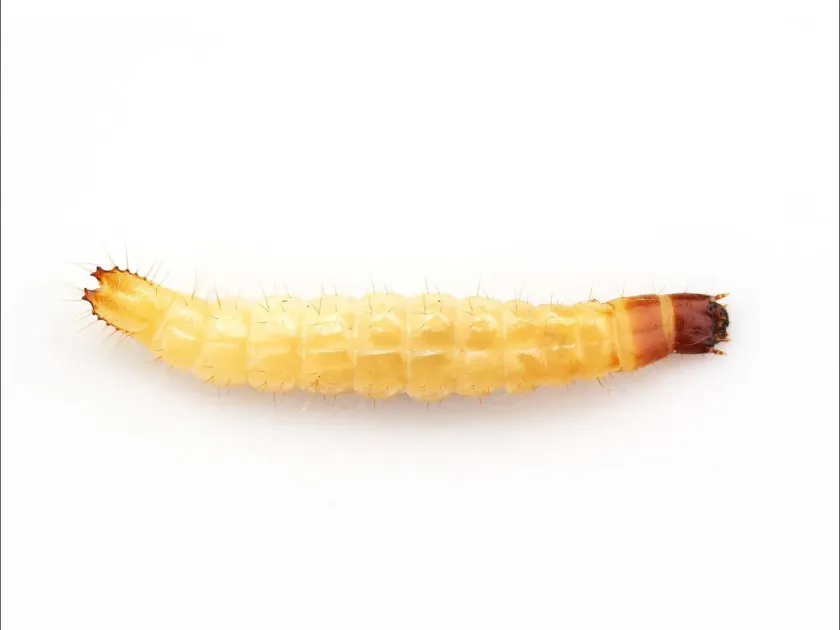
The damaging stage of this pest is the larva, commonly referred to as a wireworm. It has a tough, cylindrical, yellowish-brown body that is well-adapted for burrowing through soil.
The beetle derives its name from the audible clicking sound it produces when jumping to right itself after being turned on its back. This mechanism is unique and serves as an important diagnostic feature for identification.
Wireworms of this species have a long development cycle, often spending several years in the larval stage. During this time, they are highly mobile within the soil profile.
Entomologists distinguish this species from others by observing specific sclerotized plates on the abdominal segments of the larvae, which are visible under a microscope.
What it damages
Limonius agonus larvae are polyphagous pests that feed on a wide array of crops, including potatoes, carrots, corn, and various small grains.
They cause severe damage by feeding on roots, tubers, and seeds. In young crops, they can tunnel into the stems, leading to the death of the plant and sparse crop stands.
In mature tubers like potatoes, wireworms create deep, narrow tunnels. These entry points not only reduce the aesthetic value but also facilitate the entry of secondary pathogens like soft rot bacteria.
Seed damage is particularly prevalent in corn and wheat. Wireworms consume the germ and endosperm of the seed, preventing germination entirely and necessitating costly reseeding.
Economic losses are significantly higher in fields with high larval density, where the entire harvest may become unmarketable due to excessive mechanical injury.
When it appears
The life cycle of the Eastern field wireworm spans multiple years, with larvae residing in the soil throughout their growth stages before pupating into adults.
Adult beetles typically emerge in late spring or early summer, depending on soil temperature. After mating, females lay eggs near the base of grasses or crop plants.
Larval activity is closely linked to soil moisture and temperature. They are most active near the soil surface during the spring when the soil is warm and moist enough for movement.
During hot, dry summer months or winter frosts, wireworms migrate vertically to deeper soil layers to avoid desiccation or freezing temperatures.
Since the life cycle is long, populations can build up over several years if host plants are consistently available in the same field.
Signs of infestation
The primary visual indicator of a wireworm infestation is the presence of wilted or stunted seedlings in an otherwise healthy field row.
Root inspection often reveals severed lateral roots or larvae feeding directly inside the taproots of affected crops, confirming the pest's presence.
If potatoes or other root vegetables are harvested with small, deep holes or jagged tunnels, it is a clear sign that the soil is infested with wireworms.
Using bait traps, such as buried oats or corn kernels, can confirm the presence of Limonius agonus larvae before the planting season begins.
A history of grassy weed infestation, particularly quackgrass, often indicates that a field is prone to high populations of this specific wireworm species.
Control measures
Cultural control practices, such as frequent tillage, are essential. Tillage disrupts the soil, bringing larvae to the surface where they die from sun exposure or predation by birds.
Maintaining a crop rotation that excludes highly susceptible crops for several years can significantly reduce the larval population in the soil.
Chemical control includes the application of soil insecticides at planting or the use of seed treatments designed to protect the germinating seed from initial damage.
Soil pH management is also vital; wireworms generally prefer acidic soils, so liming fields can make the environment less favorable for their survival.
- Implement crop rotation.
- Use insecticide seed treatments.
- Ensure proper tillage practices.
- Monitor with bait stations.
- Adjust soil pH levels.
Taxonomy
- Latin name
- Limonius agonus
- Order
- Coleoptera (beetles)
- Family
- Elateridae
- EPPO code
- LIMOAG
Discussion
No discussions yet — be the first.