
Limonius click beetle
Limonius
Description
How to identify
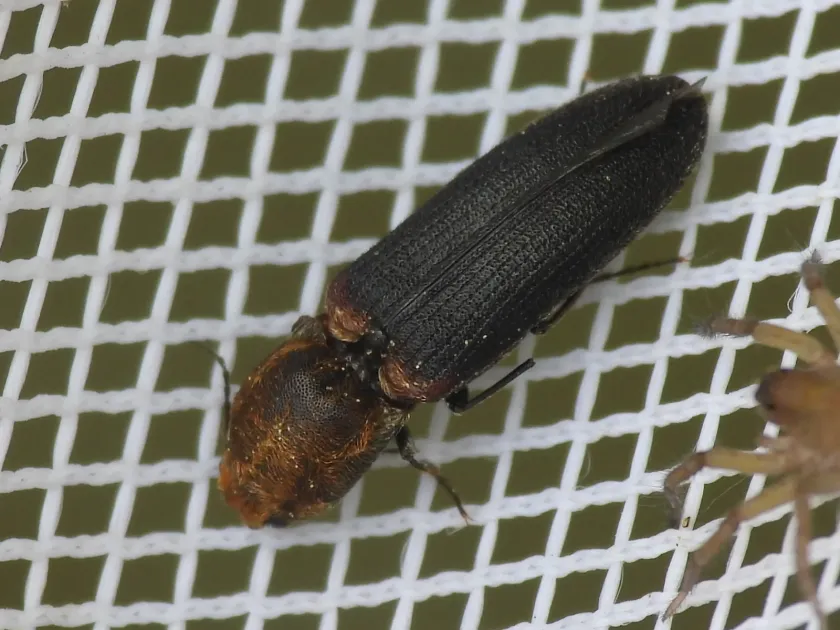
The adult Limonius click beetle features an elongated, flattened body, typically measuring between 7 to 15 mm in length with a dark brown or black coloration.
They are named for their unique thoracic hinge mechanism, which allows them to snap their bodies and launch themselves into the air when placed on their backs.
The larval stage, commonly known as wireworms, is the most destructive. They possess a long, cylindrical body protected by a hard, sclerotized cuticle.
The head of the larva is equipped with strong, dark mandibles designed for chewing through tough plant roots and tuber tissues effectively.
Pupation typically occurs in earthen cells deep within the soil profile, where the insect remains until it emerges as an adult beetle.
What it damages
Wireworms (larvae of Limonius) are notorious soil-dwelling pests that feed on the roots, seeds, and underground stems of various crops.
Root vegetables like potatoes, carrots, and beets suffer significantly, as wireworms bore into the flesh, creating deep channels that often lead to secondary rot infections.
Cereal crops and corn are highly vulnerable at the germination stage; the larvae destroy the seeds and sever the roots, leading to massive stand loss.
Vegetable seedlings, such as tomatoes and cabbage, are frequently killed outright due to the larvae feeding on the stem bases just below the soil surface.
Because these pests spend their entire life cycle in the soil, they can cause chronic damage year after year if left unmanaged.
When it appears
Adult beetles typically emerge in mid-spring, coinciding with the warming of the soil, usually reaching peak activity when temperatures exceed 10-12 degrees Celsius.
Females prefer to lay eggs in moist, undisturbed soil, particularly in fields with thick grassy vegetation or permanent pastures.
Larval activity is high during the spring and early summer months, as they feed aggressively on the young, developing root systems of crops.
As the soil temperature drops in late autumn, wireworms migrate deeper into the ground to survive the winter, returning to the root zone again the following spring.
The complete generation cycle can span several years, meaning that the population density remains a persistent threat for multiple growing seasons.
Signs of infestation
Sudden wilting and yellowing of crop plants without obvious signs of surface diseases is a primary indicator of wireworm presence in the root zone.
Finding small, round, perfectly bored holes in harvested potatoes or carrots confirms that the plants were attacked by wireworms during the growth phase.
Empty seed kernels or destroyed germination points in corn and cereals are tell-tale signs of wireworm feeding in the early planting stage.
Detection of the characteristic hard, yellow-to-brown larvae during manual soil digging is the most definitive way to verify infestation.
- Wilting of seedlings in patches.
- Deep bored holes in tubers.
- Tattered or missing root systems.
- Stunted plant growth.
- Presence of larvae in disturbed soil.
Control measures
Cultural control is essential: deep autumn plowing brings larvae to the surface, exposing them to predators and freezing temperatures, which drastically reduces their numbers.
Crop rotation plays a critical role, as planting non-host crops like mustard or buckwheat can help suppress wireworm populations naturally.
Maintaining proper soil pH through liming can make the environment less hospitable for wireworms, as they typically thrive in more acidic soil conditions.
Chemical intervention involves applying specialized soil-active insecticides during planting, which creates a protective zone around the seeds or tubers.
For organic management, using bait traps (such as potato pieces buried in the ground) allows farmers to attract and destroy larvae before they damage the main crop.
Taxonomy
- Latin name
- Limonius
- Order
- Coleoptera (beetles)
- Family
- Elateridae
- EPPO code
- LIMOSP
Discussion
No discussions yet — be the first.