
Lacon rectangularis
Lacon rectangularis
Description
How to identify
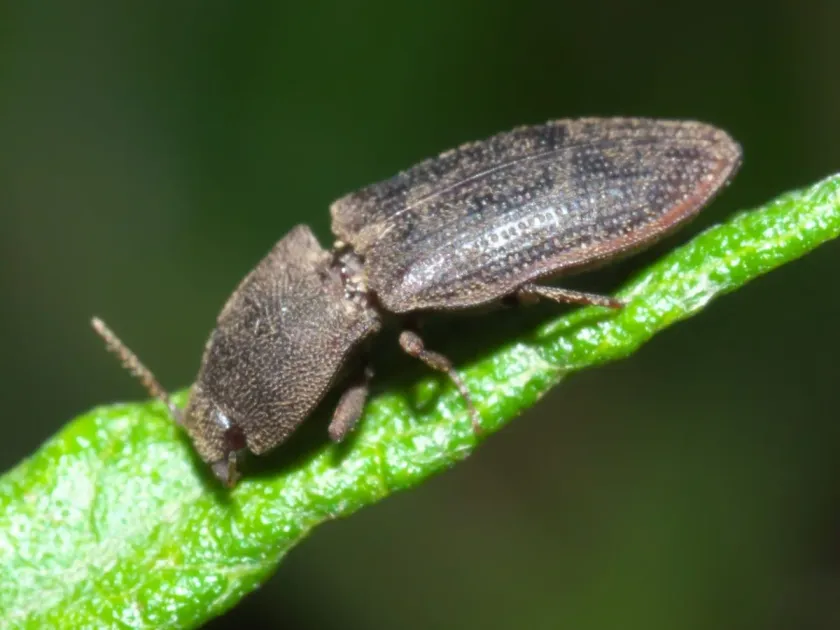
Lacon rectangularis belongs to the Elateridae family, known as click beetles. The adult beetle is characterized by its elongated body, typically measuring 10–12 mm, with a dark brown or blackish matte color.
A distinctive feature of this species is the dense coating of short, greyish or yellowish hairs on the elytra. The pronotum is broad with sharp posterior angles, giving the beetle its characteristic rectangular appearance.
The larvae, commonly known as wireworms, possess a hard, cylindrical body with a rigid chitinous exoskeleton. They range in color from light yellow to dark brown, which helps them blend into the soil.
Click beetles are named for their unique ability to launch themselves into the air with an audible "click" if they are placed on their backs, a behavior used to right themselves.
The lifecycle is long and primarily subterranean. Larvae develop through several instars over multiple years before reaching the adult stage, making them persistent pests in affected soils.
What it damages
The primary damage is caused by the larvae, which live in the soil and feed on the roots, seeds, and underground stems of various agricultural and horticultural crops.
Major crops affected include cereals such as wheat and corn, as well as root vegetables like potatoes, carrots, and beets. Larvae bore into the tubers and roots, causing significant cosmetic and structural damage.
Feeding damage often leads to stunted growth, yellowing of leaves, and frequently the death of seedlings, resulting in uneven and sparse crop stands in the field.
Because the larvae are polyphagous, they do not discriminate between crops and weeds, allowing them to maintain high population levels in fallow or poorly managed agricultural land.
Damaged root crops become unmarketable due to the tunnels created by the wireworms, which also act as entry points for pathogens and rot, further reducing storage life.
When it appears
Adult beetles typically emerge in the spring, usually around May, when soil temperatures reach favorable levels for mating and oviposition in the upper soil layers.
Larvae remain active throughout the growing season, but their vertical migration within the soil profile is heavily influenced by soil moisture and temperature fluctuations.
During the spring and autumn months, when soil moisture is optimal in the upper layers, wireworms migrate towards the surface to feed intensively on young, developing plant roots.
Larvae overwinter in deeper soil layers, often below the frost line, to survive winter conditions. As soon as the soil warms up in the spring, they return to the active root zone.
The lifecycle spans three to five years, meaning that without active intervention, populations can persist for several seasons, causing recurring damage to various crop rotations.
Signs of infestation
A primary indicator of infestation is the sudden wilting and yellowing of young plants. When pulled, these plants often come up easily because the roots have been severed.
Upon harvesting root vegetables like potatoes, characteristic circular entry holes are visible on the surface, which lead into deep tunnels within the flesh of the produce.
During soil cultivation, one may encounter the larvae themselves. They are identifiable by their hard, wire-like bodies that are difficult to crush and show strong defensive movements.
Fields infested with weeds like couch grass (Elymus repens) often harbor high populations of wireworms, as these weeds provide a consistent food source for the larvae.
Patchy growth and low seedling density in the early stages of a crop are strong visual indicators that wireworms are attacking the subterranean parts of the young plants.
Control measures
Effective agrotechnical control involves deep fall plowing, which exposes larvae to surface conditions, birds, and predators, significantly reducing their numbers in the topsoil.
Managing soil pH through liming is highly effective, as wireworms prefer acidic soils. Correcting soil acidity makes the environment less hospitable for the larvae.
- Implementing crop rotations that include resistant species like mustard or legumes.
- Using bait traps made of potato or carrot pieces buried in the soil to attract and destroy larvae.
- Maintaining clean fields by removing weeds that serve as alternative hosts.
Chemical control often involves the use of soil-applied granular insecticides at the time of planting to create a protective barrier around the seeds and young root systems.
Seed treatments using professional-grade systemic pesticides are also commonly used to protect the germinating seed and early seedling stages from wireworm attacks.
Taxonomy
- Latin name
- Lacon rectangularis
- Order
- Coleoptera (beetles)
- Family
- Elateridae
- EPPO code
- LACORE
Discussion
No discussions yet — be the first.