
Lateral click beetle
Lacon lateralis
Description
How to identify
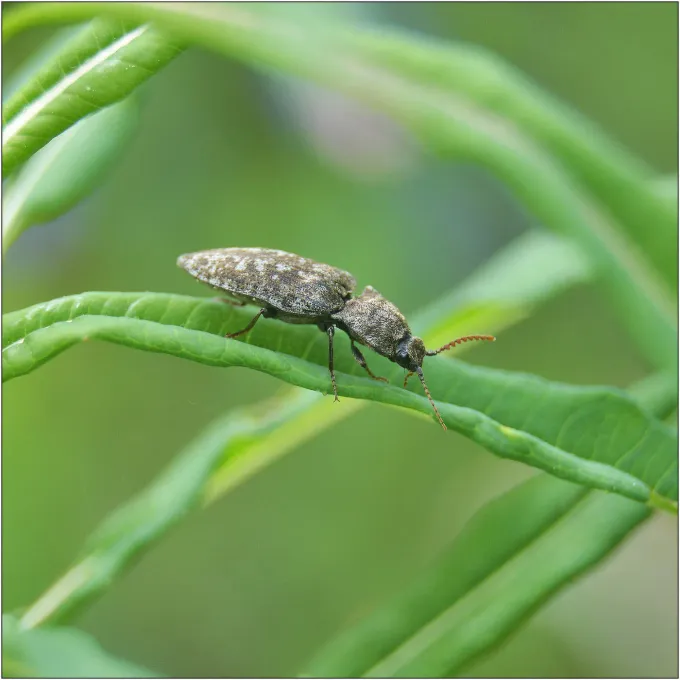
Lacon lateralis belongs to the family Elateridae, commonly known as click beetles, within the order Coleoptera. Adult beetles are typically 10–15 mm long with an elongated, brownish body and distinct light-colored pubescence along the margins of the pronotum.
The larval stage, widely recognized as a wireworm, is characterized by a cylindrical, rigid body with a tough, chitinized exoskeleton. The color of the larvae ranges from yellow to dark brown, providing camouflage within the soil environment.
The larval head is equipped with strong, biting mouthparts designed for feeding on various plant tissues, including hardy roots and seeds. Identification of the species is often confirmed by examining the structure of the last abdominal segment under a microscope.
The life cycle of the insect is a complete metamorphosis, consisting of egg, larva, pupa, and adult stages. Depending on environmental conditions and food availability, the complete life cycle can span anywhere from three to five years.
Adult beetles are largely nocturnal, remaining hidden during the daylight hours under bark, debris, or within the surface layers of the soil to avoid predation and extreme temperatures.
What it damages
Wireworms of this species are polyphagous pests, capable of damaging the underground portions of a wide variety of agricultural crops. The primary damage is inflicted during the early vegetative stages when roots and seedlings are most tender.
Cereal crops like wheat and barley are particularly vulnerable. Larvae consume the seed embryo prior to germination, leading to significant stand thinning and the potential for complete failure of the sown area.
Row crops such as maize, sunflower, and sugar beet are prone to damage where larvae tunnel into the root crown or stem base, causing stunted growth, wilting, and eventually the death of young plants.
Root crops like potatoes often suffer from larval boring, where wireworms drill deep tunnels into the tubers. This damage not only reduces marketability but also provides entry points for secondary infections like rots and molds.
The economic impact of high wireworm populations often necessitates replanting or supplementary nutrient management to help surviving plants overcome the root damage and sustain development.
When it appears
Overwintering typically occurs as larvae or adults deep in the soil, often below the frost line, to ensure survival. As soil temperatures increase in the spring, the insects migrate toward the surface to resume activity.
Mass emergence of adult beetles usually occurs in late spring to early summer. During this timeframe, mating occurs, and females deposit eggs into moist, organic-rich soil, ensuring favorable conditions for the next generation.
Larval feeding is most intense during spring and autumn when soil moisture levels are conducive to their movement. During hot, dry summer periods, larvae retreat deeper into the soil profile to prevent desiccation.
Pupation takes place mid-summer in earthen cells formed within the soil. This stage is relatively brief, lasting about two to three weeks, followed by the emergence of new adults that remain in the soil until the next spring.
Agronomic monitoring of population density should be conducted via soil sampling in early spring or late summer to inform decision-making regarding seed treatments or soil applications.
Signs of infestation
The most prominent sign of a wireworm infestation is the appearance of thin, yellowing patches in the field where seedlings fail to thrive. Uprooting these plants often reveals damaged or completely severed roots.
Finding irregular tunnels or boring marks in potatoes or root vegetables is a direct indicator of wireworm feeding activity. Soil excavations around these damaged plants will typically uncover the characteristic hard-bodied larvae.
Irregular gaps in crop rows that do not correlate with surface moisture or sowing depth issues often suggest high pressure from subterranean pests like Lacon lateralis.
Adults are attracted to light, and their presence in light traps at night can serve as an early warning for producers that a significant population of the beetle is active in the vicinity.
Overall plant weakness and stunted growth, despite adequate fertilization and water, are frequent indirect signs that the root system has been compromised by the larvae’s prolonged feeding.
Control measures
Effective cultural control relies on deep plowing with moldboard inversion. This practice physically disrupts the larval habitat and exposes the pests to predators and unfavorable environmental conditions at the soil surface.
Crop rotation is crucial; avoiding high-risk sequences such as cereal crops after long-term pasture or grassy weed infestations helps significantly in suppressing population build-up.
Chemical control focuses on seed treatment with systemic insecticides, providing a protective zone around the young plant during the most critical early growth stages.
In cases of severe infestation, the application of granulated insecticides at the time of sowing offers a more robust protection for the root zone, effectively deterring the larvae from attacking the crop.
Biological controls, including the use of entomopathogenic fungi or nematodes, can assist in lowering population levels. Furthermore, adjusting soil pH through liming can create an environment less favorable for wireworm development.
Taxonomy
- Latin name
- Lacon lateralis
- Order
- Coleoptera (beetles)
- Family
- Elateridae
- EPPO code
- LACOLA
Discussion
No discussions yet — be the first.