
Brown click beetle
Lacon fuliginosus
Description
How to identify
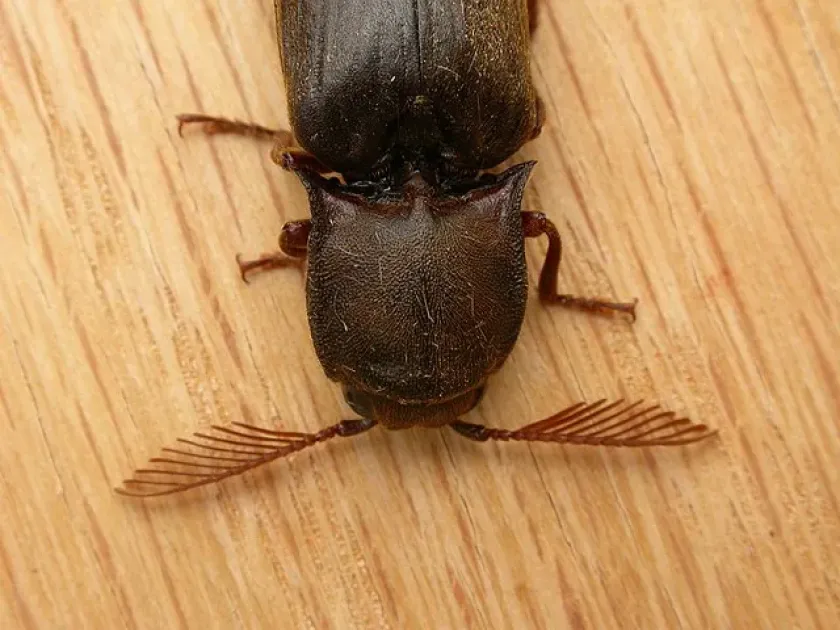
The brown click beetle (Lacon fuliginosus) is a coleopteran insect belonging to the family Elateridae. Adults typically measure 10-15 mm in length and are characterized by a dark brown or black body covered in dense, fine hair.
The beetle derives its common name from its unique ability to snap its body and produce a clicking sound when it needs to flip itself upright after being placed on its back. This mechanism is a distinct morphological and behavioral feature of this family.
Its larvae, known as wireworms, are easily recognizable by their hard, cylindrical, and highly sclerotized bodies. They possess a yellowish-brown color and are extremely resilient to environmental stressors, which contributes to their survival in various soil conditions.
The life cycle of the brown click beetle is complex and can span several years, during which the larvae remain in the soil. This extended duration makes the wireworm stage the most damaging period for agricultural systems.
Adult beetles are generally nocturnal or cryptic, living under bark, within organic debris, or in the upper soil horizons. They emerge during the growing season to mate and lay eggs in the soil, initiating the cycle of infestation.
What it damages
Wireworms are polyphagous soil pests that cause significant damage by feeding on seeds, roots, and underground stems of various crops. They are particularly notorious for their ability to destroy young seedlings and tubers.
Potatoes are among the most affected crops, as wireworms bore deep tunnels into the tubers. This damage not only reduces the weight and marketability of the crop but also provides entry points for various soil-borne pathogens and decay-causing bacteria.
Cereal crops often suffer from wireworm feeding during the early stages of establishment. By chewing through the roots and the base of the stem, the larvae cause wilting and mortality in young plants, leading to gaps in the stand.
In sugar beets and carrots, wireworm damage manifests as deep surface wounds and tunnels in the taproot. This significantly degrades the crop's quality, making it unsuitable for storage and processing as the wounds often develop rot.
In nurseries and tree plantations, wireworms damage the root systems of young saplings, slowing their growth and sometimes causing total plant death. This creates economic losses that can affect the long-term productivity of the planting site.
When it appears
Adult brown click beetles emerge in late spring as the soil warms up. This is when the majority of mating activity occurs, and females begin the process of depositing eggs into moist, vegetation-rich soil.
Larval activity in the root zone is usually highest in spring and early summer when moisture levels are sufficient for their movement. As the soil surface dries out in the heat of summer, wireworms tend to migrate deeper into the ground.
The pests often return to the upper soil layers during the autumn months when moisture increases. During this time, they continue to feed before preparing for the overwintering phase, which occurs deep in the soil profile.
The life cycle of the click beetle is highly synchronized with soil temperature and moisture. Even during winter, the larvae remain active in deeper, unfrozen layers of the soil, ensuring the population survives until the next growing season.
Because the larvae are long-lived and different age groups may inhabit the same area, wireworm pressure can be persistent over several years unless effective management strategies are consistently applied.
Signs of infestation
The most common indicator of wireworm presence is the sudden wilting of individual plants in the field. Careful excavation of the soil around the affected plant base often reveals the presence of the hard-bodied larvae.
Potato fields show clear signs of infestation through the presence of small, round, and deep entry holes on the skin of the tubers. When these tubers are sliced, the internal galleries caused by wireworm feeding become visible.
Sparse crop stands or irregular patches of dying seedlings in cereals are tell-tale signs of soil pest issues. When such areas appear shortly after emergence, it is highly likely that wireworms have attacked the root systems.
Using bait traps, such as burying pieces of potatoes or germinated seeds, is a standard diagnostic practice. Checking these traps after a few days allows for an accurate assessment of wireworm density within the top 15 cm of soil.
Secondary infections of rot around the feeding sites on roots and tubers are often the first visible symptom noticed by growers during harvest, confirming that the crop was under attack throughout the growing season.
Control measures
Deep autumn cultivation is a critical cultural control practice. It exposes larvae and pupae to extreme temperature fluctuations and natural predators like birds, significantly reducing the population density for the next year.
Managing weeds, particularly couch grass (Elymus repens), is essential. This weed is a preferred food source for wireworms, and eliminating it reduces the suitability of the field for larval survival and egg-laying.
Chemical control involving soil-applied insecticides at planting is often necessary in highly infested areas. These treatments provide a protective barrier around the seeds and roots, preventing wireworm feeding during the vulnerable early growth stages.
Adjusting soil pH through liming can make the environment less favorable for the pests, as they thrive in slightly acidic soil conditions. This also promotes better root development for the main crop.
- Rotate crops to disrupt the life cycle of the beetle.
- Use insecticide-treated seeds for better seedling protection.
- Increase planting density to mitigate losses from potential seedling death.
Taxonomy
- Latin name
- Lacon fuliginosus
- Order
- Coleoptera (beetles)
- Family
- Elateridae
- EPPO code
- LACOFU
Discussion
No discussions yet — be the first.