
Lacon binodulus
Lacon binodulus
Description
How to identify
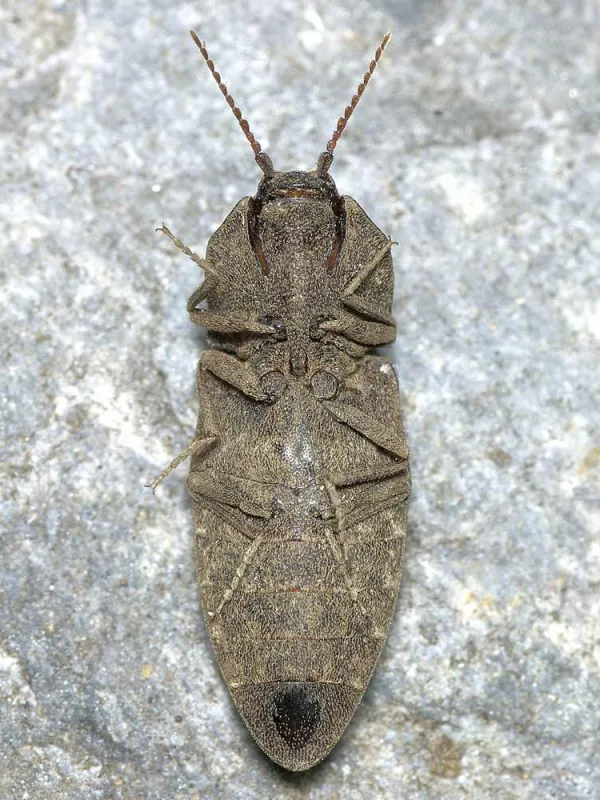
Lacon binodulus is a species of click beetle belonging to the family Elateridae. The adult beetle is characterized by its elongated body, typically measuring between 15 and 20 mm, covered with fine, dense setae giving it a matte appearance.
The species is named for the two distinct light-colored spots (tubercles) located on its pronotum. The beetle's color typically ranges from brownish to dark brown, allowing it to blend effectively into leaf litter and soil surfaces.
The larvae, commonly known as wireworms, possess a hard, cylindrical, and well-sclerotized body. Their yellow-brown color and rigid texture are key diagnostic features, allowing them to navigate through compacted soil layers with ease.
The life cycle of this beetle is complex and multi-year, with the larvae spending several years living in the soil. They are highly responsive to environmental changes, migrating vertically to adjust to temperature and moisture levels.
Adults and larvae both overwinter in the soil. In spring, they migrate towards the upper soil horizon as temperatures rise, preparing for the feeding period on germinating seeds and young root systems.
What it damages
The larvae of Lacon binodulus are highly polyphagous, causing significant damage to the roots, tubers, and seeds of various agronomic crops, including corn, cereals, potatoes, and various root vegetables.
By consuming seeds and young roots, wireworms cause severe stand reduction. This leads to gaps in fields, poor plant establishment, and, in cases of high population density, total loss of the crop.
When feeding on tubers and bulbs, the larvae bore deep holes into the tissue. This damage significantly reduces the market value of the produce and invites secondary bacterial and fungal infections.
Plants affected by wireworms are significantly weakened, showing stunted growth and reduced resistance to environmental stress factors, such as drought or nutrient deficiency.
High infestation levels are often observed in fields where sod or perennial grasses were recently plowed under, as these environments provide ideal conditions for larval development.
Control measures
Cultural control is the cornerstone of managing Lacon binodulus. Intensive soil cultivation, especially deep autumn plowing, exposes larvae to desiccation and natural predators, significantly reducing their population.
Crop rotation is an essential strategy. Including non-host crops in the rotation cycle helps break the pest's life cycle and prevents the buildup of large, stable populations in the soil.
Seed treatment with systemic insecticides is a standard and highly effective practice. Protecting seeds and young seedlings during their most vulnerable stage ensures a better crop stand even in moderately infested fields.
Soil pH management is also vital. Since these wireworms often thrive in acidic soils, applying lime to reach an optimal neutral pH can create an environment that is less favorable for their survival and development.
- Regular weeding to reduce alternative food sources for larvae.
- Application of granular insecticides during planting if thresholds are met.
- Monitoring adult beetle populations using pheromone traps.
- Maintaining proper drainage to prevent excessive soil moisture.
Taxonomy
- Latin name
- Lacon binodulus
- Order
- Coleoptera (beetles)
- Family
- Elateridae
- EPPO code
- LACOBI
Discussion
No discussions yet — be the first.