
Sand wireworm
Horistonotus uhlerii
Description
How to identify
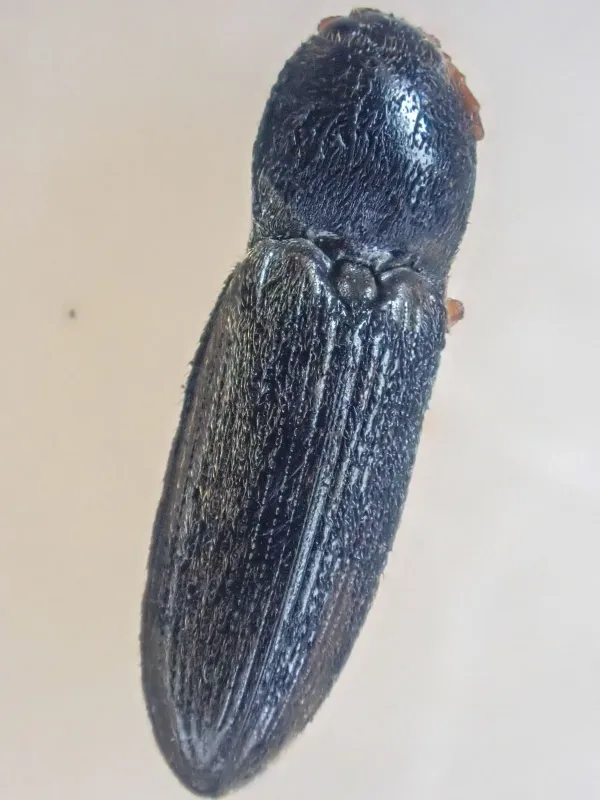
The sand wireworm (Horistonotus uhlerii) is a member of the Elateridae family. Adult beetles are small, typically ranging from 6 to 8 mm in length, with a light brown or yellowish coloration that blends with sandy soil environments.
The larval stage, known as the wireworm, is the primary destructive form. These larvae have a slender, cylindrical body with a hard, shiny exoskeleton, giving them a distinct wire-like appearance.
Adult beetles are named for their unique ability to flip themselves into the air with an audible clicking sound when placed on their backs. This mechanism is primarily a defensive behavior to escape potential threats.
Identification often involves digging in the soil around dying plants to locate the larvae. Because they prefer sandy and well-aerated soils, their distribution is often localized to specific field patches.
Proper identification is crucial for effective management, as different wireworm species may require slightly different timing for monitoring and treatment strategies.
What it damages
Sand wireworm larvae cause significant damage by feeding on the subterranean parts of crops. They often consume seeds before germination or gnaw on the roots and underground stems of seedlings.
Commonly affected crops include corn, soybeans, peanuts, and various vegetable species. The pest is particularly aggressive in light, sandy soil types, where the larvae move easily between plant roots.
Seedlings attacked by wireworms typically wilt and die within a few days, leading to noticeable gaps in crop stands. This uneven emergence often requires replanting, which increases production costs.
Even if the plant survives the initial attack, the wounds created by the larvae provide entry points for soil-borne pathogens, potentially leading to root rot or other infections.
During the growing season, a high population of larvae can decimate a field, leading to significant economic losses for farmers if prophylactic measures are not taken.
When it appears
The lifecycle of the sand wireworm is heavily influenced by soil temperature and moisture levels. They typically complete their development within a year in warmer climates.
Adult beetles emerge in late spring to begin mating. After mating, females lay eggs deep in the soil, which hatch into larvae that immediately start searching for food sources.
Larval activity is highest during the early spring when the soil starts to warm up, coinciding with the germination phase of most row crops. This period is the most critical for crop protection.
As soil temperatures rise and surface moisture drops during mid-summer, larvae tend to migrate deeper into the soil profile, away from the drying topsoil layer.
Monitoring should be conducted prior to planting, as historical data on previous infestations can help predict the risk levels for the upcoming season.
Signs of infestation
The first visual sign of a sand wireworm infestation is the appearance of stunted or wilting plants in isolated patches across the field. These areas often expand if the population density is high.
When carefully uprooting a dying plant, one might observe missing roots or specific feeding tunnels bored into the stems just below the soil surface.
Using bait traps, such as burying moistened cereal seeds in the ground, can confirm the presence of larvae before planting commences.
Reduced plant vigor without any evidence of leaf diseases or insects usually points to an underground issue, specifically root-feeding pests like wireworms.
- Sudden wilting of seedling foliage.
- Missing plants or gaps in rows.
- Feeding holes or severed roots near the soil line.
- Larvae presence found through soil sampling and sifting.
Control measures
Integrated Pest Management (IPM) is essential for controlling the sand wireworm. Cultural practices, such as thorough plowing and cultivation, can disrupt larval habitats and reduce their numbers.
Crop rotation is a recommended strategy to break the life cycle of the pest, making it more difficult for larvae to find suitable host plants for several consecutive seasons.
Seed treatments using systemic insecticides provide a crucial layer of protection for young seedlings, ensuring they survive the critical early development phase.
In cases of severe infestation, applying soil-applied granular insecticides at the time of planting creates a protective zone that minimizes damage to the root system.
Effective weed management is also necessary, as many weeds act as secondary hosts that keep the wireworm population stable even when the primary crop is absent.
Taxonomy
- Latin name
- Horistonotus uhlerii
- Order
- Coleoptera (beetles)
- Family
- Elateridae
- EPPO code
- HORIUH
Discussion
No discussions yet — be the first.