
Horistonotus
Horistonotus
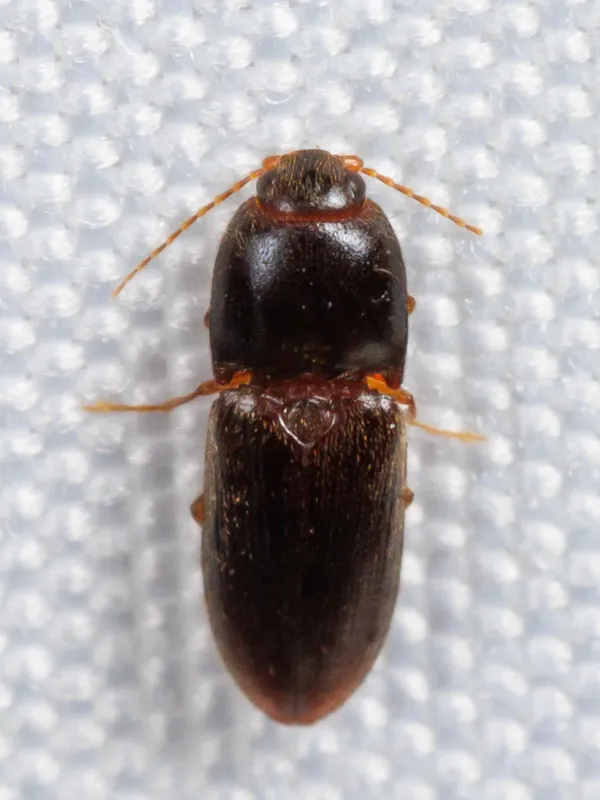
Description
How to identify
Horistonotus is a genus belonging to the click beetle family (Elateridae) within the order Coleoptera. These insects are recognized as significant soil-dwelling pests that pose a threat to various agricultural crops worldwide.
Adult beetles are generally small, brownish or grayish in color, and possess the well-known ability to leap with a distinct "clicking" sound when placed on their backs.
The larvae, often referred to in a group context with other click beetle larvae as wireworms, have elongated, cylindrical, and hardened bodies with a yellowish-brown coloration that protects them in the soil.
Identifying these pests can be difficult due to their subterranean lifestyle, as they remain deep in the soil profile for most of their life cycle, only moving to the root zone when food is abundant.
Agronomists typically use soil sampling and pre-plant bait stations to monitor populations and determine the necessity of intervention before planting crops in infested areas.
What it damages
Horistonotus is known to damage a diverse range of crops, including corn, soybeans, peanuts, and various cereal grains, making it a serious concern for modern farming systems.
The larvae are the primary damaging stage, as they feed on the root systems of young plants, consuming underground stems and roots during the early developmental stages.
Once the root system is damaged, the plants lose their ability to uptake water and essential nutrients, which inevitably results in rapid wilting and subsequent plant death.
This pest is most dangerous during the germination and seedling phases; even minor feeding damage to the growing point can result in total stand loss.
Heavy infestations can lead to significant economic losses, often forcing farmers to perform re-seeding or implement aggressive control measures to salvage the remaining crop.
When it appears
The activity of Horistonotus is largely dictated by soil temperature and moisture levels, which influence when larvae move from deeper layers to the root-feeding zone.
Larvae typically overwinter deep in the soil and migrate toward the surface in the spring as the soil warms up, matching their activity with the emergence of susceptible crops.
Adult beetle flight generally occurs in late spring or early summer, which often coincides with the critical early growth stages of the major host crops.
The period of greatest damage is usually observed during May and June, when the larvae are actively feeding on the expanding root systems of young seedlings.
During the hotter and drier months of late summer, the larvae tend to retreat back into deeper soil horizons to avoid moisture stress, reducing their immediate impact on the crop.
Signs of infestation
One of the earliest signs of a Horistonotus infestation is the appearance of patches of dying or wilted seedlings, which often occurs suddenly within the field.
Closer inspection of damaged plants reveals clear evidence of feeding, such as bored holes at the base of the stem or entirely pruned root systems that prevent normal plant stability.
Fields infested with this pest often exhibit irregular stands, which may be mistaken for poor seed quality or germination issues if the underlying pest pressure is not investigated.
Evidence of larval tunnels in the soil or the presence of beetles near light sources or on the soil surface at night serves as a strong indicator of the pest's presence.
It is crucial to examine the field borders and low-lying areas where moisture is retained, as these environments are often favored by the larvae for their developmental needs.
Control measures
Managing Horistonotus requires an integrated approach that combines cultural practices, preventative seed treatments, and judicious use of chemical insecticides.
The most effective strategy currently involves the use of systemic insecticide seed treatments, which provide a protective zone around the seed and seedling against early-season soil pests.
Implementing a diverse crop rotation is a key cultural practice that disrupts the pest's life cycle and reduces the likelihood of high populations building up in a specific field.
Deep fall tillage can help expose larvae to the surface, where they become susceptible to natural predators, birds, and harsh winter temperatures that reduce their survival rate.
- Application of soil-applied granular insecticides during the planting process.
- Aggressive weed control to eliminate alternative food sources for the larvae.
- Maintaining soil health and proper fertilization to encourage rapid crop establishment.
Taxonomy
- Latin name
- Horistonotus
- Order
- Coleoptera (beetles)
- Family
- Elateridae
- EPPO code
- HORISP
Discussion
No discussions yet — be the first.