
Hemicrepidius sinuatus
Hemicrepidius sinuatus
Description
How to identify
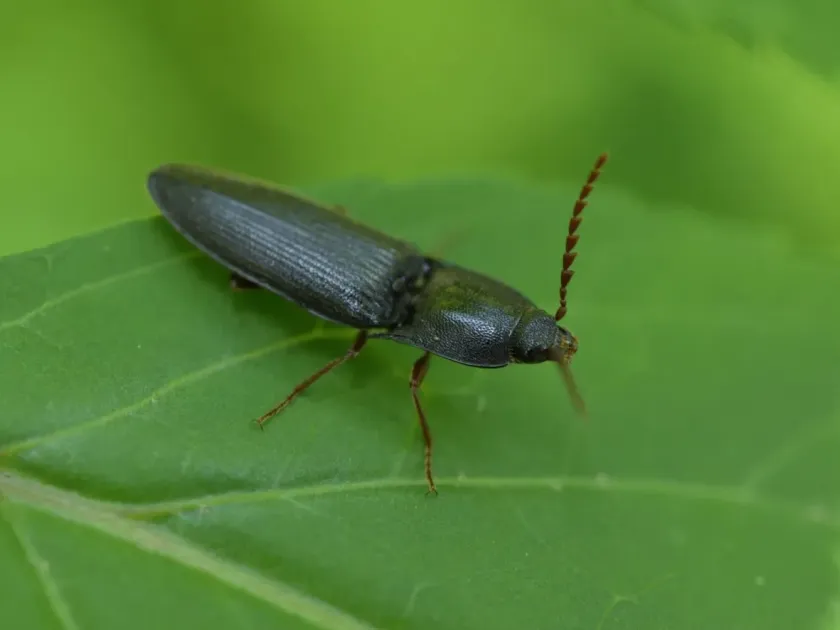
The adult click beetle Hemicrepidius sinuatus is an elongated insect, typically measuring 9 to 12 mm in length, with a dark brown or blackish matte appearance.
The body is covered with fine hairs, and the pronotum features a distinct sinuate notch at the base, which serves as a key identifying diagnostic character.
The larvae, commonly known as wireworms, are characterized by a rigid, cylindrical, yellowish-brown body that can grow up to 20 mm long.
Equipped with a powerful chewing mouthpart, these larvae are highly efficient at boring into the subterranean tissues of various cultivated plants.
The species undergoes complete metamorphosis, passing through egg, larval, pupal, and adult stages, with the larval phase posing the primary agricultural threat.
What it damages
The damage is caused primarily by the wireworms that inhabit the soil, feeding on the underground structures of plants throughout their development.
Hemicrepidius sinuatus acts as a polyphagous pest, attacking a wide range of crops including cereals, corn, sunflower, and various vegetable species.
By consuming seeds, sprouts, and young roots, the larvae cause significant reduction in plant density and can lead to total crop failure in infested patches.
The feeding activity is particularly detrimental during the germination and seedling emergence stages, as the roots lack the capacity to recover from damage.
In addition to direct plant loss, the larval wounds create entry points for soil-borne pathogens, potentially leading to secondary infections and rot.
When it appears
Adult beetles typically emerge in late spring, with peak activity for mating and egg-laying occurring during the first half of the summer season.
Females prefer to lay eggs in moist soil environments, often selecting areas with abundant vegetation or heavy weed cover, such as couch grass.
Larval activity in the upper soil layers is highest during the spring and autumn when temperature and moisture levels are favorable for their development.
Both larvae and adults overwinter deep in the soil profile, often reaching depths of 30 to 50 cm to avoid lethal freezing temperatures.
Due to the long developmental cycle, populations in the soil often comprise larvae of different ages, which creates a continuous threat across several seasons.
Signs of infestation
A classic sign of wireworm infestation is the presence of localized wilting and death of plants within an otherwise healthy-looking crop stand.
Root system examination usually reveals characteristic clean-cut holes, tunneling, or deep grooves caused by the larvae's biting mouthparts.
In newly sown fields, low germination rates and thin stands often indicate that seeds have been destroyed by wireworms before emergence.
Fields with a high density of couch grass (Elymus repens) are at higher risk, as this weed serves as a primary host and shelter for the larvae.
- Sudden wilting of seedlings without apparent surface damage.
- Presence of circular holes in roots and stems.
- Recovery of wireworm larvae during soil sampling or field inspection.
Control measures
Successful management relies on an integrated approach, combining sound agronomic practices with targeted chemical interventions where necessary.
Deep fall tillage is a critical practice, as it exposes larvae to the surface, where they become vulnerable to avian predators and climatic extremes.
Implementing a diverse crop rotation is highly effective, as it prevents the buildup of larval populations by disrupting the stability of their environment.
Seed treatment using systemic insecticides is the most effective proactive measure to protect seeds and seedlings from early-season larval damage.
Maintaining clean fields by eliminating weeds, particularly perennial grasses, significantly reduces the attractiveness of the soil for adult beetle egg-laying.
Taxonomy
- Latin name
- Hemicrepidius sinuatus
- Order
- Coleoptera (beetles)
- Family
- Elateridae
- EPPO code
- ATHOSI
Discussion
No discussions yet — be the first.