
Hemicrepidius hirtus
Hemicrepidius
Description
How to identify
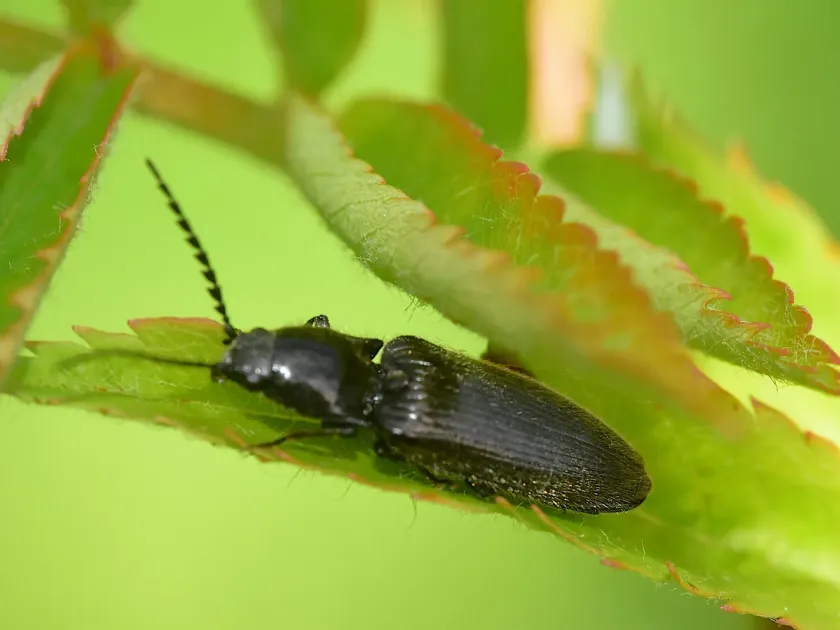
Hemicrepidius hirtus belongs to the order Coleoptera and the family Elateridae, commonly known as click beetles. Adults typically range from 10 to 14 mm in length, featuring a dark brown or black elongated body covered in fine hairs.
The larvae, widely known as wireworms, possess a hard, cylindrical, and shiny chitinous exoskeleton. Their color ranges from yellowish-brown to dark brown, and they have strong mouthparts suited for soil dwelling.
The common name "click beetle" refers to the insect's ability to snap its thoracic hinge when flipped onto its back, creating a clicking sound and a sudden spring-like movement to flip over.
The life cycle of this species is complex and usually lasts between 3 to 5 years. Most of this time is spent in the larval stage underground, where they develop and grow through several instars.
Pupation occurs in a small soil chamber during the summer. Once the transformation is complete, the new adult usually stays within the soil until the following spring.
What it damages
Wireworms are polyphagous pests that cause severe damage to grain crops like wheat, barley, and corn. They also frequently attack root vegetables such as potatoes, carrots, and sugar beets.
Larvae primarily feed on seeds in the soil, preventing germination. As the plants develop, they gnaw at the stems and root systems, leading to stunted growth or total plant mortality.
In mature plants, damage to the roots reduces the uptake of water and essential nutrients, causing the plant to turn yellow, wilt, and become susceptible to secondary infections.
Significant infestations often result in irregular gaps in crop stands, forcing farmers to perform costly reseeding or leading to a substantial decrease in yield quality and volume.
Potatoes are particularly prone to aesthetic and functional damage, as wireworms create deep tunnels in the tubers, which significantly reduces their marketability and shelf life.
When it appears
Adults emerge from their overwintering sites in early spring as soil temperatures rise. Their peak activity period usually occurs during May and June when mating takes place.
Females lay eggs in the soil, favoring damp environments and areas with dense vegetation, which provide cover and moisture for the developing eggs.
Larvae are most active near the soil surface during the cooler, moister periods of spring and autumn. This is when they cause the most damage to root systems.
During the dry, hot summer months, wireworms migrate deeper into the soil profile to find cooler and more humid conditions, effectively escaping surface-applied controls.
Winter is spent in deep soil layers, where both adults and larvae hibernate, ensuring survival through harsh weather conditions until the next growing season.
Signs of infestation
The most visible sign of infestation is the sudden appearance of wilting or dead plants in a field, which leaves noticeable patches of missing or stunted growth.
Upon physical inspection of the root zone, one may observe severed roots or deep feeding grooves on the subterranean parts of the stems and tubers.
In infested potato fields, small, circular entry holes in the skin of the tubers provide clear evidence of wireworm presence and feeding activity.
Increased density of weeds like couch grass (Elymus repens) within the crop field often indicates an environment highly attractive to adult click beetles for egg-laying.
Soil monitoring using bait traps—such as buried grains or potato segments placed 5–10 cm deep—is an effective way to assess the population density of larvae in a field.
Control measures
Deep autumn tillage is a crucial cultural control method. It brings the larvae to the surface, exposing them to desiccation and natural predators like birds and beneficial insects.
Effective crop rotation is essential. Avoid planting highly susceptible crops after meadows or long-term pastures, which are known to harbor large populations of wireworms.
Maintaining proper field sanitation and controlling grassy weeds reduces the habitat suitable for both egg-laying females and developing larvae.
Seed treatment with systemic insecticides is the most effective chemical measure for protecting young plants during the vulnerable germination phase.
- Liming acidic soils, as wireworms generally prefer low pH environments.
- Applying specific fertilizers that have a deterrent effect on soil larvae.
- Using trap crops to lure wireworms away from the main production area before planting.
Taxonomy
- Latin name
- Hemicrepidius
- Order
- Coleoptera (beetles)
- Family
- Elateridae
- EPPO code
- PSATSP
Discussion
No discussions yet — be the first.