
Gambrinus confusus
Gambrinus confusus
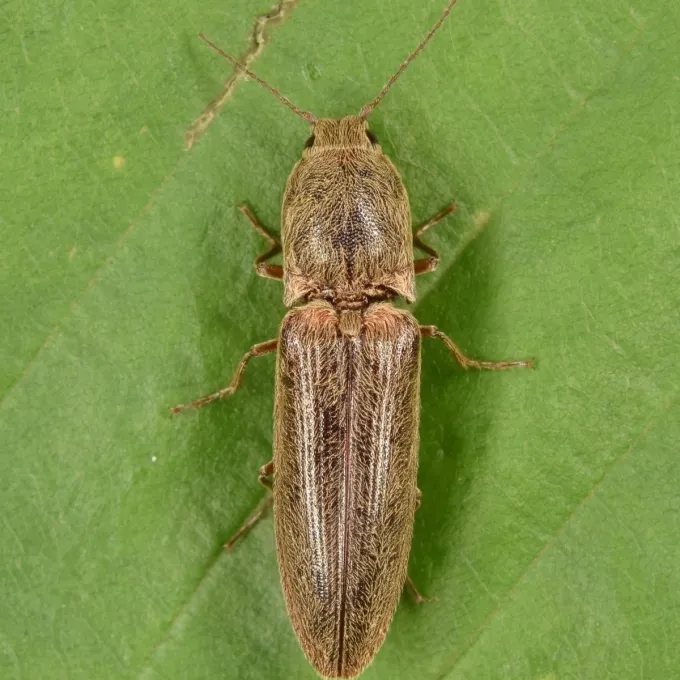
Description
How to identify
Gambrinus confusus belongs to a systematic group of insects, acting as a specialized pest that often remains undetected until significant infestation spots appear. Adult specimens possess specific morphology characteristic of this family, allowing for accurate identification only through microscopic analysis.
The biology of this species is closely linked to specific climatic conditions that provide optimal humidity levels for larval development. The insect's life cycle involves several stages of metamorphosis, each with distinct requirements for food sources and microclimate.
In the natural environment, Gambrinus confusus often inhabits the root zone or the underside of leaves, making them elusive to visual inspection without specialized field monitoring methods. Active movement of individuals is primarily observed during twilight hours.
For population monitoring, the use of pheromone traps or sticky plates is recommended to assess pest density per hectare. The high degree of specialization of this organism requires the agronomist to have a clear understanding of its development phenology.
Given the pest's classification, regular crop inspection during active vegetation periods is necessary, as the population is capable of rapid reproduction under favorable temperature conditions.
What it damages
Gambrinus confusus primarily causes damage by feeding on the tissues of various agricultural crops, including cereals and forage grasses. The insect can affect both the above-ground part of the plant and the root system, depending on its life cycle phase.
During its life activity, the pest damages the epidermis and vascular bundles, leading to a disruption of normal metabolic processes within the affected plant. This causes systemic weakening of the crop and a slowdown in growth processes.
In areas with high pest concentrations, a decrease in commodity quality and significant loss of biomass are observed. The pest may facilitate the transmission of secondary pathogens, which further exacerbate the condition of the crops.
Damage to young seedlings poses a particular risk, as intensive insect activity can lead to total plant death before row closure. This results in sparse stands and the necessity of reseeding significant areas.
- Deformation of leaf blades
- Yellowing and wilting of shoots
- Reduced plant growth energy
- Root system damage
When it appears
The life cycle of the pest is synchronized with the vegetative period of target plants, determining activity peaks in mid-spring and early summer. Temperature fluctuations may adjust the timing of the insect's emergence from diapause.
Overwintering occurs in the topsoil layer or under plant residues, requiring thorough stubble cultivation and deep autumn plowing to reduce population survival. With the onset of stable positive temperatures, insects begin active feeding.
The greatest damage is observed during periods of prolonged wet weather, which promotes intensive development of larval stages. During hot and dry periods, pest activity decreases slightly, but the insect transitions into a hidden phase of existence.
Generations of the pest may overlap during the season, complicating the prediction of peak flight periods. Population control should be carried out continuously until the physiological maturity of the crops.
An important factor in development is the presence of weeds in fields and borders, which serve as intermediate hosts for Gambrinus confusus during the off-season.
Signs of infestation
The primary sign of the pest's presence is specific necrotic spots on leaves, which eventually merge into larger damaged areas. Plants visually lag behind in development compared to healthy neighbors.
In the early stages of infestation, waste products and larval skins can be found on the underside of leaves or in axils. Close inspection of the root zone reveals traces of mechanical tissue damage.
An indirect sign is the attraction of entomophagous insects, which react to the changing physiological state of the infested plant. Field monitoring should be supplemented by examining slices of damaged tissues under a magnifying glass.
In cases of mass infestation, general wilting of crops is noticeable even with sufficient irrigation, linked to damage to the conductive system. This is a critical point that requires immediate protective measures.
Changes in leaf color to lighter shades or the appearance of silvery areas often indicate a disruption of the photosynthesis process due to pest activity.
Control measures
Integrated protection against Gambrinus confusus is based on agrotechnical methods, including crop rotation with the exclusion of susceptible crops and the destruction of volunteers. Quality soil cultivation significantly reduces the number of overwintering individuals.
Chemical control is effective upon reaching the economic threshold. It is recommended to use broad-spectrum insecticides permitted for use in the specific region according to current state regulations.
Biological control agents, such as entomopathogenic fungi or the release of specialized parasitoids, demonstrate high efficacy in integrated farming systems when application protocols are followed.
Field edge monitoring plays an important role, as primary pest concentration is often observed there. Localized treatments in these areas help prevent further spread of insects throughout the entire field.
Strict adherence to sowing dates and the application of balanced fertilizers help plants pass through critical growth phases faster, reducing vulnerability to pest attacks.
Taxonomy
- Latin name
- Gambrinus confusus
- Order
- Coleoptera (beetles)
- Family
- Elateridae
- EPPO code
- LIMOCO
Discussion
No discussions yet — be the first.