
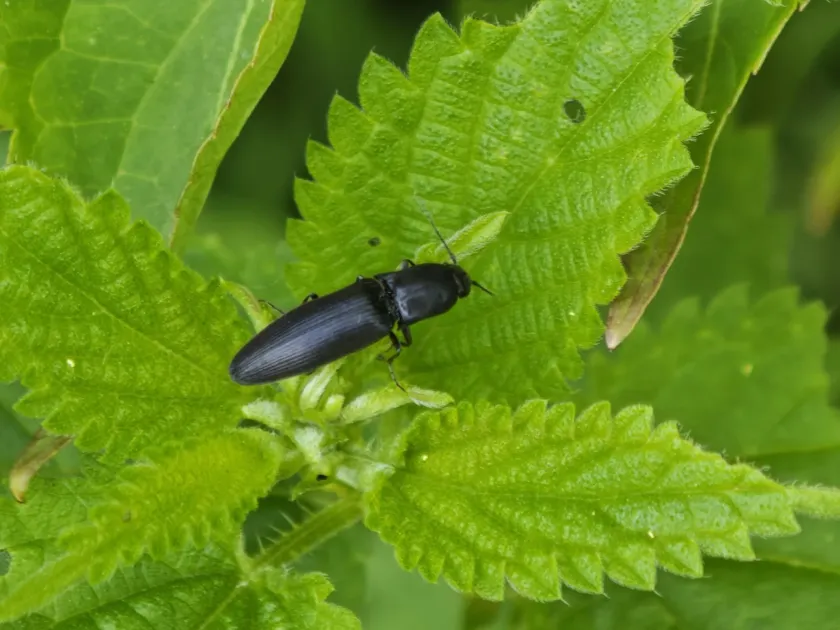
Click beetle (genus Ectinus)
Ectinus
Description
How to identify
The genus Ectinus belongs to the Elateridae family, commonly known as click beetles. These insects are distinguished by an elongated body shape and a unique biomechanical mechanism that allows them to flip and click when placed on their backs.
The larvae, known as wireworms, are the primary concern for farmers. They have a hard, chitinous, yellowish-to-brown body that is cylindrical and tough, resembling a piece of wire.
The life cycle of the click beetle is complex and lengthy, typically spanning three to five years depending on the species and environmental conditions. Most of this time is spent in the larval stage underground.
Click beetles are highly adaptable to various soil types and moisture levels. They are capable of significant vertical movement within the soil profile, escaping extreme temperatures and drought by migrating to deeper layers.
Identifying the specific species within the Elateridae family is often challenging for non-specialists, but agricultural damage is generally managed under the collective term of wireworm infestation.
What it damages
Wireworms are polyphagous pests, meaning they feed on a wide variety of cultivated crops. They cause significant destruction by feeding on seeds, roots, tubers, and the underground portions of plant stems.
Crops most susceptible to wireworm damage include potatoes, carrots, sugar beets, onions, maize (corn), sunflowers, and small cereal grains.
The damage often involves larvae tunneling into tubers and fleshy roots. This destruction not only reduces yield but also compromises the quality of the produce, often leading to secondary infections from bacteria and fungi.
Young seedlings are particularly vulnerable; a single larva can kill a plant by severing the main taproot or boring into the hypocotyl, resulting in thinning stands and yield loss.
In high-density populations, wireworms can cause severe economic losses, sometimes requiring replanting of entire fields if infestation levels are not managed effectively.
When it appears
Adult click beetles become active in early spring when soil temperatures reach approximately 8–10°C (46–50°F). This period coincides with the commencement of agricultural sowing.
Larval activity is highest in the upper 10–15 cm of soil during spring and autumn when soil moisture is adequate. This is when they move actively to feed on germinating seeds and developing roots.
During the peak of summer, larvae often migrate to deeper, cooler soil layers to avoid desiccation, meaning their feeding activity near the surface significantly declines during hot spells.
Pupation occurs during the summer months in earthen cells located in the topsoil. The pupal stage lasts a few weeks before the adult beetles emerge to complete the cycle.
Because the life cycle spans several years, different age cohorts of larvae are present in the soil simultaneously, ensuring the pest remains a persistent threat throughout the growing season.
Signs of infestation
The primary sign of a wireworm infestation is the physical presence of the hard, wire-like larvae found during soil tillage or while inspecting garden beds for stunted plants.
Visually, infested fields show irregular growth patterns, wilting of young plants, and visible holes or tunnels in harvested tubers and root vegetables.
When examining damaged seedlings, one can observe clear feeding marks at the base of the stem or entirely severed root systems that prevent the plant from absorbing nutrients and water.
Uneven germination and patches of dead plants in fields often indicate localized hotspots of high wireworm density, especially in fields previously under sod or permanent pasture.
- Wilting and yellowing of young plants without leaf disease.
- Tunneling damage in potatoes and other root crops.
- Gaps in crop stands due to seedling death.
- Presence of beetles on the soil surface during mating flights.
Control measures
Cultural control is a cornerstone of wireworm management, including deep autumn plowing to bring larvae to the surface, where they are exposed to natural predators and freezing temperatures.
Crop rotation plays a vital role; avoiding planting high-risk crops after grass leys or permanent pastures significantly reduces the likelihood of severe infestation.
Soil monitoring using bait traps—such as burying potato pieces or sprouted grain in the soil—allows farmers to assess population density before making management decisions.
Chemical control measures include the use of seed treatments or in-furrow applications of granular insecticides at planting time to protect vulnerable seeds and roots from initial attack.
Biological alternatives, specifically formulations containing entomopathogenic fungi like Metarhizium anisopliae, provide a sustainable way to suppress wireworm populations in the soil over time.
Taxonomy
- Latin name
- Ectinus
- Order
- Coleoptera (beetles)
- Family
- Elateridae
- EPPO code
- ECTNSP
Discussion
No discussions yet — be the first.