
Drasterius bimaculatus
Drasterius bimaculatus
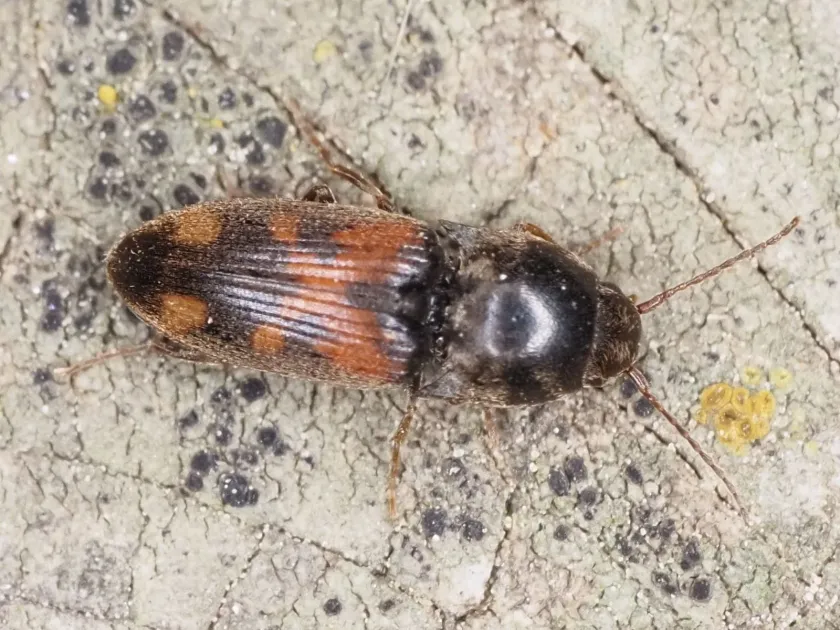
Description
How to identify
Drasterius bimaculatus is a species of click beetle (Elateridae) known as a significant agricultural pest in various regions. Adult beetles are small, usually measuring between 5 and 7 millimeters in length.
The body is elongated and generally light brown or tan in color. A key feature for identification is the presence of two distinct dark spots on the elytra (wing covers).
The larvae, widely known as wireworms, have a hard, cylindrical body that is yellow or yellowish-brown. Their appearance resembles a stiff wire, which gives them their common name.
They possess a heavily sclerotized head capsule with powerful mandibles capable of chewing through tough roots, seeds, and stems of various plant species.
Adult beetles are famous for their ability to snap their bodies to flip over when placed on their backs, creating a characteristic clicking sound in the process.
What it damages
The damage is almost exclusively caused by the larvae, which live in the soil and feed on underground plant tissues throughout their developmental stages.
They attack a wide array of crops, including wheat, barley, maize, potatoes, sugar beets, and various vegetables, causing significant yield losses every year.
The larvae often attack seeds immediately after planting, hollowing them out and preventing germination, which leads to thinning stands and patchy crop emergence.
By feeding on roots and the underground portion of the stem, they disrupt the plant's ability to take up water and nutrients, leading to wilting and death.
In root crops, such as potatoes or carrots, the larvae bore deep tunnels into the tubers, making the produce aesthetically unappealing and susceptible to rot.
When it appears
Adult beetles typically overwinter in the upper soil layers or beneath dense plant debris. They emerge in the spring as soon as soil temperatures reach approximately 10-12 degrees Celsius.
Mating and egg-laying occur in late spring and early summer. Females prefer laying eggs in moist soil conditions, often choosing fields with cover crops or weeds.
The larval stage is prolonged, lasting several years in the soil, during which they feed and grow, adjusting their depth based on moisture levels and temperature.
Peak activity occurs during the first half of the summer, as newly hatched larvae seek out food sources to support their rapid growth and development.
As the soil cools in the autumn, the larvae migrate deeper into the soil profile to reach temperatures suitable for surviving the winter months.
Signs of infestation
The most common sign of infestation is the emergence of stunted or withered plants in localized patches throughout the field, leading to an irregular crop appearance.
Upon closer inspection, dead or dying plants often show signs of being chewed off at the base of the stem or having their root systems destroyed by larvae.
Root vegetables exhibit deep, narrow, and rounded tunnels that penetrate the tissue, often serving as entry points for secondary bacterial and fungal infections.
Monitoring for wireworm presence can be achieved through soil bait traps, which use slices of carrot or potato buried at shallow depths to attract the larvae.
High numbers of adult beetles found in light traps or on the soil surface at night serve as an early warning for potential larval infestations in the upcoming season.
Control measures
Effective management requires an integrated approach that focuses on reducing larval populations through both cultural practices and chemical intervention.
- Deep fall plowing helps bring larvae to the soil surface, exposing them to predators like birds and harsh weather conditions.
- Implementing long-term crop rotation cycles helps disrupt the lifecycle and reduces the accumulation of wireworms in the soil.
- Maintaining a weed-free environment is crucial, as many weed species act as alternative food sources for the larvae throughout the year.
- Seed treatment with systemic insecticides provides essential protection for crops during the critical germination and seedling establishment phase.
- Applying granular soil insecticides during planting is recommended in fields with a history of high pest pressure to protect the developing root systems.
Taxonomy
- Latin name
- Drasterius bimaculatus
- Order
- Coleoptera (beetles)
- Family
- Elateridae
- EPPO code
- AEOLBI
Discussion
No discussions yet — be the first.