
Dalopius marginatus
Dalopius marginatus
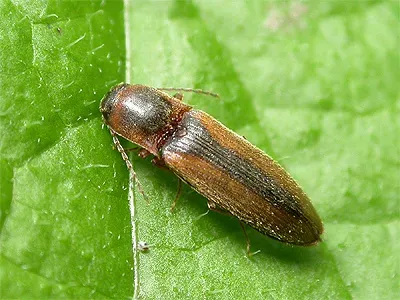
Description
How to identify
Dalopius marginatus is a beetle species belonging to the family Elateridae, commonly known as click beetles. The adult beetle typically measures between 6 and 8 mm in length, featuring a dark brown or black body with a distinctive light-colored margin along the edges of the pronotum and elytra.
These beetles are named for their unique ability to launch themselves into the air with an audible clicking sound when placed on their backs. The head is tucked closely against the pronotum, and the antennae are serrated, which is a key diagnostic feature for this specific species.
The larva, widely known as a wireworm, is cylindrical, highly sclerotized, and typically yellow or light brown in color. Unlike some other Elateridae, this species is relatively tolerant of varying soil moisture levels, allowing it to thrive in diverse agricultural environments.
The life cycle consists of complete metamorphosis: egg, larva, pupa, and adult. Adults are generally secretive and nocturnal, often residing in the topsoil or under organic debris, making them difficult to detect during standard field inspections.
Effective identification in the field requires specialized knowledge, as many click beetle species share similar morphological traits. Regular soil sampling is essential to assess population density throughout the growing season.
##damage##The primary economic damage is caused by the wireworm, which resides in the soil and feeds on the underground parts of plants. Its diet includes germinating seeds, roots, and the basal portion of stems of numerous crops.
Cereals, including wheat, rye, barley, and oats, are particularly susceptible to wireworm infestation. The larvae often consume the germ of seeds, preventing germination entirely, or they prune the roots, leading to thinning and reduced crop stands.
Beyond grains, Dalopius marginatus causes significant damage to root crops such as potatoes, sugar beets, and carrots. The larvae bore into the roots and tubers, creating tunnels that destroy the product's marketability and introduce secondary pathogens like rot.
Damage intensity tends to increase in years with moderate soil moisture, as larvae become more mobile and active in the root zone. They can migrate between neighboring plants, creating distinct patches of crop failure in the field.
Stunted growth, yellowing, and sudden wilting of young plants are common signs of severe infestation. When roots are heavily pruned, plants cannot compensate for the loss of nutrient uptake, especially during dry spells, leading to rapid plant death.
When it appears
Adult beetles typically emerge from the soil in spring, usually in April or May, once soil temperatures rise to suitable levels for mating and oviposition. Mating occurs in spring, and females deposit eggs in the upper soil layers, often near lush vegetation.
Embryonic development lasts for several weeks, followed by the hatching of young larvae. The larval stage is long, often spanning several years, during which they grow steadily and persist in the soil environment throughout all seasons.
The larvae are most active in the topsoil during the growing season, tracking moisture and food availability. As winter approaches and soil temperatures drop, they migrate deeper into the soil profile to find refuge below the frost line.
Summer marks the period of most intensive feeding, as the density of root systems is at its peak. This aligns with the rapid development of agricultural crops, making it the most critical time for monitoring and intervention.
Pupation usually occurs in late summer or early autumn within soil cells. The newly emerged adults spend the winter underground in these cells, finally surfacing in the following spring to initiate the next generation's life cycle.
Signs of infestation
The most immediate sign of an infestation is the appearance of patchy or thinned areas in a field. Seedlings may fail to emerge altogether or show signs of sudden wilting and yellowing shortly after germination.
Inspection of the underground stem reveals typical injury: the base of the plant may be severed or hollowed out, creating a "gnawed" appearance. Pulling gently on a wilting plant often results in the stems detaching easily from the root system.
Root crops exhibit deep, winding tunnels or small circular holes in the flesh. These entry points are prime sites for the development of dry or wet rots, which can compromise the entire harvested crop.
Soil sampling in areas where plants show symptoms often reveals the presence of larvae. When uncovered, wireworms are easily identified by their firm, jointed bodies that coil up when touched as a defense mechanism.
If adult beetles are frequently observed on the soil surface during spring tillage, it is a clear indicator that the population density is increasing, and preventative measures should be prioritized for subsequent plantings.
Control measures
Effective crop management starts with good tillage practices. Deep plowing in the autumn helps expose larvae to the surface, where they become vulnerable to predators like birds and harsh weather conditions.
Crop rotation is a fundamental management tool. Avoiding the consecutive planting of attractive host crops for more than 2-3 years helps break the larval development cycle and naturally reduces population numbers over time.
Liming acidic soils creates an environment less conducive to wireworm survival. These pests prefer slightly acidic conditions, so neutralizing soil pH is a beneficial practice that supports plant health and discourages infestation.
Chemical control focuses on the use of seed treatments with systemic insecticides. This provides the most targeted and effective protection during the early establishment phase, shielding seeds and young roots from wireworm attacks.
- Strict weed control, particularly the elimination of couch grass (Elymus repens), which serves as a host.
- Use of green manure or cover crops, such as mustard, to improve soil health and suppress larvae.
- Application of ammonium-based fertilizers, which are known to be unfavorable for larval development.
Taxonomy
- Latin name
- Dalopius marginatus
- Order
- Coleoptera (beetles)
- Family
- Elateridae
- EPPO code
- DOLOMA
Discussion
No discussions yet — be the first.