
Western gray click beetle
Ctenicera pruinina
Description
How to identify
The western gray click beetle (Ctenicera pruinina) belongs to the family Elateridae within the order Coleoptera. Adult beetles are characterized by an elongated shape, measuring about 10–15 mm, with a grayish-brown body and metallic sheen.
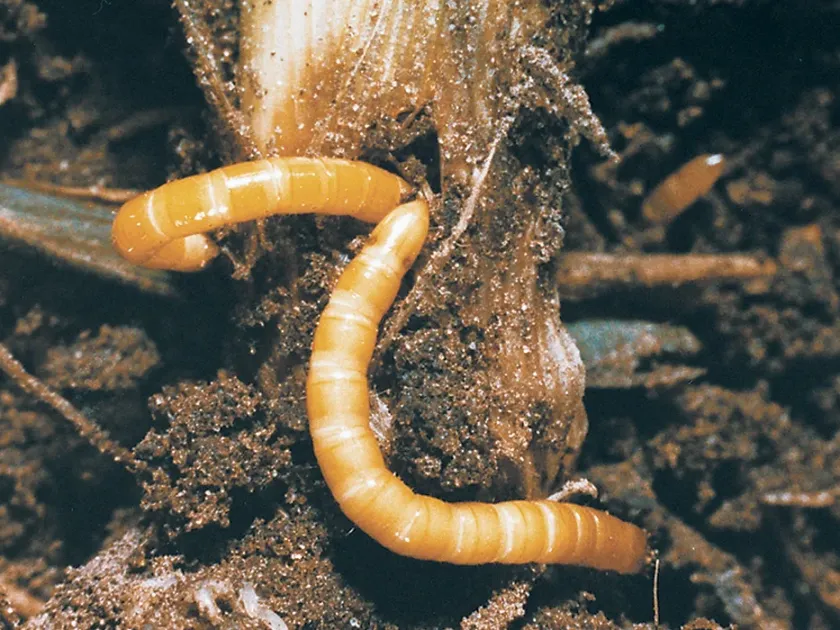
The larval stage, commonly referred to as wireworms, is the most destructive phase. They possess a long, cylindrical body that is heavily sclerotized, giving them a tough, wire-like appearance and high resistance to environmental stress.
The life cycle of this species is complex and usually lasts from 3 to 5 years. A significant portion of this time is spent underground, where the larvae feed on the roots and underground stems of various crops.
Pupation occurs in the soil within earthen cells, typically during late summer or early autumn. Adults emerge the following spring, coinciding with the timing of crop germination and planting operations.
While adult beetles are generally harmless to crops, their presence and activity in the field during the spring months serve as an indicator for potential larval infestations in the upcoming seasons.
What it damages
Wireworms are polyphagous pests that cause extensive damage to grains, corn, potatoes, sugar beets, and numerous vegetable crops. They are particularly known for feeding on seeds before they can even emerge.
Early-season damage is most severe, as the larvae feed on the underground parts of young seedlings. This feeding activity results in chlorosis, wilting, and often total plant death, leading to patchy and sparse crop stands.
Root crops, such as potatoes, are heavily damaged when wireworms bore tunnels deep into the tubers. These injuries significantly reduce the market value and make the tubers susceptible to secondary bacterial and fungal infections.
High populations of this pest can lead to catastrophic yield losses. Fields that were previously under perennial grasses or those with excessive soil moisture are most at risk for severe infestations.
- Consumption of seeds and germinating embryos
- Severing of roots on young seedlings
- Boring tunnels into potato tubers and root crops
- Facilitating the entry of secondary pathogens
- Significant reductions in overall crop stand density
When it appears
Larval activity is highly dependent on soil temperature and moisture levels. They are most active in the upper soil profile during the cool, moist conditions of spring and early autumn, which align with vulnerable plant growth stages.
During the hotter, drier summer months, wireworms migrate deeper into the soil to escape desiccation. Understanding these vertical migration patterns is essential for the effective timing of field monitoring and control.
Signs of infestation
The primary symptom of a wireworm infestation is the appearance of bare spots or thinning stands within a field. Affected plants show signs of stunted growth and can easily be pulled from the soil due to root destruction.
Visual inspection of subterranean parts will reveal feeding scars, holes, or complete severing of roots and stems. In potato production, the characteristic evidence is the presence of small, circular entry holes in the skin of the tubers.
Control measures
Cultural practices are the foundation of management, including crop rotation with non-host crops and diligent weed control. Removing perennial weeds, especially couch grass, helps break the pest's life cycle.
Tillage operations, particularly deep plowing in the autumn, can help expose larvae and pupae to predators and adverse weather conditions. This reduces the overall soil population density before the next planting season.
Seed treatments with registered insecticides provide a critical layer of protection for young seedlings during the initial germination phase. This remains one of the most effective strategies for minimizing early-season stand loss.
In-furrow application of granular insecticides at the time of planting is another proven technique. This creates a localized protective zone that prevents wireworms from reaching the germinating seeds and developing roots.
Integrated Pest Management (IPM) involves using bait traps to assess population levels before planting. By combining monitoring, mechanical disturbance, and chemical controls, farmers can manage populations below economic injury levels.
Taxonomy
- Latin name
- Ctenicera pruinina
- Order
- Coleoptera (beetles)
- Family
- Elateridae
- EPPO code
- CTENPR
Discussion
No discussions yet — be the first.