
Ctenicera pectinicornis
Ctenicera pectinicornis
Description
How to identify
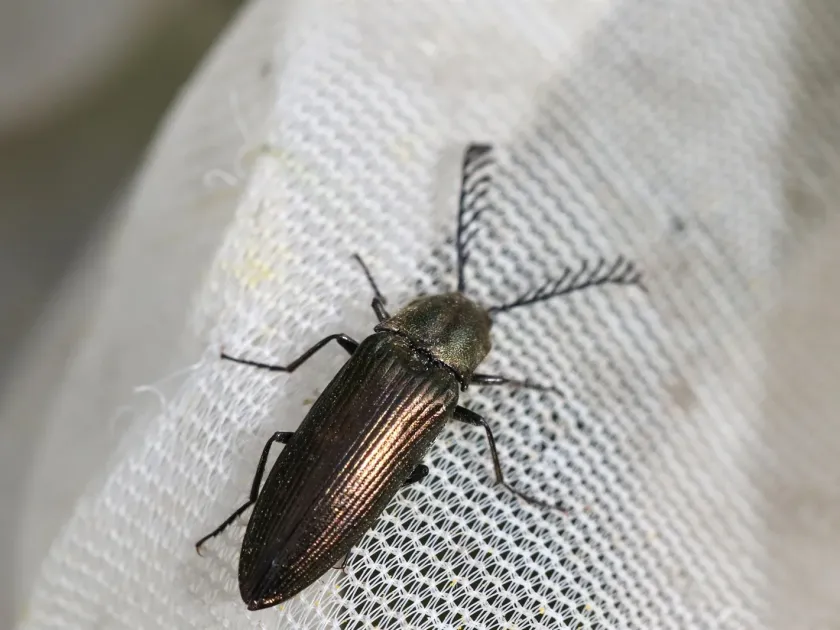
Ctenicera pectinicornis is a species of click beetle belonging to the family Elateridae. Adult beetles are typically 13–18 mm long with a distinct metallic bronze-green or copper-red coloration.
The species is named for the males, which possess characteristic pectinate (comb-like) antennae. Females have serrated antennae and a slightly broader body shape, which helps distinguish them from other Elateridae species.
The larvae, widely known as wireworms, are cylindrical and have very hard, sclerotized cuticles. They are usually yellowish-brown and have three pairs of short, sturdy legs, which allow them to burrow efficiently through soil.
Adult beetles have a specialized anatomical structure allowing them to perform a sudden, clicking jump if they land on their backs. This mechanism helps them escape predators and right themselves on uneven ground.
The life cycle involves complete metamorphosis, including egg, larva, pupa, and adult stages. The larval stage is long-lived, lasting 3 to 4 years underground, where they grow and thrive in diverse soil conditions.
What it damages
Wireworms cause significant agricultural damage by feeding on seeds, roots, and subterranean stems. They are generalist pests that impact a wide range of monoculture and vegetable crops.
Cereal crops like wheat, barley, and oats are highly susceptible, especially during the early growth stages. Wireworms bore into the stems or consume the germinated seeds, leading to severe stand thinning.
Maize and sugar beets are also major targets. The larvae feed on the developing root systems, which stunts plant growth and, in severe cases, leads to total plant death.
Root vegetables, particularly potatoes, suffer heavy damage when larvae bore tunnels into the tubers. This significantly reduces the marketability and quality of the harvest, as the damaged tubers are prone to rot.
Population density is usually higher in fields that were previously under grass, perennial legumes, or have heavy weed infestation, providing the larvae with an ideal environment for establishment.
When it appears
Adult Ctenicera pectinicornis beetles emerge during late spring or early summer. They are most active on warm days, feeding on pollen and nectar from various weeds and flowering plants.
Females lay eggs in the soil, favoring moist, undisturbed sites with thick ground cover. This makes pastures and neglected agricultural plots prime spots for infestation.
Larval activity is closely linked to soil moisture levels. In the spring and autumn, when soil is moist, wireworms remain in the upper layers, feeding on plant roots.
During the peak of summer heat or winter frost, the larvae migrate to deeper soil horizons to protect themselves from extreme temperatures. They return to the root zone once soil conditions stabilize.
Because multiple generations live simultaneously in the soil, farmers must implement long-term monitoring strategies, as a single season of control might not eliminate the entire pest population.
Signs of infestation
Early signs of infestation include patchy crop growth, with areas of stunted, yellowing, or wilted plants. When pulled, these plants often lack a root system or have stems that have been cleanly severed.
Examination of the soil around affected areas usually reveals the presence of hard-bodied, wire-like larvae. In potato fields, the presence of clean, round holes in tubers is a classic indicator.
Inconsistent crop stands, particularly after spring germination, are a common symptom. Large "bald spots" in a field often correlate with the highest concentrations of wireworm populations.
The presence of adults in early summer is a precursor to future larval pressure. Observing many click beetles in a field serves as a warning to prepare for potential root pest problems.
Acidic soil conditions often coincide with higher wireworm survival rates, so observing soil health can provide clues about the likelihood of a severe infestation on a specific plot.
Control measures
Effective management begins with sound agronomical practices. Deep autumn plowing is a highly recommended method as it exposes larvae and pupae to predators and adverse weather conditions.
Weed control is essential, particularly managing weeds like couch grass (Elymus repens), which provide a food source for wireworms during crop rotation phases.
Soil management, such as liming, can alter the pH to be less favorable for wireworm development, thereby naturally suppressing their population over several seasons.
Chemical control often involves the use of insecticide seed treatments, which provide a protective barrier around the germinating seed and the early root zone.
- In-furrow application of soil insecticides during planting for high-risk fields.
- Monitoring pest density using bait traps (e.g., germinating grain or potato pieces).
- Crop rotation with non-host crops to starve out the larval population over time.
Taxonomy
- Latin name
- Ctenicera pectinicornis
- Order
- Coleoptera (beetles)
- Family
- Elateridae
- EPPO code
- CORMPE
Discussion
No discussions yet — be the first.