
Ctenicera noxia
Ctenicera noxia
Description
How to identify
Ctenicera noxia belongs to the Coleoptera order and the Elateridae family. The adult beetle typically has an elongated body, measuring about 12-15 mm, with a dark brown or black coloration, sometimes displaying a metallic sheen.
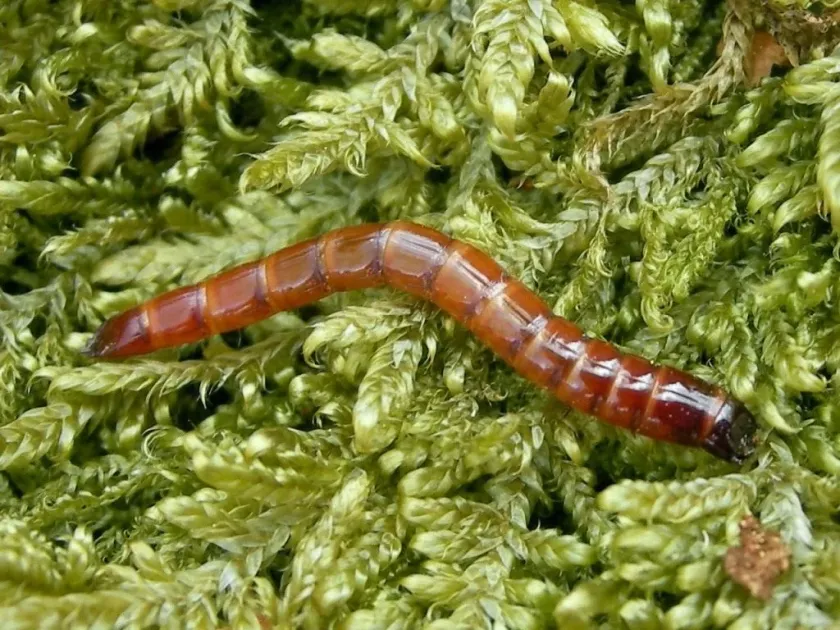
The larvae, commonly known as wireworms, possess a distinctive cylindrical, hard-bodied appearance with yellow or brown coloration. They are highly resilient to mechanical stresses and unfavorable environmental conditions.
The life cycle involves complete metamorphosis: egg, larva (wireworm), pupa, and adult. Adult beetles are famous for their ability to flip themselves over with a clicking sound if placed on their backs.
The larval stage is the longest and most destructive phase, as the wireworms spend several years living in the soil and feeding on the subterranean parts of various agricultural crops.
Accurate identification of this species often requires examining the abdominal segments of the larvae under magnification to distinguish them from other wireworm species.
What it damages
Ctenicera noxia larvae primarily damage cereals (wheat, barley, rye), maize, sunflowers, and a wide range of vegetable crops by feeding on their underground structures.
They often destroy germinating seeds by consuming the embryo, which leads to poor germination rates and patchy crop stands early in the season.
By feeding on the roots and the base of the stems, wireworms cause the seedlings to wither, turn yellow, and eventually die, leading to significant yield losses.
The damage caused by larvae creates wounds on the plant tissue, which often become entry points for secondary fungal and bacterial pathogens, exacerbating the crop destruction.
While adult beetles also feed on plant foliage, their impact on crop productivity is generally minimal compared to the severe underground damage inflicted by the larval stage.
When it appears
The activity of Ctenicera noxia is highly dependent on soil moisture and temperature, which dictate the vertical movement of larvae within the soil profile.
In spring, as soil temperatures reach 10-12 degrees Celsius, larvae migrate to the upper soil layers to feed aggressively on seeds and seedling roots.
During the heat of summer, when the topsoil becomes dry, wireworms retreat to deeper, moister soil layers to survive until conditions become more favorable.
As autumn temperatures begin to drop, larvae may return to the upper soil layers to forage before eventually settling into deeper layers for winter hibernation.
Adult beetles emerge in the spring, typically peaking in May and June, when mating occurs and females lay eggs in the soil for the next generation.
Signs of infestation
The most evident sign of infestation is the presence of thinning or patchy areas in the field where seedlings are either stunted or missing entirely.
Inspecting the base of damaged plants reveals chewed tissues, severed roots, or small entry holes made by the wireworms while feeding.
The presence of larvae can often be confirmed by digging into the soil around the affected plants, particularly after periods of moderate rainfall or irrigation.
Plants may show signs of sudden wilting despite adequate moisture, which is often a direct result of wireworms severing the main root system.
- Thinning of crop stands
- Damage to seeds and roots
- Wilting and yellowing of young plants
- Detection of larvae in soil samples
- Stunted development of crops
Control measures
Cultural control measures include deep plowing and turning over the soil, which exposes the larvae to predators like birds and desiccating conditions on the surface.
Crop rotation is an essential strategy; incorporating non-host crops and green manures can disrupt the life cycle and reduce wireworm populations over time.
Effective weed management, particularly controlling grasses like couch grass (Elymus repens), is crucial as these plants serve as an alternative food source for the larvae.
Seed treatment with systemic insecticides before planting provides the most reliable protection for seedlings during the most vulnerable early growth stages.
In cases of severe infestation, the application of granular soil insecticides during planting can provide a protective buffer zone for the crop roots.
Taxonomy
- Latin name
- Ctenicera noxia
- Order
- Coleoptera (beetles)
- Family
- Elateridae
- EPPO code
- CORMNO
Discussion
No discussions yet — be the first.