
Tobacco wireworm
Conoderus vespertinus
Description
How to identify
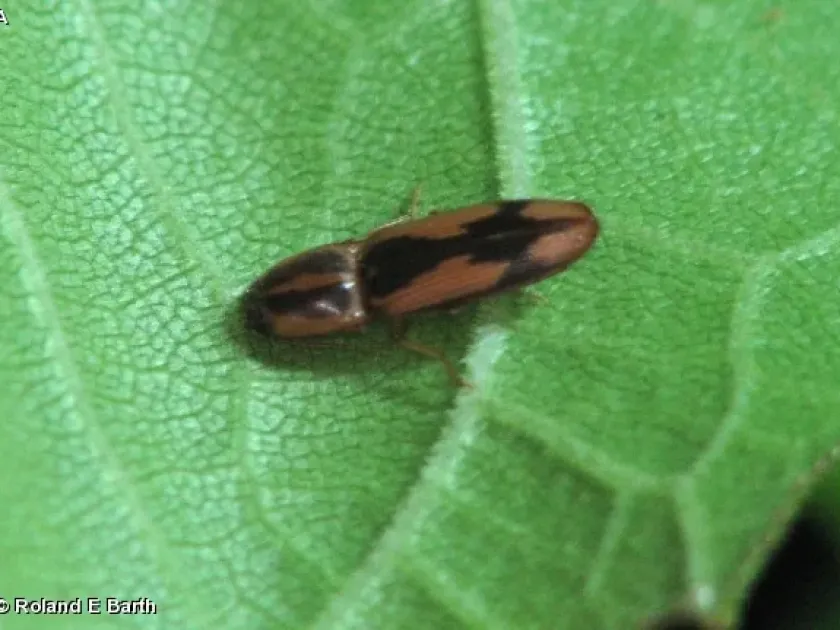
The tobacco wireworm (Conoderus vespertinus) belongs to the order Coleoptera and the family Elateridae. Adult beetles typically measure between 7 and 9 mm in length and exhibit colors ranging from reddish-brown to dark brown with a subtle metallic sheen.
The larvae, commonly known as wireworms, are characterized by a cylindrical, heavily sclerotized body with a yellowish-brown appearance. They are highly mobile and capable of navigating through various soil profiles efficiently.
The life cycle encompasses four distinct stages: egg, larva, pupa, and adult. Depending on environmental temperatures and food availability in the soil, the complete development of one generation usually requires one to two years.
Females oviposit directly into the soil near the roots of host plants. The larvae thrive in moderately moist soil environments that are rich in organic matter and crop residues, which support their development.
Both adult beetles and larvae of various stages overwinter deep in the soil, which provides them with significant protection against freezing temperatures and makes them difficult to eradicate completely.
What it damages
This pest is a polyphagous insect that causes substantial economic losses to crops such as tobacco, corn, peanuts, potatoes, tomatoes, and various vegetables. Damage is primarily inflicted by the soil-dwelling larvae.
Wireworms feed on underground plant structures, including roots, taproots, and tubers. This feeding damage disrupts the plant's nutrient and water uptake, leading to stunted growth and reduced vigor.
Young seedlings of corn and tobacco are especially vulnerable. The larvae often tunnel into the base of the stems, causing seedlings to wilt and die, which results in significant stand reduction in commercial fields.
When mature plants are attacked, their root systems are severely compromised. This leads to yellowing of leaves, wilting, and increased susceptibility to environmental stress, potentially causing total plant collapse.
In crops like potatoes, the feeding damage causes tunnels and aesthetic blemishes on tubers. These entry points often serve as infection sites for secondary bacterial and fungal pathogens, reducing marketability.
Signs of infestation
The primary field sign of an infestation is the patch-like death of seedlings or the sudden wilting of crops despite adequate soil moisture, indicating severe damage to the root system.
Physical inspection of the underground portion of affected plants typically reveals characteristic tunnels and scarred tissues. If an infestation is present, larvae can often be found in the immediate root zone.
Agronomists use soil bait traps to quantify population density. Placing germinating seeds in specific spots throughout the field before planting serves as a reliable method to detect wireworm presence.
The appearance of adult beetles on the soil surface or foliage during the spring marks the beginning of the flight and mating season, signaling that eggs will soon be deposited into the soil.
Fields recently converted from pastures or fallow land are at high risk. Monitoring these areas is essential, as the soil environment in such fields is ideal for sustaining high wireworm populations.
Control measures
Crop rotation is a fundamental management strategy. By rotating away from highly attractive hosts like corn or tobacco, farmers can effectively disrupt the wireworm's reproductive cycle and reduce population levels.
Cultural practices such as deep fall plowing and frequent tillage help physically expose larvae to the soil surface, where they become easy targets for avian predators and are susceptible to desiccation.
Seed treatments with systemic insecticides are the most common and effective method for protecting young seedlings from wireworm damage during the critical early stages of crop establishment.
Applying granular soil insecticides during the planting operation provides a concentrated protection zone around the seeds, ensuring improved stand establishment even in heavily infested fields.
Consistent monitoring using pheromone traps and soil sampling allows for informed decision-making regarding the application of chemical controls, ensuring targeted and efficient pest management.
Taxonomy
- Latin name
- Conoderus vespertinus
- Order
- Coleoptera (beetles)
- Family
- Elateridae
- EPPO code
- CONOVE
Discussion
No discussions yet — be the first.