
Click beetle Conoderus bellus
Conoderus bellus
Description
How to identify
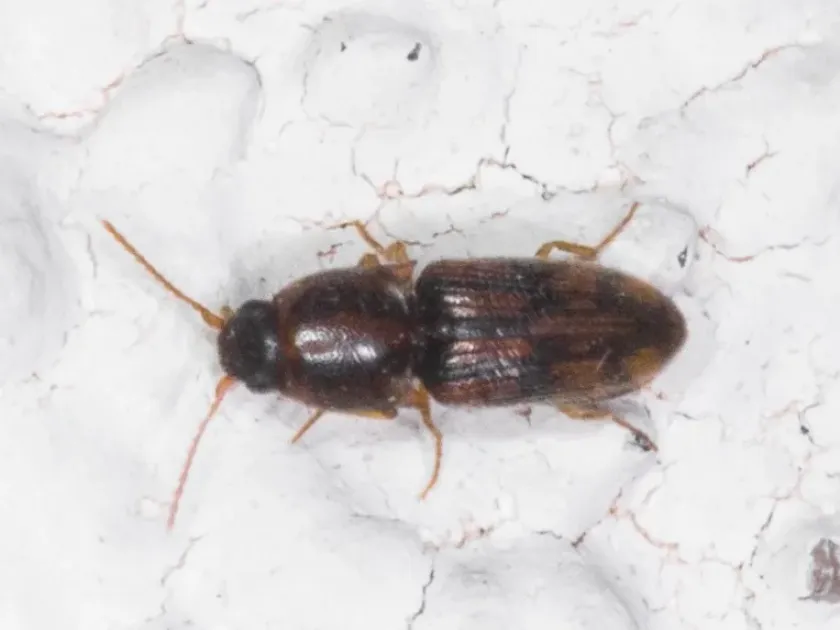
Conoderus bellus is a species of click beetle belonging to the Elateridae family. These insects are characterized by their ability to "click" and snap their bodies, which allows them to jump into the air and land on their feet if they are flipped over.
The adult beetles are typically small and brownish, often displaying specific markings on the elytra. While adults themselves rarely cause significant damage, they are the source of the next generation of wireworms, which live in the soil.
The larvae, known as wireworms, are the primary life stage of concern for farmers. They have elongated, tough-skinned, cylindrical bodies that range in color from yellow to dark brown, resembling pieces of wire.
Identification of Conoderus bellus can be complex due to the morphological similarity with other members of the Elateridae family. Detailed examination is often required to distinguish this species from other soil-dwelling wireworms.
These insects prefer habitats with adequate moisture and organic matter. They are highly adaptable to various soil types and can thrive in both cultivated fields and surrounding grassy areas.
What it damages
The larvae of Conoderus bellus are subterranean feeders that cause severe damage to a wide range of agricultural crops. They tunnel into seeds, roots, and tubers, disrupting the plant's ability to uptake water and nutrients.
Potatoes, corn, and various root vegetables are particularly susceptible to wireworm infestation. The tunnels created by the larvae provide entry points for soil-borne pathogens, leading to rot and disease development within the plant tissues.
In seedlings, wireworm feeding can lead to sudden wilting and plant death. This results in significant stand reduction and often necessitates replanting if the population density is high enough.
Beyond direct feeding damage, the presence of these larvae in fields can lead to uneven crop growth and reduced vigor. Marketable yields in root crops are often severely compromised due to unsightly boreholes and decay.
Heavy infestations are especially detrimental in fields that have been in permanent pasture or long-term forage production before being rotated into row crops, as these conditions favor wireworm population growth.
When it appears
The life cycle of Conoderus bellus is multi-year, meaning the larvae spend several seasons in the soil. They are highly active during the spring and fall when soil temperatures are moderate and moisture levels are favorable.
Adult beetles typically emerge in the late spring or early summer to mate and lay eggs. The eggs are deposited in the soil near the base of suitable host plants, ensuring an immediate food source for the hatching larvae.
During extreme weather conditions, such as hot, dry summers or deep-freeze winters, the larvae migrate deeper into the soil profile. This behavioral adaptation helps them survive environmental fluctuations.
Wireworm feeding activity peaks when plants are in their early development stages. This is the period when agricultural crops are most vulnerable to permanent damage and stand loss.
Scouting for this pest should be conducted systematically, especially before planting in fields with a history of infestation. Soil sampling remains the most accurate way to assess the risk level before the season begins.
Signs of infestation
Plants wilting in patches despite adequate soil moisture is a primary indicator of wireworm damage. Excavating the soil around these plants will often reveal the presence of larvae feeding on the root system.
In mature tubers or root crops, the appearance of deep, narrow tunnels is a classic sign of infestation. These tunnels are often associated with soft spots or secondary fungal infections that spread from the entry points.
Poor crop establishment and thin, patchy stands in corn or other row crops are strong clues. Examining the base of affected plants frequently reveals roots that have been cleanly severed or severely girdled.
The presence of certain perennial weeds, such as quackgrass, can indicate a habitat suitable for wireworm development. These plants act as a secondary food source when primary crops are absent.
Using bait traps, such as burying a mix of germinating grain in the soil, is an effective diagnostic method. Checking these traps after a few days provides a clear look at the larval population density in the immediate area.
Control measures
Integrated Pest Management (IPM) is essential for controlling Conoderus bellus. Crop rotation is one of the most effective strategies, as it disrupts the life cycle of the wireworm by changing the host availability.
Mechanical tillage practices can help by disturbing the soil environment, exposing larvae to the surface where they are more vulnerable to desiccation and natural predators like birds.
Chemical control is often necessary in high-pressure areas. This includes the use of seed treatments or soil-applied insecticides at planting time to provide a protective zone around the germinating seed.
Managing field moisture and drainage is important, as many wireworm species prefer moist soil conditions. Proper irrigation management can help reduce the attractiveness of a field to adult beetles.
Biological control agents, including entomopathogenic fungi and nematodes, are becoming increasingly effective tools. When integrated with other practices, these biologicals help suppress populations while minimizing reliance on conventional chemical inputs.
Taxonomy
- Latin name
- Conoderus bellus
- Order
- Coleoptera (beetles)
- Family
- Elateridae
- EPPO code
- CONOBE
Discussion
No discussions yet — be the first.