
Southern wireworm
Conoderus australasiae
Description
How to identify
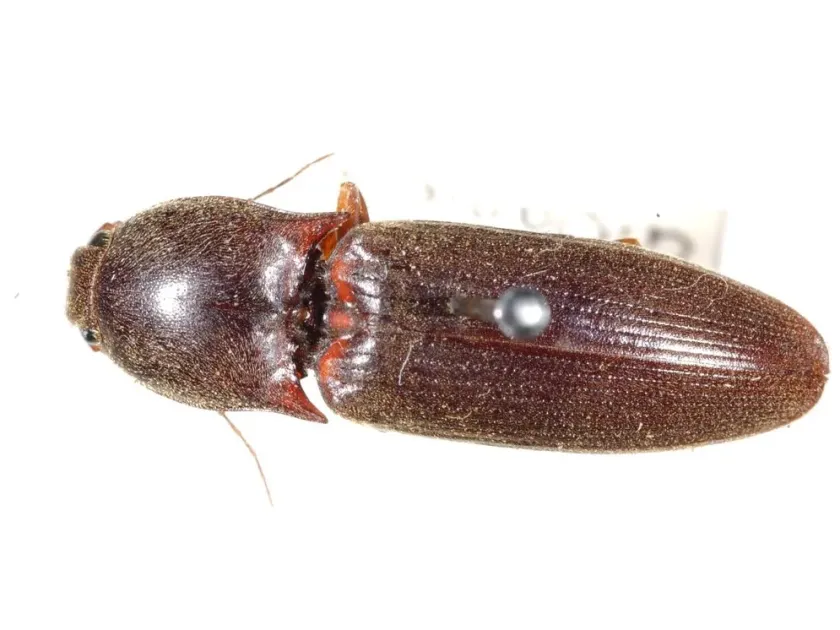
The Southern wireworm (Conoderus australasiae) belongs to the Elateridae family, commonly known as click beetles. The adult stage is a moderate-sized beetle, while the larval stage is the primary cause of agricultural damage.
The larvae are characterized by a long, slender, and heavily sclerotized body, typically yellow or brown. Their tough exoskeleton provides protection, making them elusive soil-dwelling insects that can live for several years in the larval stage.
What it damages
This pest is highly polyphagous, meaning it feeds on a wide range of cultivated plants. It is particularly notorious for damaging tubers and roots, such as potatoes, sweet potatoes, carrots, and sugar beets.
Additionally, they cause significant loss in seedling stands by boring into the stems below the soil line. This activity prevents proper plant development, leading to yellowing, stunted growth, or complete plant mortality in field crops.
When it appears
The development cycle is strongly influenced by soil temperature and moisture levels. Larvae are most active in the upper soil profile during the spring when temperatures are conducive to feeding and root growth.
During the peak of summer, if the soil becomes too dry, larvae descend to deeper levels. They complete their life cycle by overwintering in the soil, emerging as adults in the spring to lay eggs near the bases of host plants.
Signs of infestation
The presence of the Southern wireworm is often identified by small, round holes bored into the skin of tubers and roots. These holes often lead to deep internal tunnels, which can compromise the entire harvest.
In young crops, thinning of the rows is a major indicator. Plants may appear healthy initially but wilt suddenly as the larvae destroy the root system, ultimately leading to patches of missing plants within the field.
Control measures
Integrated Pest Management (IPM) is crucial, starting with crop rotation that avoids planting susceptible crops in fields known to have high wireworm populations. Rotating with non-host crops like legumes can help reduce larval numbers.
- Deep cultivation to disturb soil habitats.
- Soil-applied granular insecticides at planting.
- Seed treatment with systemic insecticides.
- Monitoring soil populations using bait traps before planting.
Proper field drainage and liming to reduce soil acidity can also make the environment less favorable for the survival and reproduction of the Southern wireworm.
Taxonomy
- Latin name
- Conoderus australasiae
- Order
- Coleoptera (beetles)
- Family
- Elateridae
- EPPO code
- CONOAS
Discussion
No discussions yet — be the first.