
Click beetle
Cidnopus
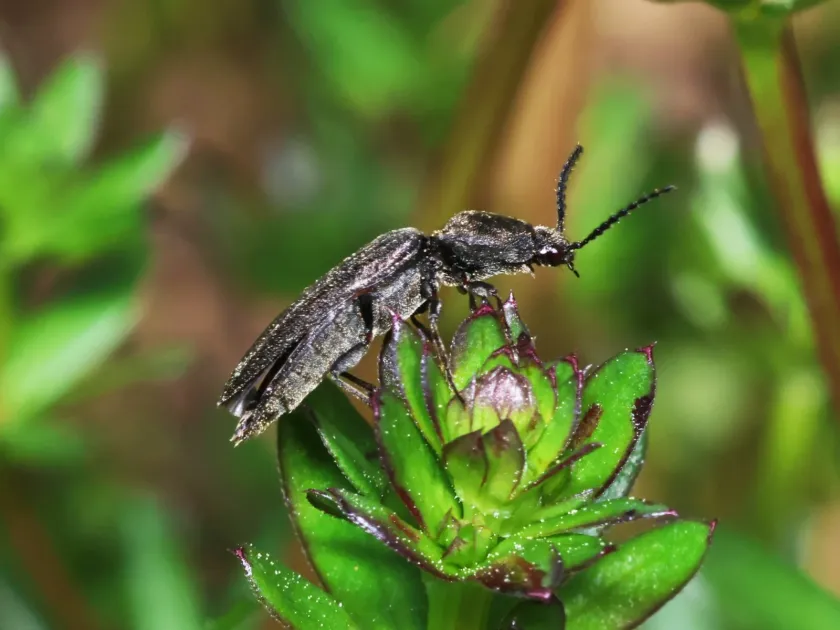
Description
How to identify
The genus Cidnopus belongs to the Elateridae family, a group of beetles known for their remarkable ability to right themselves by leaping with a clicking sound. The adults are generally elongated, ranging in color from dark brown to black with a metallic sheen.
The larvae of these beetles, commonly called wireworms, are infamous in agriculture. They possess a hard, chitinous, cylindrical body that is tough and resistant to pressure, making them difficult to crush.
Their life cycle is notably long, typically spanning 3 to 5 years. The development process includes egg, multiple larval stages, pupa, and the adult beetle, all of which are influenced by environmental conditions.
The adult beetles are generally nocturnal or crepuscular, often found in grassy fields, hedgerows, or near the margins of cultivated agricultural crops.
Identifying the specific Cidnopus species often requires an expert examination of the morphology of the antennae and the pronotal structure, as they closely resemble other Elateridae members.
What it damages
The damage is almost exclusively caused by the wireworm larvae living in the soil. They are polyphagous and will feed on the underground parts of a wide range of economically important crops.
Key crops affected include wheat, barley, maize, potatoes, carrots, sugar beets, and various vegetable seedlings. They feed on seeds, roots, and subterranean stems.
By consuming the root system, wireworms cause the plant to wilt, turn yellow, and eventually die, which can lead to significant gaps in the field during the early growth stage.
In root crops such as potatoes and carrots, the larvae bore deep holes into the tubers or roots, causing internal decay and making the produce commercially unmarketable.
Large populations of wireworms can destroy whole segments of a crop, forcing farmers to perform costly replanting and leading to significant financial losses in the agricultural sector.
When it appears
Adult click beetles typically emerge in spring, usually from late April through June, seeking mates and suitable soil for egg-laying.
They prefer moist soils with abundant vegetation, as these conditions are optimal for the survival of the neonate larvae once they hatch.
Wireworms are most active in the upper soil layers during the spring and autumn when soil moisture and temperature are favorable for their movement and foraging.
During the hot, dry summer months, wireworms migrate deeper into the soil profile to avoid desiccation, often remaining inactive until conditions become more suitable.
The most dangerous period for crops is when the larvae are near the surface during the germination and early development stages of the spring-sown crops.
Signs of infestation
The most common sign of a wireworm infestation is uneven crop emergence, often appearing as patches of thinning or dead seedlings that look like poor germination.
When investigating these dead or stunted plants, the roots will often appear severed or shredded, and the stems might show signs of boring activity at the base.
Digging into the soil around the base of affected plants usually reveals the larvae, which are distinctively wire-like and stiff, trying to burrow away from the disturbance.
In tuberous crops like potatoes, the signs are clear circular or oblong boreholes that extend deep into the flesh, often leading to secondary infections by bacteria or fungi.
Fields with a high density of couch grass (Elymus repens) are highly susceptible, as this weed provides a stable food source and habitat for the wireworm population to thrive.
Control measures
Cultural control is a primary defense; deep autumn plowing brings larvae to the surface, exposing them to predators such as birds and to adverse weather conditions.
Rigorous weed control, particularly of rhizomatous weeds like couch grass, is essential to starve the wireworm population and reduce potential egg-laying sites.
Crop rotation incorporating non-host plants or crops that have repellent effects, such as mustard or certain pulses, can help in managing and lowering the larvae density in the soil.
Seed treatment using systemic insecticides is the most effective way to protect germinating seeds and young seedlings from early larval attacks, ensuring a healthy plant stand.
In severe infestation cases, application of soil-applied granular insecticides during the planting operation provides a protective zone for the developing root systems.
Taxonomy
- Latin name
- Cidnopus
- Order
- Coleoptera (beetles)
- Family
- Elateridae
- EPPO code
- CIDPSP
Discussion
No discussions yet — be the first.