
Brown click beetle
Athous subfuscus
Description
How to identify
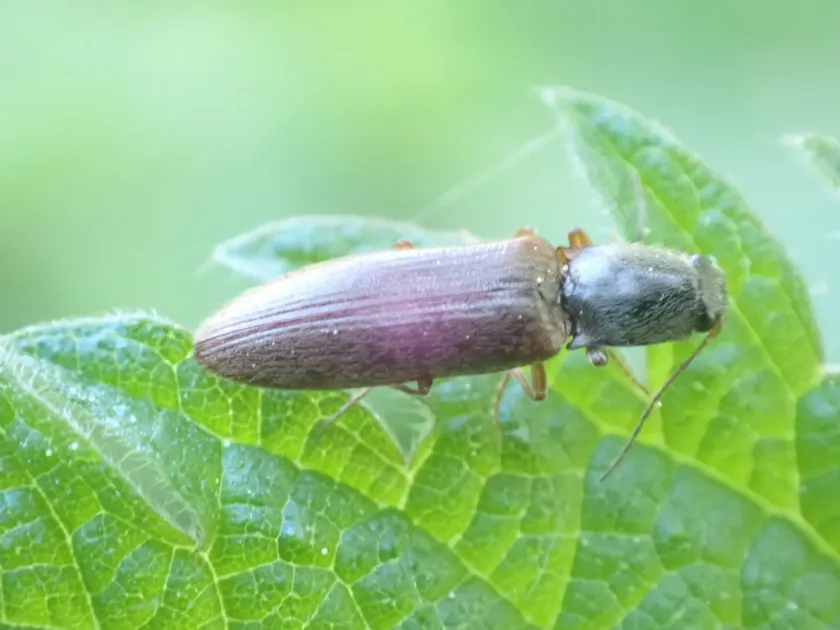
The brown click beetle (Latin Athous subfuscus) is a member of the Elateridae family, known for the unique mechanism of the adults to right themselves with a snapping click if flipped on their backs.
The adult beetle has an elongated body, typically measuring 8 to 11 mm in length, with a brown or dark-brown coloration and a fine covering of hairs.
The larval stage, commonly referred to as a wireworm, is the most recognizable form of the pest. These larvae possess a hard, cylindrical, and chitinous body that is yellow-brown in color.
Their appearance is similar to a piece of rigid wire, which gives them their common name and makes them physically resistant to environmental pressure in the soil.
Development involves multiple larval instars, with the total duration of the life cycle ranging from three to five years before they reach maturity and emerge as beetles.
What it damages
Wireworms are notorious for their polyphagous nature, meaning they attack a wide range of agricultural crops by feeding on underground parts such as seeds, roots, and stems.
Cereal crops like wheat and barley, as well as row crops like maize, sunflowers, and sugar beets, are particularly vulnerable to larval feeding during the early stages of growth.
The larvae bore into the seeds, destroying the embryo, and frequently sever the root system of seedlings, leading to reduced plant stands or complete crop loss.
Tuberous vegetables such as potatoes are frequently damaged by wireworms tunneling through the tubers, which significantly reduces the market value and quality of the harvest.
These boreholes serve as entry points for secondary pathogens, such as fungi and bacteria, which cause further decay of the root systems and infected tubers.
When it appears
The emergence of adult click beetles typically occurs in the late spring, spanning from May to June, coinciding with the growth period of many spring-sown crops.
During this time, adult beetles mate, and females lay eggs in the moist upper layers of the soil, often favoring fields with dense ground cover or high weed density.
The larvae spend several years in the soil environment, where they grow and feed continuously, making them a persistent problem in fields with long-term crop cycles.
Seasonal migration of larvae occurs based on moisture levels; they move to the upper soil layers in the spring and autumn to feed when temperatures are moderate.
In the peak of summer, when the topsoil becomes excessively dry, wireworms retreat to deeper, more humid soil horizons to survive until conditions improve.
Signs of infestation
The presence of wireworms is often detected by uneven crop emergence, where patches of plants turn yellow or wilt and die due to root damage.
When excavating the soil around the base of affected plants, the hard, wire-like larvae are usually found either feeding or nearby in the disturbed soil profile.
Another common sign is the discovery of round holes and tunnels in harvested potatoes, carrots, or other root crops that were planted in infested areas.
Reduced crop stands in specific areas of the field that expand over several seasons are a clear indicator of a established wireworm infestation.
- Thinning or gaps in the crop rows.
- Yellowing and wilting of young seedlings.
- Boreholes in harvested tubers or root vegetables.
- Direct observation of larvae in the root zone during soil sampling.
Control measures
Deep autumn plowing is a highly effective cultural control method that exposes the larvae to the surface, where they succumb to dehydration, heat, and predators.
Implementing a diverse crop rotation is crucial, especially avoiding long periods of grass crops that encourage wireworm population growth in the soil.
Aggressive weed control, particularly targeting couch grass and other perennial weeds, reduces the available resources for the larvae and makes the field less attractive for oviposition.
Liming acidic soils helps create a less favorable chemical environment for wireworm larvae, thereby acting as a preventive measure against high infestation levels.
For high-pressure situations, seed treatment with systemic insecticides or the application of granular soil insecticides at planting provides essential early-season protection.
Taxonomy
- Latin name
- Athous subfuscus
- Order
- Coleoptera (beetles)
- Family
- Elateridae
- EPPO code
- ATHOSU
Discussion
No discussions yet — be the first.