
Blood-red click beetle
Ampedus sanguinolentus
Description
How to identify
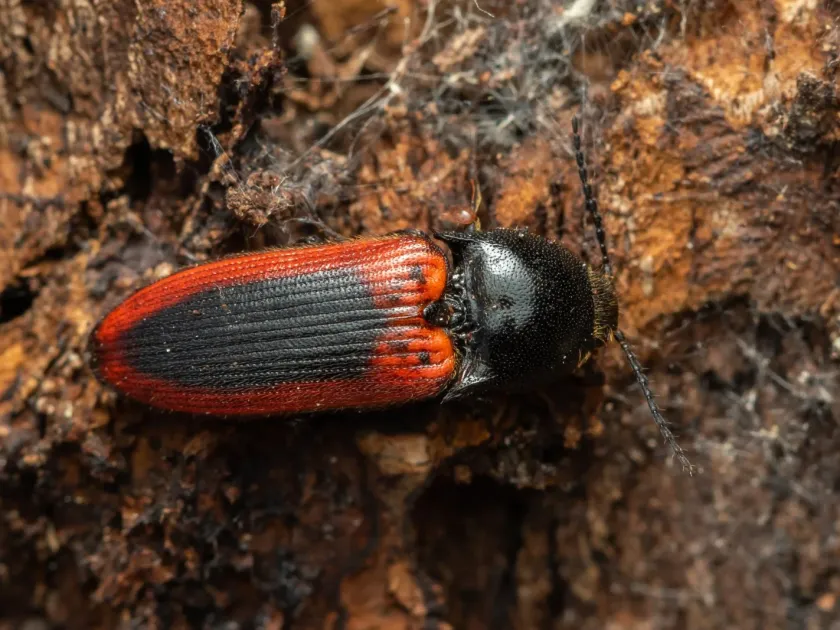
The blood-red click beetle (Ampedus sanguinolentus) belongs to the family Elateridae, order Coleoptera. The adult beetle is easily recognized by its vibrant red elytra with black markings.
The adult body is elongated and flattened, measuring approximately 8–10 mm. Like other click beetles, it features a specialized mechanism that allows it to flip into the air with a clicking sound if overturned.
The larvae, commonly known as wireworms, are cylindrical with a hard, shiny, yellow-to-brown cuticle. This protective armor allows them to move easily through compact soil and decaying wood.
The biology of this species is primarily associated with decaying wood of coniferous and deciduous trees, where they often complete their development.
The life cycle involves complete metamorphosis: egg, larva (undergoing multiple instars), pupa, and adult. The development phase can span several years depending on local climate conditions.
What it damages
The primary damage is caused by the wireworm larvae, which dwell in decaying organic matter or soil, occasionally feeding on the roots of weakened woody plants.
While they are not as notorious for field crop damage as other Agriotes species, they can cause significant problems in forest nurseries and orchard areas with high organic debris.
Larvae consume small root hairs and bore into thicker roots, which results in stunted growth, nutrient deficiency, and increased vulnerability to soil-borne pathogens.
Infestation often occurs in sites with poorly managed wood waste or near forest edges, where the population density can build up over time.
Secondary infections of root systems often occur through the wounds created by the larvae, leading to the rapid decline of young seedlings.
When it appears
Adult beetles are typically active during the spring and early summer months, usually from April through July, seeking mates and suitable sites for oviposition.
The larvae are subterranean and active throughout the year, with their depth in the soil fluctuating based on temperature and moisture levels.
Pupation generally occurs in late summer within the soil or rotten wood, and the newly emerged adults often remain in their chambers to overwinter.
Peak feeding activity for larvae coincides with the growth periods of young roots, particularly in the spring when moisture in the upper soil profile is high.
During extreme heat or freezing winter temperatures, the larvae migrate to deeper, more thermally stable soil layers.
Signs of infestation
Signs of infestation include the gradual wilting, yellowing, and lack of vigor in young saplings, despite adequate moisture levels in the soil.
Diagnostic evidence involves finding characteristic tunnels in the roots or root collar area, which are often visible upon careful inspection of the root ball.
Adults can be spotted on bark, tree stumps, or near decaying logs, especially during their active mating period in the spring.
Bait traps consisting of sliced raw potatoes or carrots buried shallowly in the soil can be used to monitor the presence and population density of wireworms.
The presence of large amounts of rotting wood debris or decaying stumps on an agricultural site is a primary indicator of potential habitat for this beetle.
Control measures
The most effective management approach is sanitation: removing old stumps, logs, and decaying woody debris that serve as nurseries for the larvae.
Cultural methods, such as deep autumn tillage, expose the larvae to predators like birds and subject them to lethal temperature changes.
Crop rotation using green manures or bio-fumigant crops like mustard can help manage soil-dwelling wireworm populations effectively.
In high-risk areas such as tree nurseries, application of soil-incorporated insecticides may be necessary to protect the root systems of susceptible plants.
- Remove rotting wood and stumps
- Perform deep soil cultivation in autumn
- Utilize crop rotation with green manures
- Monitor populations with potato bait traps
Taxonomy
- Latin name
- Ampedus sanguinolentus
- Order
- Coleoptera (beetles)
- Family
- Elateridae
- EPPO code
- AMPDSG
Discussion
No discussions yet — be the first.