
Agrypnus variabilis
Agrypnus variabilis
Description
How to identify
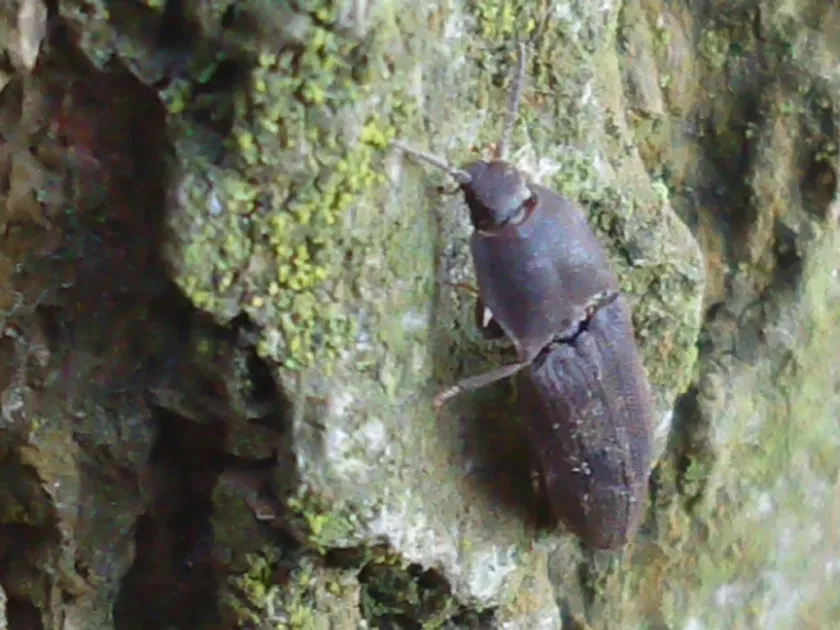
Agrypnus variabilis is a member of the Elateridae family, commonly known as click beetles. These beetles are characterized by their elongated, brownish bodies and the ability to snap their thorax to flip themselves upright if they land on their backs.
The larvae, widely referred to as wireworms, are the primary life stage causing agricultural damage. They possess a tough, sclerotized integument and a cylindrical, worm-like body, often yellowish or orange in color, which allows them to move easily through the soil.
The life cycle of this species spans several years, with the majority of this time spent in the larval stage underground. Adults typically emerge in the spring to mate and lay eggs in moist, organic-rich soil.
Identifying this pest in the field requires soil sampling, particularly during the pre-sowing period to determine population density. Light traps are effective for monitoring adult beetle activity during the mating season.
Developmental success is heavily reliant on soil temperature and humidity. Larvae are highly mobile in the soil profile, moving vertically to reach optimal moisture and temperature conditions throughout the seasons.
What it damages
The damage caused by Agrypnus variabilis larvae is significant, as they feed on a wide range of host plants including cereals, maize, and various vegetables. They typically attack the roots, underground stems, and germinating seeds.
In cases of high infestation, wireworms can destroy the root system entirely, leading to plant wilting, stunted growth, and death. This frequently results in significant crop losses and patchy field emergence.
Beyond direct mechanical injury, the feeding wounds created by larvae act as entry points for soil-borne pathogens, including bacteria and fungi, which can exacerbate the impact of the infestation.
Crops in the early stages of development are the most vulnerable. A single larva is often capable of causing damage to multiple seedlings as it tunnels through the row, which drastically reduces plant population.
Farmers often assess the potential for damage by checking the history of the field, particularly if it was previously under grass, which is a preferred environment for wireworm development.
Control measures
Managing populations of Agrypnus variabilis requires an integrated approach to reduce the number of larvae and protect the vulnerable crop stages effectively.
- Crop rotation, specifically avoiding crops that are highly susceptible to wireworms after grass or long-term fallow.
- Tillage practices, such as deep plowing, which exposes larvae to predators and desiccation by the sun.
- Seed treatment with systemic insecticides to provide a protective zone around the germinating seed and roots.
- Application of granular insecticides into the soil during planting if the larval population exceeds the economic threshold.
- Maintenance of soil fertility and proper drainage to create an environment less favorable for high larval activity.
Taxonomy
- Latin name
- Agrypnus variabilis
- Order
- Coleoptera (beetles)
- Family
- Elateridae
- EPPO code
- AGRYVA
Discussion
No discussions yet — be the first.