
Grey click beetle
Agrypnus
Description
How to identify
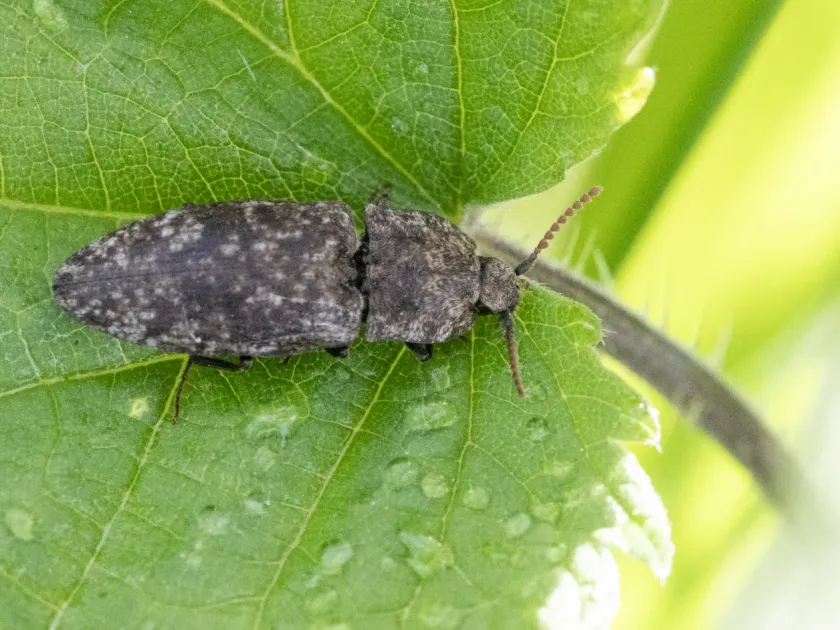
The grey click beetle (Agrypnus murinus) is a member of the Elateridae family, belonging to the order Coleoptera. The adult beetle typically measures between 11 and 16 mm in length and is covered with dense, grey or brownish-grey scales.
This species is named for its ability to produce a distinct clicking sound when it flips itself over to right its body after being placed on its back. The larvae, widely known as wireworms, are characterized by their hard, cylindrical, and yellow-brown bodies.
The life cycle of the grey click beetle is extensive, often spanning 3 to 5 years. Most of this period is spent as larvae, which develop within the soil profile, feeding on organic matter and plant roots.
Adult beetles are most active during the day, although they tend to remain sedentary during overcast or cool weather conditions. Both adults and larvae at various developmental stages overwinter in the soil at depths sufficient to survive freezing temperatures.
Identification of the adult stage is primarily based on the grey pubescence of the pronotum and the presence of specific teeth on the front tibiae, which helps distinguish this species from other related click beetle members.
What it damages
The larvae are the primary destructive stage, known for their polyphagous feeding habits. Wireworms can cause severe damage to a wide range of agricultural crops, including cereals, corn, potatoes, and various root vegetables.
Wireworms damage plants by feeding on seeds, sprouts, and roots. This destruction often results in stunted growth, wilting, and eventually the death of the plant, as the root system becomes unable to supply water and nutrients.
Potatoes are particularly susceptible to wireworm infestation, as the larvae burrow deep into the tubers, creating extensive galleries. This damage significantly reduces the market value of the crop and facilitates secondary infections.
Damage is typically more severe in years with optimal soil moisture, which encourages wireworm movement toward the root zones of the crops. Conversely, dry or compacted soil can limit their activity, though it does not eliminate the risk entirely.
Furthermore, damaged tissues provide entry points for soil-borne pathogens, leading to fungal or bacterial rots that can devastate crop yield and quality throughout the growing season.
When it appears
Adult beetle flight generally begins in spring, usually between April and June, depending on local temperatures and environmental conditions. Once mating occurs, females deposit eggs in loose soil rich in organic matter and weeds.
Early-stage larvae primarily consume organic debris and fine root hairs. However, as they mature, their diet shifts towards the thicker roots and tubers of cultivated crops, which is when their economic impact becomes most significant.
Wireworm migration within the soil profile is driven by soil temperature and moisture levels. They typically move towards the surface in spring and autumn, while retreating to deeper soil horizons during extreme heat or dryness.
Monitoring for this pest is conducted using soil sampling techniques prior to planting. This allows agronomists to determine the population density and assess the necessity of applying chemical or biological control measures.
Weed-infested fields, particularly those with grasses like couch grass, provide a perfect habitat for larval development. Removing such weeds is an effective preventive strategy to reduce the overall click beetle population in the area.
Signs of infestation
The first indicator of an infestation is often the presence of patchy or thin crop stands, with young plants appearing wilted or dying despite adequate soil moisture levels. Excavation near the base of affected plants usually reveals the presence of larvae.
When harvesting root crops such as potatoes or carrots, the presence of holes of varying depths indicates wireworm activity. These signs confirm that the soil population was high enough to cause significant economic damage.
Yellowing of the lower leaves of cereal crops in the spring often suggests root damage caused by wireworms, which prevents the plants from absorbing sufficient nitrogen and other essential nutrients.
Observing high numbers of adult beetles on the soil surface after tillage is a clear warning sign. This suggests that the site has a high potential for a heavy larval infestation in the subsequent growth cycles.
Damaged roots often exhibit signs of secondary rot, characterized by soft, discolored tissues around the bite marks. Identifying these signs early can help in implementing targeted control actions before the damage becomes widespread.
Control measures
The most effective strategy for managing the grey click beetle is integrated pest management. Crop rotation is essential, specifically avoiding planting susceptible crops after grasslands or in fields heavily infested with weeds.
Deep autumn tillage is a highly effective mechanical control method, as it brings larvae to the surface, exposing them to bird predators and harsh weather conditions that significantly reduce their numbers.
Chemical control options include the use of insecticidal seed treatments to provide protection during the critical early stages of germination. Soil-applied insecticides can also be used during planting for high-value root crops.
Biological alternatives involve the use of entomopathogenic nematodes or fungi like *Beauveria bassiana*, which naturally infect and kill wireworms in the soil. These methods are increasingly popular as they are environmentally safer than traditional synthetic pesticides.
- Maintain a strict crop rotation schedule.
- Use bait traps (potato or grain) to monitor and catch larvae.
- Implement deep ploughing for soil disturbance.
- Apply systemic insecticidal treatments when necessary.
- Control weeds, especially couch grass, to limit larval food sources.
Taxonomy
- Latin name
- Agrypnus
- Order
- Coleoptera (beetles)
- Family
- Elateridae
- EPPO code
- AGRYSP
Discussion
No discussions yet — be the first.