
Dark click beetle
Agriotes ustulatus
Description
How to identify
The dark click beetle (Agriotes ustulatus) is a member of the Elateridae family, commonly known for its larvae stage, the wireworm, which is a significant soil-borne pest in agriculture.
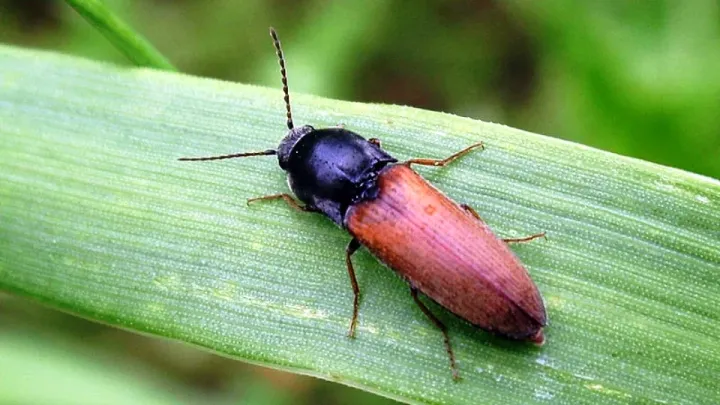
Adult beetles are typically 7 to 10 mm long, featuring an elongated, dark brown to black body. They possess a unique anatomical mechanism that allows them to snap their thorax and jump when placed on their backs.
The larvae, wireworms, are characterized by their cylindrical, hard, and smooth-skinned bodies. They range in color from yellowish to reddish-brown, resembling a piece of stiff wire.
The life cycle of Agriotes ustulatus is notably long, typically lasting between 3 to 5 years. Most of this time is spent underground in the larval stage, which explains why they are difficult to eradicate completely.
Accurate identification requires careful inspection of the posterior segment of the larva's abdomen, as morphological characteristics can vary slightly between different species within the Agriotes genus.
What it damages
Wireworms are highly polyphagous, causing extensive damage to a wide range of crops including cereals, maize, potatoes, sugar beets, and various vegetable species.
The primary damage occurs when larvae consume newly planted seeds, germinating embryos, and the underground parts of stems. This leads to reduced stand density and potential crop failure early in the season.
Root crops are particularly susceptible as wireworms create deep, unsightly tunnels through tubers and roots. These injuries not only reduce market value but also act as entry points for pathogens and fungi.
Large infestations can result in significant economic loss, as plants struggle to recover from root system damage. High populations are often found in fields that were previously under long-term pasture or have persistent weed issues.
The pest's ability to live deep in the soil makes it a resilient adversary, capable of causing persistent issues in fields if not managed properly over several years.
When it appears
Adult click beetles emerge from the soil in late spring and early summer, usually when soil temperatures begin to rise, to mate and lay eggs in moist, vegetated environments.
Young larvae hatch during the summer months and initially feed on organic matter and small roots. They do not pose a serious threat to cash crops until they reach the second or third year of development.
Wireworms exhibit vertical migration based on soil moisture and temperature. During dry or hot summer spells, they retreat deeper into the soil profile to find suitable living conditions.
In spring and autumn, when soil moisture is optimal, larvae move closer to the surface, where they become active and begin feeding on the root systems of emerging plants.
The most critical window for protection is during the sowing season, when seedlings are highly vulnerable to the feeding activities of the mature larvae present in the upper soil layers.
Signs of infestation
A primary indication of a wireworm infestation is the presence of scattered bare spots in a field where seeds have failed to emerge or seedlings have withered suddenly.
If you inspect the base of affected plants, you will often find the larvae nearby, actively chewing on the roots or the stem base, confirming the cause of the decline.
On harvested tubers or root vegetables, the presence of distinct, bored tunnels is a classic hallmark of wireworm activity, which differs from damage caused by surface-feeding pests.
Fields with high infestations often show patches of stunted growth, where affected plants appear chlorotic due to the inability of their damaged root systems to transport nutrients.
The presence of dense, grassy weeds like couch grass (Elymus repens) is a common sign that the field may harbor high populations of click beetle larvae, as these weeds provide ideal food.
Control measures
Integrated Pest Management (IPM) is essential for wireworm control. Crop rotation, specifically alternating host crops with non-susceptible ones, helps break the long life cycle of the pest.
Tillage practices, such as deep autumn plowing, can reduce wireworm populations by exposing larvae and pupae to predators like birds and harsh weather conditions, significantly lowering their numbers.
Using insecticidal seed treatments is the most effective approach to protect seedlings during the crucial early stages of growth, providing a barrier against early larval attacks.
Liming acidic soils can also make the environment less hospitable for wireworms, as they prefer acidic soil conditions. This simple modification can help suppress the population over time.
Keeping fields clean from weeds is vital, as removing the alternative food source helps prevent larvae from establishing themselves and surviving until a susceptible crop is planted.
Taxonomy
- Latin name
- Agriotes ustulatus
- Order
- Coleoptera (beetles)
- Family
- Elateridae
- EPPO code
- AGRIUS
Discussion
No discussions yet — be the first.