
Click beetle
Agriotes sputator
Description
How to identify
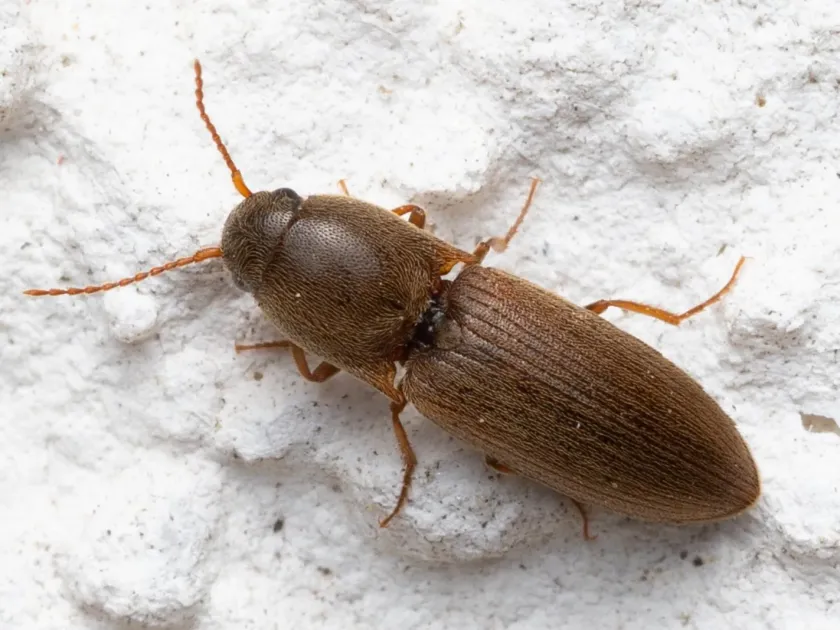
The click beetle Agriotes sputator belongs to the Elateridae family. The adult beetle is typically 7–9 mm long, with a dark brown or black elongated body.
These beetles are famous for their ability to flip into the air with an audible clicking sound if they are placed on their backs, an adaptation to escape predators.
The larvae, known as wireworms, are the most destructive stage. They have a cylindrical, shiny, and hard-skinned body, usually yellow-brown in color, which makes them very resilient.
The life cycle is long, typically lasting 3 to 4 years. Most of this time is spent underground as larvae, which go through several developmental stages.
Identification is best achieved through soil sampling in the spring, which helps farmers determine if the population density warrants a pre-planting insecticide treatment.
What it damages
Wireworms are polyphagous, meaning they attack a wide range of crops including potatoes, carrots, corn, cereals, and various ornamental plants.
The larvae feed on seeds, roots, and underground stems. They can kill young seedlings by severing the main root or eating the emerging shoot completely.
In root crops like potatoes, wireworms tunnel into the flesh, creating deep holes that ruin the appearance and decrease the commercial value of the harvest.
Damaged crops are prone to secondary fungal and bacterial infections because the feeding tunnels act as entry points for pathogens, leading to rot.
Wireworm damage is usually patchy across a field, often appearing in areas with higher moisture or those that were previously infested with perennial grasses.
When it appears
Adult beetles emerge from the soil in early spring. They are generally active on the surface and feed on foliage, though they cause minimal economic damage compared to larvae.
Larval activity is highest in the upper soil layers during spring and autumn when soil moisture levels are optimal for their movement and feeding.
During the peak of summer, when the topsoil becomes dry and hot, wireworms move deep into the soil profile to stay cool and find moisture.
Egg-laying occurs in late spring and early summer. Females prefer laying their eggs in undisturbed, grassy areas or fields with significant weed cover.
Pupation takes place in soil chambers in mid-to-late summer. New adults usually emerge in late summer or autumn and remain in the soil until the next spring.
Signs of infestation
The first sign of an infestation is often a patchy crop stand where young plants suddenly wilt and die, even when moisture conditions seem adequate.
Plants affected by wireworms can be easily pulled from the ground because their root systems have been severely gnawed or entirely severed.
When harvesting root vegetables, the presence of clean, round tunnels running deep into the vegetable is a definitive sign of wireworm activity.
Fields with high infestations of couch grass often harbor high wireworm populations, as the grass provides a consistent food source for the larvae.
Digging in the root zone of wilting plants will often reveal the hard-bodied larvae, which are easy to identify by their wire-like appearance.
Control measures
Cultural control includes thorough tillage, which exposes larvae and pupae to predators like birds and desiccating weather, significantly reducing their numbers.
Strict weed management is essential, as maintaining a clean field removes the preferred egg-laying sites and food sources for the developing larvae.
Correcting soil acidity via liming can make the environment less hospitable to wireworms, as they prefer slightly acidic and moist soil conditions.
Chemical control is often necessary for high-density populations, utilizing seed treatments with systemic insecticides or soil-applied granular pesticides.
Crop rotation incorporating non-host plants or crops that have repellent properties can disrupt the wireworm life cycle and decrease future infestations.
Taxonomy
- Latin name
- Agriotes sputator
- Order
- Coleoptera (beetles)
- Family
- Elateridae
- EPPO code
- AGRISU
Discussion
No discussions yet — be the first.