
Click beetle
Agriotes rufipalpis
Description
How to identify
The click beetle, specifically Agriotes rufipalpis, belongs to the family Elateridae within the order Coleoptera. Adult beetles are characterized by their elongated bodies and a unique ability to flip themselves into the air with an audible clicking sound when turned over.
This species is distinct due to the coloration of its antennae and legs, which are typically reddish-brown. Adults are generally nocturnal or crepuscular, hiding under debris or within the soil surface during daylight hours.
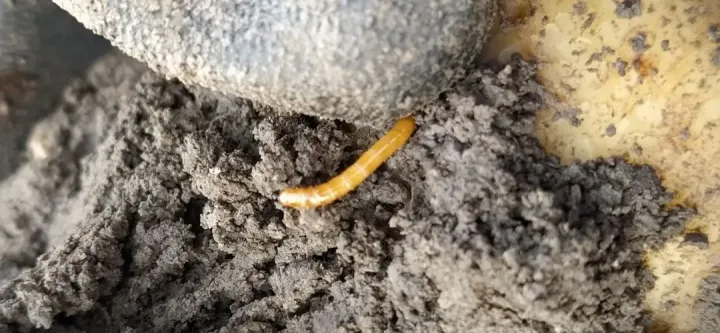
The larvae, widely known as wireworms, are the primary pest stage. They possess a long, cylindrical, and heavily sclerotized body that is firm to the touch, providing them with excellent burrowing capabilities in the soil profile.
The life cycle involves complete metamorphosis, including egg, larva, pupa, and adult stages. Because the larval stage is particularly long-lived, these insects can persist in a field for several years if not managed correctly.
Identifying this specific species often requires professional entomological assessment, but the destructive impact of wireworms is generally consistent across the genus Agriotes.
What it damages
Wireworms inflict significant damage by living exclusively underground and feeding on the subterranean parts of host plants. They are known for gnawing on roots, seeds, and the base of young plant stems.
A wide range of crops is susceptible to Agriotes rufipalpis, including cereals (wheat, barley), maize, sunflowers, sugar beets, and various vegetable crops. Seedlings are particularly vulnerable, often failing shortly after attack.
The reduction in plant density caused by larval feeding often leads to severe yield losses. When plants are attacked at the seedling stage, the destroyed stem tissue results in plant death, necessitating costly replanting.
Furthermore, wireworms damage tubers and root crops by boring tunnels into the plant tissue. This not only directly reduces the harvest volume but also creates entry points for various soil-borne pathogens and decay-causing microorganisms.
High infestations can decimate field populations, especially when environmental conditions force the larvae to congregate near the root zones of emerging commercial crops.
When it appears
Adult beetles typically emerge in the spring once soil temperatures reach approximately 10–12 degrees Celsius. The mating and egg-laying period usually peaks in late spring and early summer.
Females prefer to deposit their eggs in moist, undisturbed soil, often choosing fields with permanent pastures or high levels of organic matter. These conditions are ideal for the development of neonate larvae.
Wireworms show clear vertical migration patterns within the soil. They are most active in the upper soil horizons during spring and autumn when moisture and temperature levels are optimal for movement.
During the hot summer months, larvae typically retreat to deeper, cooler soil layers to avoid desiccation, which is why their feeding activity decreases during peak summer heat.
The entire developmental cycle can span three to five years, depending on regional climatic factors, with the pupal stage occurring within subterranean chambers during the latter part of the season.
Signs of infestation
The most common indicator of a wireworm infestation is the presence of uneven patches in the field where seedlings are wilting, yellowing, or missing entirely without any visible sign of above-ground pest activity.
Careful inspection of the affected plants often reveals damaged, chewed, or severed roots and tunnels bored into the stems at or just below the soil surface.
Soil sampling is the most reliable way to confirm the pest's presence. Finding multiple wireworms within a standardized soil volume in the spring indicates a high risk to subsequent crops.
Physical evidence of tunnels in potatoes or other root vegetables harvested from the field is a clear sign of high pest population density.
Fields with long histories of cereal-grass rotation or those that were previously abandoned land are at a higher risk of harboring significant populations of wireworms.
Control measures
Integrated Pest Management (IPM) is essential for controlling Agriotes rufipalpis. Crop rotation, specifically avoiding susceptible crops after permanent grassland, is the most effective cultural practice.
Mechanical tillage, including deep plowing, can disrupt the wireworm habitat and bring larvae to the surface, where they become exposed to environmental stress and avian predators.
Seed treatments using systemic insecticides are the standard for protecting high-value crops from early-stage wireworm damage, ensuring the survival of seedlings during the most vulnerable period.
- Monitoring soil temperature to time sowing optimally.
- Rigorous weed control to remove alternative hosts like couch grass.
- Application of specialized nitrogen-based fertilizers.
- Use of trap crops to concentrate and remove larvae.
For fields with historically high wireworm counts, applying soil-applied granular insecticides during planting can provide the necessary protection to maintain adequate crop stands.
Taxonomy
- Latin name
- Agriotes rufipalpis
- Order
- Coleoptera (beetles)
- Family
- Elateridae
- EPPO code
- AGRIRU
Discussion
No discussions yet — be the first.