
Agriotes pubescens
Agriotes pubescens
Description
How to identify
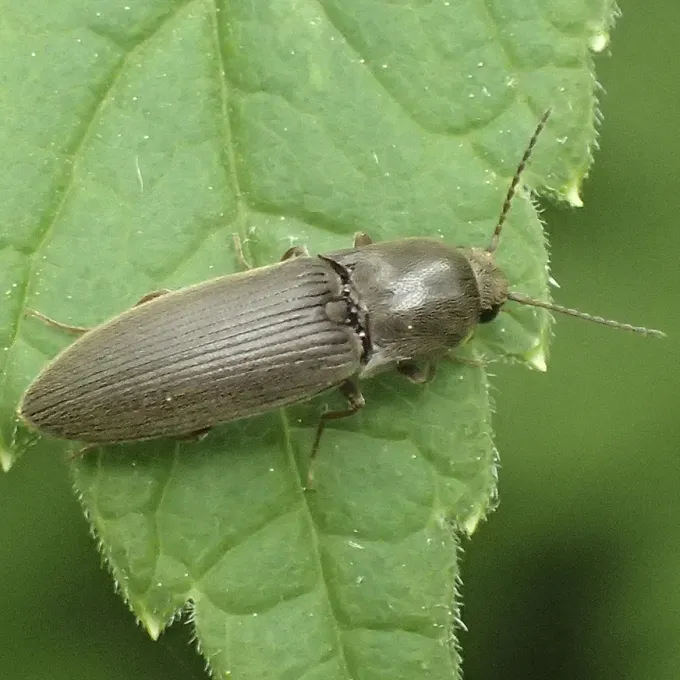
Agriotes pubescens is a species of click beetle (family Elateridae, order Coleoptera). The adults are typically 8–10 mm long and are easily recognized by the dense greyish-yellow pubescence covering their body.
The larval stage, commonly known as a wireworm, is the most destructive phase. These larvae are cylindrical, highly sclerotized (hard-bodied), and range from light yellow to reddish-brown in color.
The insect undergoes complete metamorphosis, with a lifecycle that usually spans 3 to 5 years. The vast majority of this period is spent as a larva living beneath the soil surface.
Adult beetles possess a unique mechanism: a thoracic spine that allows them to "click" and flip themselves upright if they fall on their backs, a key identifying feature of the family Elateridae.
Females lay eggs in the soil, favoring areas with sufficient moisture and dense vegetation, which provides the necessary microclimate for successful larval development.
What it damages
Wireworms cause significant damage by feeding on seeds, subterranean stems, and roots of a wide range of agricultural crops, including cereals, maize, potatoes, and sugar beets.
In newly sown fields, wireworms bore into the seeds, destroying the embryo and leading to poor crop establishment and irregular plant density.
As plants develop, larvae feed on the roots, which stunts growth and causes wilting, especially in young seedlings that lack a deep, established root system.
In root vegetables like potatoes, wireworms create deep feeding tunnels, which significantly lowers the market value and makes the produce susceptible to secondary rot.
Severe infestations can lead to total crop failure, necessitating replanting, which increases production costs and disrupts the planned farming schedule.
When it appears
Adult activity peaks in the spring, typically starting in April or May as soil temperatures rise, facilitating mating and egg-laying in nearby fields.
Larvae are active throughout the growing season, though their vertical position in the soil profile is strictly regulated by moisture levels and temperature.
In the spring, larvae are typically concentrated in the upper 10–15 cm of the soil, coinciding with the germination phase of most annual crops.
During hot, dry summer months, larvae retreat deeper into the soil to escape desiccation, often returning to the surface layers after rainfall.
Autumn brings renewed feeding activity as larvae prepare for winter; they eventually migrate deep into the soil to hibernate once temperatures drop below a critical threshold.
Signs of infestation
Visible thinning of crop stands and the presence of bare patches in the field are the primary indicators of a wireworm infestation.
Uprooting affected plants reveals missing or severely damaged root systems, and in some cases, the larvae themselves can be found feeding on the root collar.
Seedlings may suddenly wilt or die; upon closer inspection, the base of the stem often shows evidence of tunneling or girdling by the larvae.
In fields with high populations, scouting involves digging sample pits to count the number of larvae per square meter to determine if threshold levels for treatment are exceeded.
Tuberous vegetables will display small, perfectly round entrance holes, often leading to extensive internal damage that is not always visible from the surface.
Control measures
Management of Agriotes pubescens requires an Integrated Pest Management (IPM) approach to maintain population levels below the economic threshold.
- Crop rotation: Avoiding susceptible crops in fields known to have high wireworm populations.
- Soil cultivation: Frequent tillage disrupts the soil environment, exposing larvae to predators and unfavorable conditions.
- pH adjustment: Liming acidic soils can make the environment less hospitable for wireworm development.
- Seed treatments: Using systemic insecticides to protect seeds and seedlings during the critical early growth phase.
- In-furrow applications: Applying granular insecticides during planting as a prophylactic measure in high-risk areas.
Taxonomy
- Latin name
- Agriotes pubescens
- Order
- Coleoptera (beetles)
- Family
- Elateridae
- EPPO code
- AGRIPU
Discussion
No discussions yet — be the first.