
Agriotes pilosellus
Agriotes pilosellus
Description
How to identify
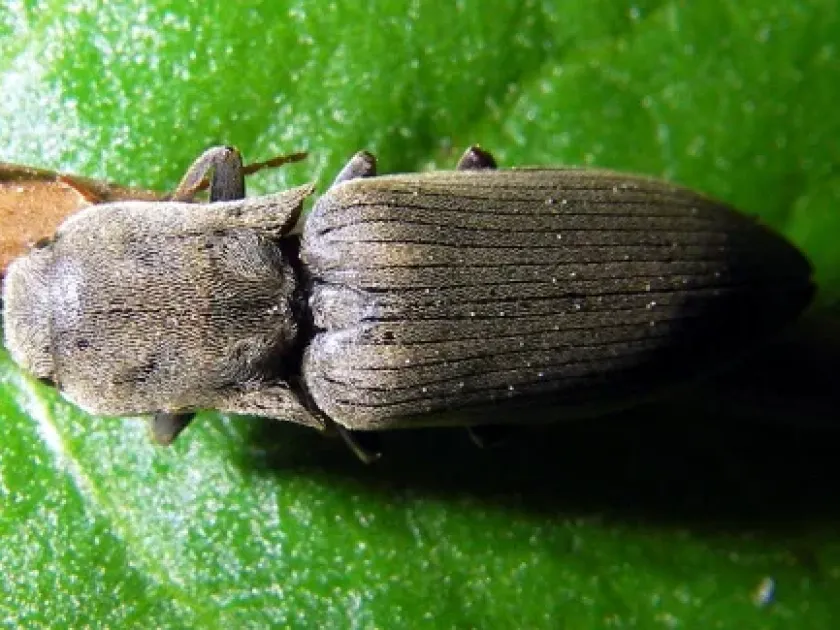
Agriotes pilosellus is a species of click beetle belonging to the family Elateridae, known for its distinct ability to flip itself over with a clicking sound if turned upside down.
The adult beetle is relatively small, measuring about 7–10 mm in length, and is covered with dense, short hairs that give it a characteristic brownish-grey matte appearance.
The larval stage, commonly referred to as a wireworm, has a hardened, cylindrical, and segmented body with a golden-yellow to brown color, adapted for moving through soil.
These larvae have a long life cycle, typically spending 3 to 4 years in the soil, which makes them highly persistent and difficult to eradicate from affected fields.
Adult beetles are often found in sheltered areas such as dense grass, under plant debris, or just beneath the soil surface, becoming active mainly during dusk and night hours.
What it damages
This pest is highly polyphagous, attacking a wide range of agricultural crops including cereals, maize, potatoes, sunflowers, and various root vegetables.
The primary damage is caused by the larvae feeding on underground plant parts, specifically targeting seeds, emerging seedlings, roots, and subterranean stems.
In cereal crops, wireworms bore into the stems just above the root system, causing the plant to wilt and eventually die, which leads to reduced plant density in fields.
For root crops like potatoes and sugar beets, the larvae create deep, narrow tunnels, significantly reducing the market value and inviting secondary fungal infections.
Infestation often results in patchy crop growth, necessitating additional costs for reseeding or the application of protective measures to salvage the crop.
When it appears
Adult beetles emerge from their overwintering sites in the soil during spring, typically when soil temperatures reach 10–12 degrees Celsius, coinciding with sowing time.
Oviposition takes place in late spring or early summer, with the females preferring moist soil conditions provided by heavy grass cover or weeds.
After hatching, the young larvae remain in the upper soil layers, initially feeding on fine rootlets and decomposing organic matter before moving to larger crops.
The larvae are most active in the top 10–20 cm of the soil during the spring and autumn, as they move vertically to avoid extremes in temperature and moisture.
As the soil dries out in summer or cools in winter, the larvae migrate deeper into the soil profile, staying out of reach of surface treatments.
Signs of infestation
The most visible sign of an infestation is the irregular, patchy emergence of seedlings or plants wilting unexpectedly during the early growth stages.
Close inspection of damaged plants will reveal gnawed or hollowed-out subterranean stems and severed root systems, pointing to wireworm activity.
On harvested tubers or root crops, the clear indication of wireworm presence is the presence of small, uniform, and deep entry holes penetrating the outer skin.
Soil baiting stations, using buried raw potato chunks or grain, can be used to monitor the local population density of larvae in infested fields.
A history of poor crop establishment, especially in fields previously planted with long-term grasses, is a strong indicator of a high wireworm risk.
Control measures
Managing Agriotes pilosellus requires an integrated approach that focuses on habitat modification, soil health, and timely chemical intervention.
- Deep tillage in autumn helps expose larvae to the surface, where they become vulnerable to predators like birds and environmental desiccation.
- Crop rotation, particularly using non-host crops like mustard, buckwheat, or pulses, can disrupt the pest's breeding cycle significantly.
- Seed treatment with systemic insecticides, such as neonicotinoids or fipronil-based products, is the primary defense against early-stage larval damage.
- Rigorous weed control, especially managing couch grass (Elymus repens), is crucial as these serve as alternative food sources and breeding grounds.
- Application of granular soil insecticides at the time of sowing can be a necessary reactive measure if soil sampling indicates high larval numbers.
Taxonomy
- Latin name
- Agriotes pilosellus
- Order
- Coleoptera (beetles)
- Family
- Elateridae
- EPPO code
- AGRIEL
Discussion
No discussions yet — be the first.