
Agriotes persimilis
Agriotes persimilis
Description
How to identify
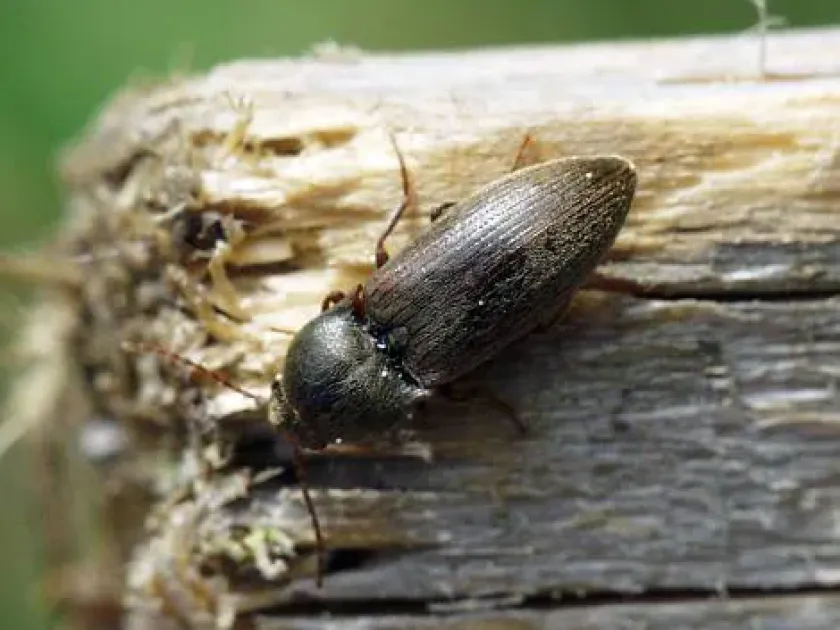
Agriotes persimilis is a species of click beetle belonging to the Elateridae family, order Coleoptera. Adult beetles are typically 7–10 mm long, featuring an elongated, slender body covered with fine hairs, usually displaying dark brown or mahogany coloration.
The larva of this insect is commonly known as a wireworm. Its body is heavily sclerotized, cylindrical, and firm to the touch, resembling a segment of metallic wire, which is a key diagnostic feature for identification in the field.
The larvae possess a shiny, yellow-to-reddish-brown exterior, which protects them from desiccation and mechanical stresses in the soil environment where they spend their entire development period.
The adult beetles are known for their ability to flip themselves into the air with an audible clicking sound if they are placed on their backs, a trait that serves as an escape mechanism and makes them distinct from other beetles.
Because multiple Agriotes species exist in the same environment, positive species identification often relies on microscopic examination of the terminal abdominal segments of the larvae to distinguish them from closely related pests.
What it damages
Wireworms are highly polyphagous, meaning they feed on a vast array of plant roots, tubers, and underground stems. They are considered one of the most persistent soil-borne pests in modern agriculture.
Cereal crops, such as wheat, barley, and maize, are particularly vulnerable. The larvae feed on germinating seeds and the primary root systems, frequently leading to stand reduction and crop failure in early development stages.
Root and tuber crops, including potatoes and sugar beets, sustain significant economic damage as larvae bore tunnels into the tubers, which severely reduces their market quality and facilitates the entry of plant pathogens.
On larger, established plants, the damage to root systems weakens the plant, reducing its ability to absorb nutrients and water, which makes the crop highly susceptible to drought and secondary fungal infections.
In cases of high infestation, the pest creates "dead patches" across fields, leading to significant yield loss and requiring expensive replanting or the use of heavy chemical interventions to save the harvest.
When it appears
The life cycle of Agriotes persimilis is complex and long, typically spanning 3 to 5 years. The vast majority of this time is spent as a subterranean larva, which complicates monitoring and management strategies.
Adult beetles emerge in early spring, usually when soil temperatures exceed 10°C. They are primarily nocturnal or crepuscular, hiding in the soil or under debris during the heat of the day.
Females lay eggs in the soil, favoring damp, undisturbed sites, such as grass pastures or weedy fields, which provide the optimal environment for the survival of emerging larvae.
Throughout their development, larvae undergo vertical migration within the soil profile. They move to the surface layer during spring and autumn for active feeding and descend to deeper, cooler layers during summer droughts or winter freezes.
Pupation occurs in the soil during the summer months. After the pupal stage, the new generation of adults typically remains overwintering in the soil, ready to emerge the following spring to restart the reproductive cycle.
Signs of infestation
The most visible sign of an active wireworm infestation is a patchy emergence of crops in the field, where plants appear stunted, wilted, or fail to emerge entirely despite adequate moisture.
Upon physical inspection of the root zone, one may observe larvae feeding on the roots or notice characteristic scarring, bored holes, or severed main roots that indicate the presence of wireworms.
Using bait traps, such as burying soaked wheat seeds or potato slices, is a standard diagnostic practice. The insects are attracted to the bait, allowing farmers to estimate population density per square meter.
A high presence of perennial grasses or weeds like couch grass within the field is often a precursor to infestation, as these plants serve as ideal breeding grounds for click beetle populations.
Post-harvest signs include potato tubers with irregular, deep circular holes or tunnels, which serve as clear indicators of damage sustained during the late stages of the growing season.
Control measures
Crop rotation is the cornerstone of sustainable wireworm management. Avoiding planting high-risk crops immediately after perennial grasses significantly lowers the risk of severe infestations.
Strategic tillage, particularly deep autumn plowing, disrupts the larvae's habitat, bringing them to the surface where they are vulnerable to avian predators and freezing temperatures during the winter.
Seed treatment with systemic insecticides is the most effective proactive measure for protecting young plants during the critical germination phase, providing a "halo" of protection against early-season damage.
Effective weed management, especially targeting grasses like couch grass, reduces the availability of suitable food sources for larvae, effectively discouraging them from establishing large colonies within the crop field.
Where infestation thresholds are exceeded, the application of granular insecticides directly into the planting furrow provides targeted protection, which is essential for ensuring successful plant establishment in high-risk areas.
Taxonomy
- Latin name
- Agriotes persimilis
- Order
- Coleoptera (beetles)
- Family
- Elateridae
- EPPO code
- AGRIPE
Discussion
No discussions yet — be the first.