
Wheat wireworm
Agriotes mancus
Description
How to identify
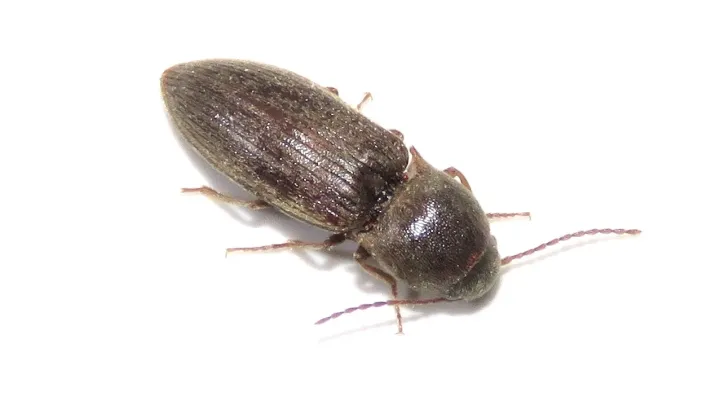
The wheat wireworm (Agriotes mancus) belongs to the family Elateridae, order Coleoptera. Adult beetles typically measure 8–10 mm in length and are dark brown to black in appearance.
The larvae, known as wireworms, are the primary damaging stage. They possess a hard, cylindrical, yellowish-brown body that is highly adapted for movement through soil particles.
The life cycle of this species is complex and usually spans three to five years. Most of this time is spent as a larva underground, feeding extensively on roots and organic matter.
Adult beetles emerge in the spring to mate and lay eggs in moist soil, often choosing fields with heavy vegetation or crop residues as their preferred egg-laying sites.
Unlike some other soil pests, Agriotes mancus is highly resilient to varying soil moisture and temperature levels, allowing it to maintain stable populations across different seasons.
What it damages
This pest is a polyphagous insect that targets a wide range of crops. Corn, potatoes, small grains, and various vegetable crops are particularly susceptible to severe damage.
Larvae feed on germinating seeds, destroying the embryo, and tunnel into the roots and underground stems of young seedlings, often causing total plant failure.
Potatoes suffer from deep, unsightly tunnels created by the larvae, which significantly reduce the market value of the crop and increase susceptibility to secondary bacterial rot.
Economic damage is most severe on fields converted from sod or permanent pasture, as these environments support high concentrations of wireworms over long periods.
Crop losses can be extensive, often resulting in sparse stands that require replanting, which adds significant costs to the farming operation.
Signs of infestation
A primary indicator of infestation is the emergence of yellowed or wilted seedlings in patches throughout the field, which eventually lead to plant death.
Excavating the soil around damaged plants often reveals destroyed roots or chewed stem bases, and frequently the larvae themselves are found nearby in the soil profile.
For tuber crops like potatoes, damage is confirmed by finding characteristic small entrance holes leading into extensive tunnels inside the tuber flesh.
Uneven crop development and stunted growth are common across infested areas, reflecting the stress placed on the plants due to ongoing root injury.
The presence of adult click beetles in early spring fields serves as a strong warning sign for potential larval populations in the soil for the current or upcoming season.
Control measures
Cultural control via deep fall tillage is highly effective, as it exposes the larvae to environmental stressors and natural predators, significantly reducing their numbers.
Crop rotation is essential, specifically avoiding planting susceptible crops immediately following perennial grasses or sod, which are known to harbor wireworm populations.
Seed treatments with systemic insecticides are a common and effective method to protect seeds and emerging seedlings during the early, most vulnerable developmental stages.
In cases of heavy infestation, applying soil-incorporated granular insecticides at planting provides a necessary chemical barrier around the developing root system.
- Regular weeding, especially targeting quackgrass, minimizes the attractant sites for beetle oviposition.
- Liming acidic soils creates an environment less conducive to larval survival and growth.
- Prompt removal of crop residues post-harvest deprives larvae of food and shelter during the late season.
Taxonomy
- Latin name
- Agriotes mancus
- Order
- Coleoptera (beetles)
- Family
- Elateridae
- EPPO code
- AGRIMA
Discussion
No discussions yet — be the first.