
Agriotes limosus
Agriotes limosus
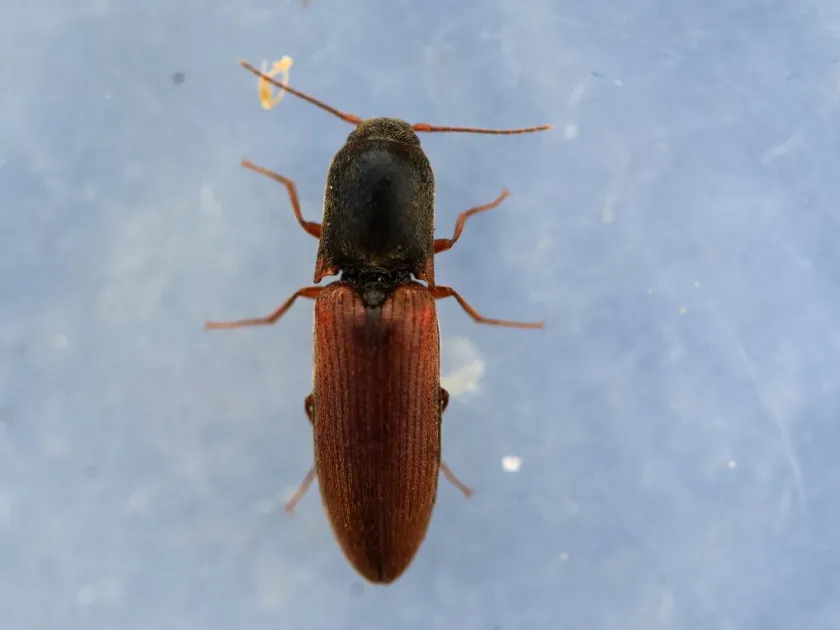
Description
How to identify
Agriotes limosus is a species of click beetle belonging to the Elateridae family. Adult beetles are characterized by their elongated bodies, typically ranging from 8 to 10 mm in length, with a dark brown or reddish-brown coloration.
The larvae, commonly known as wireworms, are the primary stage causing damage to agricultural crops. They have a firm, cylindrical body with a hard, shiny, yellow-to-brown cuticle, resembling a piece of wire.
The larva has a well-developed head with strong, chewing mouthparts designed to feed on tough plant tissues. It possesses three pairs of short, robust thoracic legs that enable efficient movement through the soil.
The adult beetles are named for their unique ability to right themselves when placed on their backs by snapping their thorax against their abdomen, producing an audible clicking sound.
The life cycle involves complete metamorphosis: egg, larva, pupa, and adult. The larval stage is long and spent entirely within the soil, often taking several years to reach maturity.
What it damages
Agriotes limosus is a significant polyphagous pest that affects a wide variety of crops, including cereals, corn, potatoes, sugar beets, sunflowers, and various vegetables.
The larvae cause economic damage by feeding on germinating seeds, roots, and subterranean stems, which often leads to poor plant establishment and significant thinning of stands.
In cereals, larvae bore into the crown and roots, causing plants to wilt, yellow, and eventually die. This damage is particularly devastating in the early growth stages.
Potatoes and root vegetables suffer from deep, tunnel-like holes created by the wireworms. This feeding damage lowers the quality of the harvest and creates entry points for secondary pathogens like fungi and bacteria.
Fields with high moisture levels and heavy infestation of couch grass (Elymus repens) are at the highest risk, as these conditions provide ideal food and breeding grounds for the pests.
When it appears
Adult beetles typically emerge from overwintering in the soil during early spring, as temperatures rise, usually when the soil reaches at least 10–12 degrees Celsius.
The egg-laying period occurs during late spring and early summer. Females prefer to deposit eggs in moist soil, often choosing locations with dense vegetation or weeds.
Larvae are active throughout the growing season. They move vertically through the soil profile in response to moisture and temperature gradients, seeking the most favorable microclimate.
Pupation takes place in the soil during the second half of summer. After a brief pupal stage, the new generation of adults emerges but remains in the soil through the winter.
The entire life cycle can span 3 to 4 years, meaning that larvae of various ages are often present in the soil at the same time, leading to constant pressure on crops.
Signs of infestation
Visual identification in the field often starts with observing patchy, thinned crop stands where young plants are yellowing or have completely withered without an obvious cause.
A closer inspection of damaged plants will reveal severed roots or stems below the soil surface, often with evidence of boring or irregular tunneling.
In tuber crops like potatoes, characteristic circular entry holes and internal tunneling are definitive signs of wireworm activity.
Field monitoring is effectively performed using potato or carrot bait traps, buried at a depth of 10–15 cm, which attract larvae and allow for population estimation.
The presence of larvae during field tillage or when examining the roots of infested plants confirms the infestation level and the need for immediate control measures.
Control measures
Effective management begins with deep fall tillage. Turning the soil exposes the larvae to predators, birds, and harsh weather conditions, significantly reducing their numbers.
Strategic crop rotation is essential; planting non-host crops or crops that act as natural deterrents, such as mustard, can help manage wireworm populations over several seasons.
Strict weed control is mandatory, particularly the removal of couch grass, which is a preferred host for the larval stages and a primary source of population increase.
Chemical control often involves the use of insecticide seed treatments to protect young plants during the most vulnerable early stages of growth.
Granular soil insecticides can be applied during planting to provide a protective zone around the seed or tubers, effectively reducing larval feeding pressure.
Taxonomy
- Latin name
- Agriotes limosus
- Order
- Coleoptera (beetles)
- Family
- Elateridae
- EPPO code
- AGRILM
Discussion
No discussions yet — be the first.