
Agriotes gurgistanus
Agriotes gurgistanus
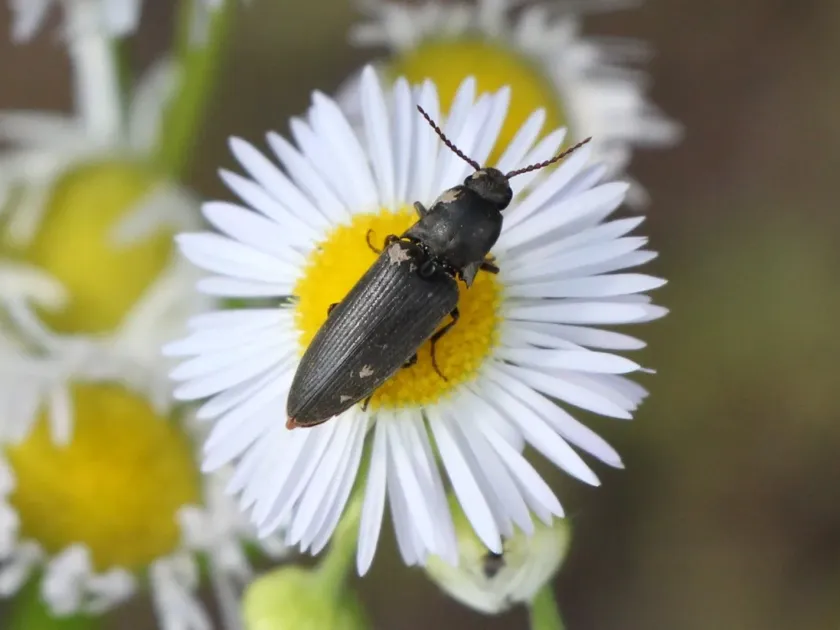
Description
How to identify
Agriotes gurgistanus is a species of click beetle belonging to the family Elateridae within the order Coleoptera. Adult beetles are typically 8–11 mm long, characterized by an elongated body shape and a coloration ranging from dark brown to black.
The larval stage, commonly known as a wireworm, is the primary source of agricultural damage. These larvae have a distinct cylindrical, hard, and smooth body, usually yellowish to brownish in color, which is well-adapted for movement through compact soil layers.
Adults are known for their unique ability to right themselves with a clicking sound if they are flipped onto their backs, a defensive mechanism that gives the family its common name.
The life cycle of this beetle is completed entirely within the soil. Adults emerge in spring to mate and lay eggs, and the resulting larvae spend several years in the soil before pupating and becoming adults.
This species is widely distributed in steppe and forest-steppe regions. It prefers loamy soils and thrives in environments where moisture and organic debris are available, making it a persistent problem in intensive agricultural systems.
What it damages
The wireworms of Agriotes gurgistanus are polyphagous pests, causing significant destruction to a wide range of crops including cereals (wheat, barley), corn, sunflower, sugar beet, and various vegetables.
The most severe damage occurs during the early growth stages of plants. Wireworms feed on germinating seeds, roots, and the subterranean parts of stems, leading to uneven crop emergence and significant stand loss.
While adult beetles feed on pollen and floral parts of plants, this activity is considered of minor economic importance compared to the extensive damage caused by the larvae, which reside in the root zone.
Infested plants typically show signs of yellowing, wilting, and stunted growth. In severe cases, the entire plant may die, necessitating replanting and leading to significant yield losses for farmers.
Fields with long histories of cereal cultivation or those heavily infested with perennial weeds, such as couch grass, are at the highest risk for severe wireworm pressure.
When it appears
Adult flight usually occurs during the spring and early summer, typically between April and June. During this time, the beetles are most active in the evening and night hours, when they seek out mates and suitable sites for egg-laying.
Larval activity is closely linked to soil moisture and temperature. They are most active in the root zone during spring and autumn, but will migrate deeper into the soil during hot and dry summer conditions to avoid desiccation.
The development from egg to adult takes several years, with the larvae undergoing multiple molts as they increase in size, ensuring a continuous threat throughout the growing season.
Pupation takes place in small soil chambers. The newly developed adults generally remain in the soil over winter, emerging on the surface only in the following spring.
Climatic conditions, particularly a mild and moist spring, significantly influence the population density of this pest, facilitating larval survival and adult emergence.
Control measures
Effective management of Agriotes gurgistanus relies on an integrated approach, starting with sound agricultural practices. Deep autumn plowing is a highly effective mechanical control method that exposes larvae to predators and harsh weather conditions, significantly reducing their populations.
Crop rotation is crucial in breaking the beetle's life cycle. Avoiding crops that are highly attractive to wireworms and maintaining fields free of grassy weeds, especially couch grass, limits the food supply for the larvae.
Chemical protection is standard in high-pressure areas, primarily through the use of insecticidal seed treatments. Treating seeds with systemic insecticides provides a vital protective shield during the initial germination phase.
In cases of high infestation, the application of soil-applied granular insecticides during planting can provide additional protection, creating a treated zone around the plant roots.
- Utilize crop rotation to disrupt the wireworm life cycle.
- Implement deep autumn plowing to bring larvae to the surface.
- Maintain strict weed control, targeting perennial grasses.
- Apply professional insecticidal seed treatments.
- Conduct soil sampling to monitor pest density before planting.
Taxonomy
- Latin name
- Agriotes gurgistanus
- Order
- Coleoptera (beetles)
- Family
- Elateridae
- EPPO code
- AGRIGU
Discussion
No discussions yet — be the first.