
Click beetle
Agriotes brevis
Description
How to identify
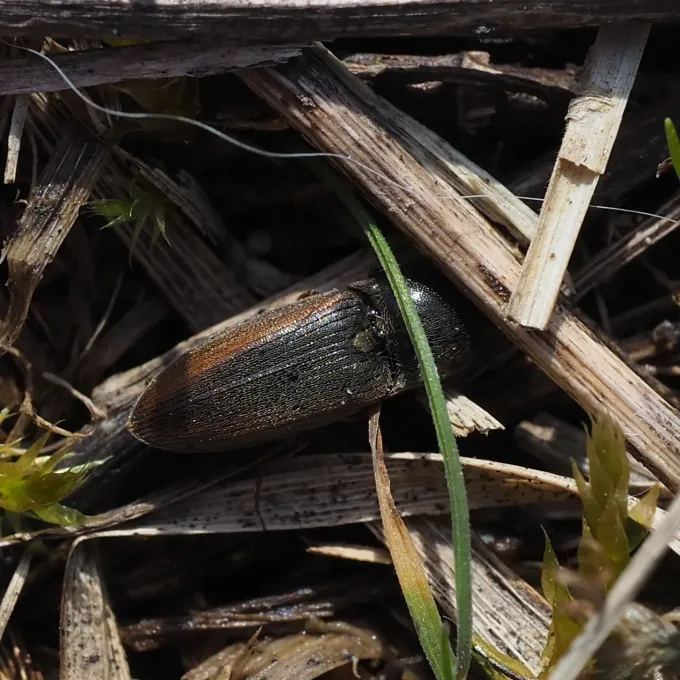
Agriotes brevis belongs to the Elateridae family, order Coleoptera. Adult beetles are typically 6-8 mm long with a dark brown coloration and a streamlined body shape.
The larval stage, known as the wireworm, is cylindrical, hard-bodied, and yellowish-brown. Their morphology allows them to navigate through the soil with ease.
A key identifying feature of these beetles is their ability to click and jump when placed on their backs, a mechanism used to right themselves.
The life cycle is long, often spanning three to five years, with the vast majority of this time spent as larvae in the soil feeding on roots.
Eggs are laid in batches in the soil, usually in areas with higher moisture levels or organic matter, providing a suitable environment for the larvae.
What it damages
Agriotes brevis is a polyphagous pest that causes severe damage to major crops including cereals, corn, potatoes, sugar beets, and sunflowers.
Wireworms damage crops by consuming sown seeds, roots, and underground stems, leading to stunted growth, reduced plant density, and often complete plant loss.
The larvae are particularly destructive to root crops, where they bore deep tunnels into tubers and bulbs, rendering them unmarketable and prone to decay.
Damage caused by feeding often leads to secondary infections by soil-borne pathogens, which further increases the negative impact on the final harvest.
The economic impact is high because damage often occurs early in the growth stage, making replanting necessary in heavily infested fields.
When it appears
Adult beetles emerge from their overwintering sites in the soil during early spring as temperatures rise, signaling the start of the mating season.
The peak activity period for adults occurs in late spring and early summer when they are most frequently observed in or near the fields.
Wireworms exhibit vertical migration in the soil based on temperature and moisture levels, moving towards the root zone during spring and autumn.
During the hot summer months, larvae typically move deeper into the soil profile to avoid desiccation and stay within their preferred moisture range.
As soil temperatures drop in autumn, larvae prepare for winter by moving into deeper soil layers to survive the freezing conditions.
Signs of infestation
One of the most obvious signs of wireworm presence is the sudden yellowing and wilting of plants in patchy areas throughout a field.
Field inspections often reveal missing rows or irregular stands where seeds or emerging sprouts were eaten before reaching the soil surface.
Tubers or root crops show characteristic circular entry holes that lead to deeper tunnels, often resulting in internal rot of the harvested produce.
Using bait traps, such as small amounts of germinating grain buried in the soil, is a proven method to detect and assess wireworm populations.
Digging around the base of wilting plants will frequently uncover the larvae, confirming their presence and indicating the intensity of the infestation.
Control measures
Cultural control practices, such as deep fall plowing, are highly effective as they expose larvae to surface predators and harsh weather conditions.
Implementing a proper crop rotation strategy helps break the life cycle of the pest, as certain crops are less attractive to wireworms than others.
Managing soil pH through liming can create an unfavorable environment for Agriotes brevis, as these larvae generally thrive in slightly acidic soils.
Seed treatments with systemic insecticides are essential for protecting vulnerable seedlings during the critical germination and establishment phase.
The application of granular insecticides at planting provides targeted control in the root zone, significantly reducing the pressure from soil pests.
Taxonomy
- Latin name
- Agriotes brevis
- Order
- Coleoptera (beetles)
- Family
- Elateridae
- EPPO code
- AGRIBR
Discussion
No discussions yet — be the first.