
Adrastus limbatus
Adrastus limbatus
Description
How to identify
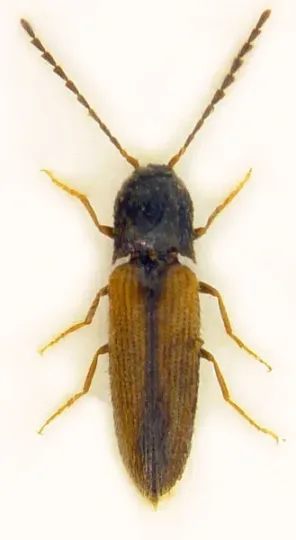
Adrastus limbatus, commonly known as a type of click beetle, is a small insect typically measuring between 5 to 7 mm in length. Its body is elongated and generally brown to blackish in color, often featuring a distinct light-colored margin on the elytra.
Like other members of the Elateridae family, these beetles possess a unique biomechanical ability to right themselves when placed on their backs by performing a sudden, audible jump, which is their signature defensive behavior.
The larvae of this species, commonly referred to as wireworms, are highly recognizable due to their firm, cylindrical, and well-sclerotized bodies. They appear yellowish-brown and are known for their extreme durability against physical pressure.
Adult beetles maintain a cryptic lifestyle, often spending their time within soil crevices or beneath surface vegetation. They are generally more active during cooler parts of the day or during humid conditions.
This species belongs to the order Coleoptera and is recognized in agricultural settings as a representative of soil-dwelling pests that can persist in the environment for several years.
What it damages
The primary economic damage is caused by the wireworms (larvae), which reside in the soil and feed on plant roots, tubers, and newly germinated seeds. This underground feeding often destroys the vascular system of the crop.
Major susceptible crops include small grains such as wheat and barley, as well as corn and various vegetable crops. Seedlings are particularly vulnerable, often wilting and dying shortly after emergence.
Infestations typically manifest as patchy crop stands, with visible gaps in rows where larvae have decimated the root systems of young plants, frequently requiring farmers to replant affected areas.
While adult beetles do feed on foliage, their impact on commercial crop yields is minimal compared to the significant root damage inflicted by the larval stages throughout their long life cycle.
Fields recently converted from grasslands or pastures are historically at the highest risk, as these environments provide ideal conditions for wireworm population growth.
When it appears
Adult beetles typically emerge from their overwintering sites in late spring, usually starting in May, to mate and lay eggs in moist, structured soil environments.
The development cycle of the larvae is notably long, often spanning three to four years. During this period, they remain in the soil, undergoing multiple molts while gradually moving through the soil profile.
With the onset of winter, the larvae migrate to deeper soil layers to avoid freezing temperatures, returning to the surface or near-surface root zones as the soil warms up in the following spring.
Agricultural scouting for this pest is most effective during the spring months, as this coincides with the period when larvae are active in the upper soil layers feeding on young, tender roots.
Understanding these seasonal migrations is crucial for timing tillage and other cultural practices to maximize the exposure of the larvae to environmental stressors and predators.
Control measures
A successful integrated pest management strategy relies heavily on crop rotation. Avoiding the planting of highly susceptible crops in infested fields can significantly reduce larval populations over time.
Cultural control via soil management is highly effective; deep autumn tillage exposes larvae to the soil surface, where they become vulnerable to desiccation, frost, and avian predators.
Seed treatment with systemic insecticides is a standard and effective preventive measure, ensuring that the young plant is protected during the most critical early growth stages.
- Strict control of weeds, particularly couch grass, which attracts egg-laying females.
- Soil pH management, as wireworms generally prefer slightly acidic soils, making liming a beneficial practice.
- The use of bait traps in the soil to monitor population density before making treatment decisions.
In cases where wireworm populations exceed the economic threshold, the application of granular soil insecticides at planting can provide necessary protection for high-value crops.
Taxonomy
- Latin name
- Adrastus limbatus
- Order
- Coleoptera (beetles)
- Family
- Elateridae
- EPPO code
- ADRSLI
Discussion
No discussions yet — be the first.