
Actenicerus sjaelandicus
Actenicerus
Description
How to identify
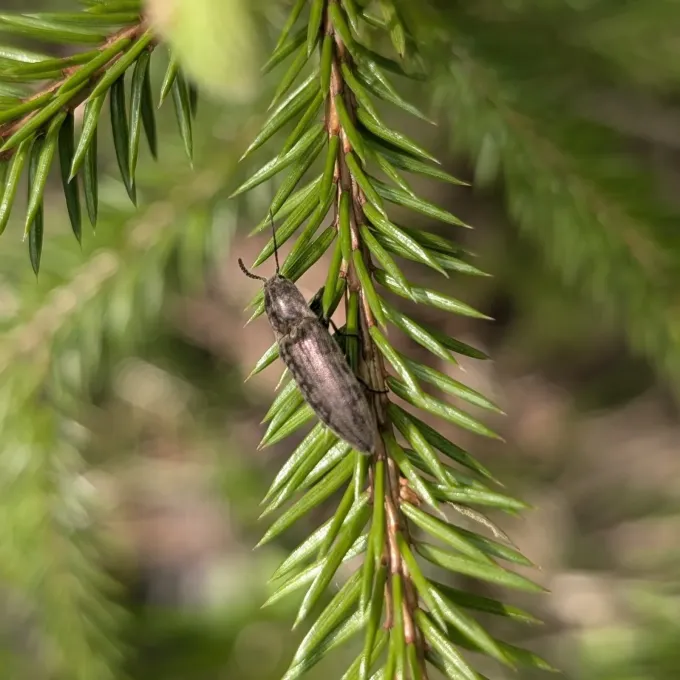
Actenicerus sjaelandicus is a species of click beetle belonging to the family Elateridae. Adult beetles are characterized by an elongated, metallic dark or bluish-gray body measuring between 12 and 15 mm.
The larvae, commonly referred to as wireworms, are easily identified by their hard, cylindrical, and yellow-brown segmented bodies, which provide high resistance to mechanical stress.
Adults possess a unique biological mechanism allowing them to spring into the air with a clicking sound if they are placed on their backs, which is a key diagnostic feature of the family.
The life cycle involves complete metamorphosis, but it is the larval stage that remains in the soil for several years, making it a persistent threat to agricultural production.
This species shows a preference for moist environments, frequently colonizing peatlands, damp meadows, and riparian areas where soil moisture remains consistently high throughout the season.
What it damages
Wireworms of this species are polyphagous, meaning they feed on a wide variety of cultivated plants, including cereals, root vegetables, legumes, and industrial crops.
They are particularly destructive during the seed germination phase, where they consume the embryo, leading to severe stand reduction and the need for field reseeding.
As the plants grow, larvae feed on the underground stems and roots, causing plants to wilt, yellow, and eventually collapse as their nutrient uptake is severely compromised.
Tuberous crops, especially potatoes, suffer significant economic losses as wireworms tunnel into the flesh, rendering the product unmarketable and susceptible to secondary decay.
In high populations, these larvae can migrate along a row, destroying entire stands of young seedlings in a systematic manner that leads to major gaps in crop density.
When it appears
Adult flight typically occurs from late spring through mid-summer, during which time beetles are active and seek out suitable soil conditions for oviposition.
Eggs are deposited in the upper soil layers, particularly in areas with dense vegetation or weeds, which protect the eggs from temperature extremes and moisture loss.
The larval stage is very long-lived, spanning 3 to 5 years, which means that infestations often persist over multiple growing seasons if not managed appropriately.
Wireworms exhibit vertical migration patterns in response to soil temperature; they move to the surface in spring and autumn and retreat deeper during summer heat or winter frost.
The primary period of crop damage occurs in the spring, coinciding with the rapid growth of seedling roots and the rise in soil temperatures to approximately 10–12°C.
Signs of infestation
The earliest sign of an infestation is the patchy emergence of crops, characterized by unexplained gaps or stunted growth in young plant populations across the field.
Physical inspection of the roots and underground stems often reveals characteristic small holes or chewed tissues, confirming the presence of soil-borne larvae.
Monitoring using bait traps, such as buried starch-rich germinating seeds or wheat grain, provides a reliable method for assessing population density before the planting season.
If soil excavation during monitoring reveals hard, wire-like larvae with a shiny golden-brown appearance, it is a clear indicator that preventative measures are required.
High levels of grassy weeds, particularly couch grass (Elymus repens), serve as an attractant for wireworms, often correlating with increased larval density in those specific areas.
Control measures
Integrated Pest Management (IPM) strategies for wireworms focus on cultural practices, such as crop rotation, which breaks the lifecycle and reduces the available food source.
Deep autumn tillage is a highly effective control measure that brings larvae to the surface, exposing them to predators and harsh environmental conditions.
Chemical control involving the use of insecticidal seed treatments is standard practice in high-risk areas to provide early-stage protection for vulnerable crop seedlings.
Soil pH management is also vital; since wireworms prefer acidic soils, liming can help create an environment that is less hospitable to their growth and survival.
In cases of severe infestation, the application of granular insecticides directly into the furrow during planting ensures a protected zone around the developing plant roots.
Taxonomy
- Latin name
- Actenicerus
- Order
- Coleoptera (beetles)
- Family
- Elateridae
- EPPO code
- ACTSSP
Discussion
No discussions yet — be the first.