
Bicarinate diving beetle
Yola bicarinata
Description
How to identify
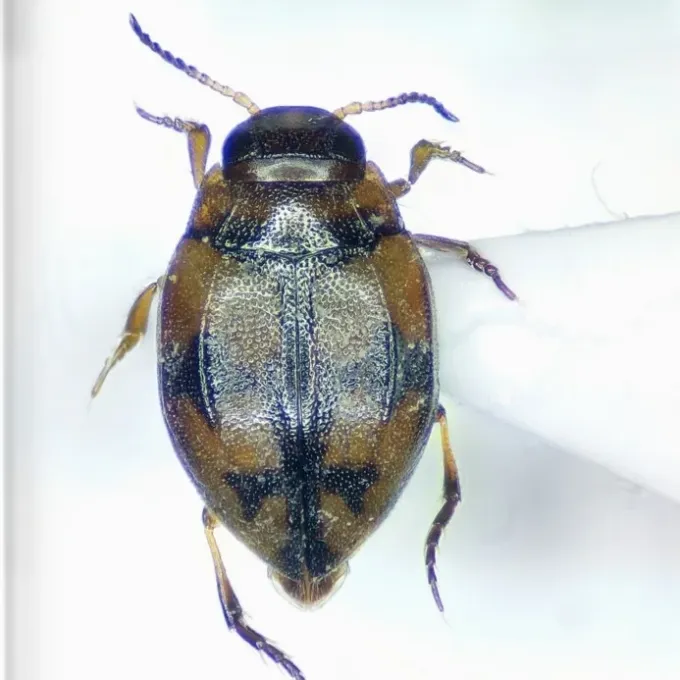
The bicarinate diving beetle, known scientifically as Yola bicarinata, is a small aquatic insect belonging to the family Dytiscidae.
These beetles are distinguished by their small size, typically not exceeding 3 millimeters, and their streamlined, oval-shaped body structure.
The most important diagnostic feature is the presence of two distinct keels on the pronotum, which provides the species with its common and scientific names.
Their anatomy is highly adapted for an aquatic lifestyle, with specialized swimming legs that allow them to navigate effectively through stagnant and slow-moving water.
The larvae are predatory by nature, possessing elongated bodies and sharp mandibles designed to grasp and consume other small aquatic organisms.
What it damages
In an agricultural context, this beetle is recognized as a nuisance or pest primarily within aquaculture facilities, such as fish nurseries and hatchery ponds.
The predatory behavior of the larvae poses a direct threat to fish larvae and fry, which can be killed or severely injured by these insects.
Adult beetles may also feed on fish eggs, resulting in lower stocking success rates and significant economic losses for commercial fish farms.
Furthermore, their presence increases competition for limited food resources like zooplankton, which are essential for the healthy development of fish fry.
- Predation on fish fry and larvae.
- Consumption of fish spawn.
- Nutritional competition.
- Increased mortality rates in hatchery ponds.
When it appears
The biological cycle of Yola bicarinata is heavily dictated by water temperature, with activity increasing significantly as spring approaches.
Adult beetles emerge from hibernation in early spring and begin the breeding season, which typically continues throughout the warm summer months.
The development from egg to adult is rapid in favorable warm conditions, often resulting in multiple generations within a single season.
In the autumn, as temperatures decline, the beetles move toward the pond bottom to seek refuge in mud or dense vegetation for the winter period.
Migration between water bodies occurs during warm evenings, allowing the species to recolonize different ponds or expand their territory during the peak season.
Control measures
Management of the bicarinate diving beetle in aquaculture requires a preventative approach focused on habitat modification and structural security.
Regular maintenance of ponds, including the removal of thick aquatic vegetation and silt, is crucial to eliminate the preferred habitats for these beetles.
Installing fine-mesh screens on inlet pipes prevents the influx of adult beetles from natural water sources into the controlled nursery ponds.
For high-density operations, the total draining and drying of pond beds during the off-season serves as a highly effective method for population control.
Integrated management should prioritize physical exclusion and habitat degradation over chemical treatments, ensuring the safety of the fish stock and the ecosystem.
Taxonomy
- Latin name
- Yola bicarinata
- Order
- Coleoptera (beetles)
- Family
- Dytiscidae
- EPPO code
- YOLABI
Discussion
No discussions yet — be the first.